

Yes, silver plated jewelry will absolutely tarnish over time. It’s an unavoidable fact of life for these beautiful pieces.
Think of that delicate silver layer like a beautiful, but very thin, coat of paint on a park bench. It looks stunning at first, but constant exposure to the elements will eventually cause it to fade and change. The good news? Understanding why this happens is the first step to slowing it down and keeping your jewelry looking its best.
The Simple Truth About Silver Plated Jewelry
When we talk about tarnish, we're not talking about dirt or grime that can just be wiped away. Tarnish is actually the result of a chemical reaction.
The thin layer of real silver on your jewelry reacts with substances in the air—primarily sulfur compounds—which causes it to darken. This process is a completely natural part of owning anything silver-plated. It’s the same reaction that affects antique silverware, just happening on a much thinner surface.
Everyday things like moisture in the air, the natural oils on your skin, and even chemicals in lotions and perfumes can speed this process up significantly.
Understanding What You're Working With
The key to protecting your jewelry is knowing what you're up against. Unlike solid sterling silver, silver-plated pieces only have a microscopic layer of real silver electroplated over a different base metal, like copper, brass, or nickel.
This super-thin coating makes them far more vulnerable than their solid silver counterparts. If you want to dive deeper into this, we break it all down in our guide comparing silver vs. silver-plated jewelry.
Because the plating is so delicate, aggressive polishing or contact with harsh chemicals can actually rub the silver layer right off, exposing the different-colored base metal underneath. This is why gentle care is non-negotiable.
The most important takeaway is this: Tarnish on silver-plated jewelry is inevitable, but its speed is not. With the right care, you can keep your pieces looking brilliant for a long, long time.
To put it all in perspective, here’s a quick snapshot of what’s really going on with your silver-plated items.
Silver Plated Jewelry Tarnish At a Glance
This table summarizes the core concepts of why your jewelry changes color and what you can do about it.
| Aspect | Explanation |
|---|---|
| The Cause | A chemical reaction where the thin silver layer meets sulfur and oxygen in the air, creating a dark film called silver sulfide. |
| The Appearance | A dull, dark layer that can look anywhere from yellowish-brown to deep black, covering the jewelry's original shine. |
| Key Takeaway | Tarnish is natural, but you are in control. Proper care, cleaning, and storage are your best tools to slow it down. |
Understanding these basics is the foundation for keeping your jewelry looking brand new. Now, let’s get into the specifics of what makes it happen faster.
Why Tarnishing Happens to Silver Plated Pieces
To really get why your silver-plated jewelry tarnishes, we need to look beyond just the shiny surface. Think about an apple slice you leave on the counter. It doesn't take long for it to start browning, right? That's a natural chemical reaction called oxidation, and it's almost exactly what’s happening to the silver on your jewelry.
At its heart, tarnishing is a simple chemical handshake. The delicate layer of pure silver on your piece is constantly exposed to the world around it. The main culprit is sulfur, which is surprisingly common in the air we breathe. When silver atoms bump into hydrogen sulfide gas, they react and form silver sulfide—that dark, blackish film that robs your jewelry of its beautiful shine.
The Two-Front Battle Against Tarnish
But with silver-plated items, there's a second, more sneaky problem at play: the base metal hiding underneath. The silver coating is incredibly thin, often just a few microns (a thousandth of a millimeter). That makes it vulnerable to everyday wear and tear.
Once that thin silver layer gets a scratch or wears down from use, the base metal underneath is exposed to the elements. This metal is usually one of the following:
- Copper: Notorious for oxidizing and turning that familiar green color.
- Brass: A mix of copper and zinc that also corrodes over time.
- Nickel: An inexpensive and common choice, though it can cause skin allergies for some.
When this happens, you’ve got a double-problem. The silver on the surface is still tarnishing, but now the exposed base metal is also reacting with air, moisture, and the natural oils from your skin.
This hidden reaction is what causes the infamous "green finger." It's a common misconception that the silver is staining your skin. In reality, it's the copper in the base metal oxidizing when it touches your skin.
How the Base Metal Speeds Up the Problem
The interaction between the two different metals can actually make the whole piece fall apart faster. As the base metal corrodes, that corrosion can work its way under the edges of the remaining silver plating, causing it to flake off or peel away.
It's a lot like a tiny chip in your car's paint. At first, it’s just a small blemish. But once moisture seeps underneath, it makes the surrounding paint bubble and flake, turning a small issue into a much bigger one. The same thing is happening with your jewelry. For a deeper look, check out our complete guide explaining what causes silver plated jewelry to tarnish.
This is why it's so important to protect that fragile silver layer. Every scratch brings the more reactive base metal closer to the surface, and that just speeds up the decay of your piece's beautiful finish. Once you understand this dual threat, you'll know exactly how to give your jewelry the care it needs.
How Quickly Does Silver-Plated Jewelry Tarnish?
So, how much time do you really have before that shiny new silver-plated piece starts to look a little less brilliant? The honest truth? There's no magic number. The lifespan of your jewelry's shine is a story written by its quality, your lifestyle, and even the air around you.
It helps to think of it like a new pair of white canvas shoes. Wear them once in a while on a perfect, sunny day, and they’ll look new for ages. But wear them every day, through rain puddles and city grime, and they’ll tell a very different story, very quickly. Your jewelry is exactly the same.
A necklace you wear every day might start showing the first subtle signs of dullness in just a few months. But that pair of earrings you save for special occasions? If you store it properly, it could easily keep its sparkle for years.
It All Starts with Plating Thickness
One of the biggest variables is the thickness of the silver plating itself. This is measured in microns—a unit so small it’s one-millionth of a meter. A thicker layer of silver simply provides a more durable shield against friction and the elements.
- Flash Plating (Under 0.5 microns): This is a super-thin coating that looks great out of the box but offers very little protection. You might see it start to wear off within just a few weeks or months of regular use.
- Standard Plating (0.5 - 2.5 microns): This is the sweet spot for most fashion jewelry. It gives you a reasonable amount of durability, as long as you take good care of it.
- Heavy Plating (Over 2.5 microns): You'll find this on higher-end pieces. This thicker, more robust layer can easily last for several years before showing significant wear.
At the end of the day, more microns mean more silver protecting the base metal underneath. It buys you time.
Your Life and Your Environment
Beyond the jewelry's construction, your own daily habits and environment have a huge impact. Believe it or not, your body's unique chemistry—especially the acidity of your sweat—can actually accelerate the chemical reaction that causes tarnish.
How long your shine lasts really depends on how you treat it. Tarnish can technically start forming within a couple of months if a piece is just left out in the open, especially in air with a lot of sulfur. But if you're careful to keep it away from lotions, perfumes, and city pollutants, that same piece can look great for years. To learn more, check out these insights on how environmental factors affect silver plating on valencesurfacetech.com.
Key Takeaway: There's no expiration date on your jewelry. Its lifespan is a direct result of its quality, your body chemistry, and the world it lives in.
Simple things, like living in a humid, coastal area or a city with more air pollution, will constantly expose your jewelry to moisture and sulfur. That's a surefire recipe for faster tarnishing.
Everyday Habits That Ruin Silver Plated Jewelry
Believe it or not, you might be the biggest threat to your own jewelry. The simple truth is that our daily routines are often the main reason silver-plated pieces lose their shine and start to tarnish. Many of the things we do without a second thought can dramatically speed up that process, turning a beautiful item dull and discolored.
Think of that thin silver layer as a delicate shield. Every time it gets hit with harsh chemicals or stays damp for too long, a little piece of that shield erodes. Those small encounters really add up, eventually exposing the base metal underneath and kicking discoloration into high gear.
The Hidden Culprits in Your Daily Routine
So many products we use every single day are loaded with chemicals that are just terrible for silver plating. When these substances meet the silver, they trigger a chemical reaction that can cause it to break down and tarnish almost instantly.
Here are the top offenders to keep an eye out for:
- Beauty and Personal Care Products: Things like perfume, hairspray, body lotion, and even sunscreen contain ingredients that eat away at the silver layer. The golden rule here is simple: make your jewelry the last thing you put on before you leave and the first thing you take off when you get home.
- Water and Moisture: Water itself isn't the problem, but the chemicals in it certainly are. Chlorine from swimming pools is public enemy number one for silver plate. Always, always take your jewelry off before you shower, go for a swim, or even just wash your hands to stop moisture from getting trapped under the plating.
- Household Cleaners: Bleach, ammonia, and other aggressive cleaning products can strip the silver layer right off your jewelry in seconds. It’s a no-brainer—never wear your pieces while cleaning the house.
This chart really drives home how a few simple, consistent cleaning habits can make a world of difference in how long your jewelry stays beautiful.
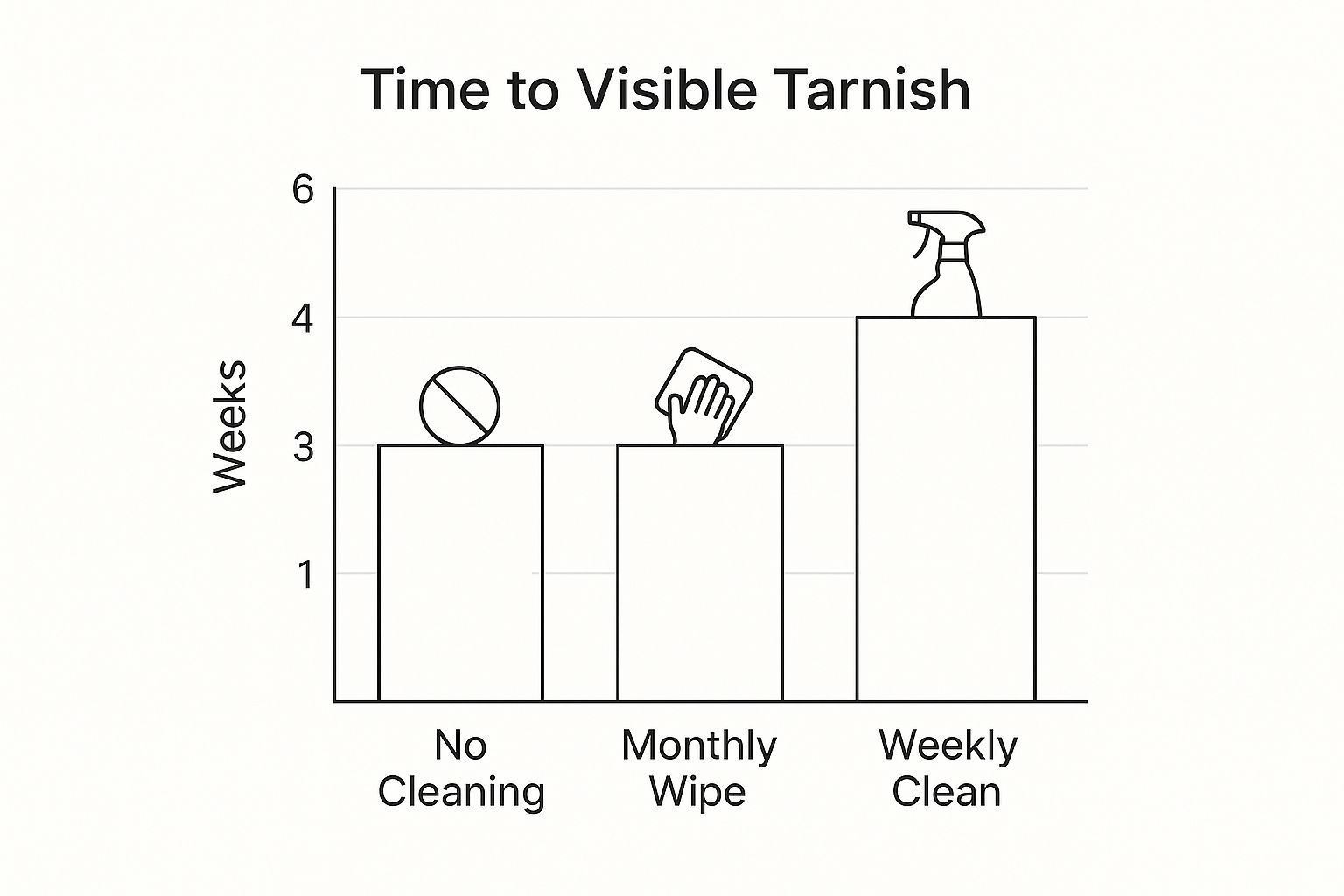
As you can see, just a quick wipe-down once a week can help your jewelry last six times longer before you even start to see visible tarnish. That's a huge return for such a small effort!
Good Habits vs. Bad Habits That Affect Tarnish
Understanding what helps versus what harms your jewelry is half the battle. This becomes even more important for pieces like rings, which are constantly in contact with your skin and the environment. If you're specifically concerned about your rings, our guide on expert care secrets for silver-plated rings is a must-read.
Remember: Protecting your jewelry isn't about locking it away and never wearing it. It's about making small, mindful choices every day to steer clear of the things that cause the most damage.
To make this crystal clear, let's break down the habits that will save your jewelry from the ones that will send it to an early grave.
Jewelry Care Habits: Good vs. Bad
Sometimes seeing it side-by-side makes all the difference. This table compares the little things you can do to protect your jewelry with the common mistakes that speed up tarnishing.
| Good Habit (Protects Your Jewelry) | Bad Habit (Accelerates Tarnish) |
|---|---|
| Storing it in an airtight bag or jewelry box. | Leaving it out on a dresser or in the bathroom. |
| Wiping it with a soft cloth after each wear. | Wearing it 24/7, including while you sleep. |
| Taking it off before you swim, shower, or exercise. | Exposing it to chlorine, saltwater, or sweat. |
| Putting it on after applying lotions and perfume. | Spraying perfume directly onto the jewelry. |
Making the "Good Habit" column your new normal will go a long way in keeping that beautiful silver shine lasting as long as possible.
How to Properly Care For Your Silver Plated Jewelry
Now for the good news. While tarnish is pretty much inevitable, you have a surprising amount of control over how fast it happens. The right care is your best defense, and it can turn a piece that might fade in a few months into one that stays brilliant for years. It all comes down to a few simple, protective habits.
The most important rule to live by is “last on, first off.” Seriously, make this your mantra. Think of your jewelry as the final touch, the cherry on top of your look. It should only go on after you’ve sprayed your perfume, applied your lotion, and finished your hair and makeup. All those products are loaded with chemicals that can be really harsh on that delicate silver layer.
By the same token, your jewelry should be the very first thing you take off at the end of the day. Remove it before you change your clothes, wash your face, or hop in the shower. This simple step saves it from a lot of unnecessary friction and exposure to the oils and moisture that speed up tarnishing.
Smart Storage Is Non-Negotiable
Where you keep your jewelry when you’re not wearing it is just as important as how you wear it. Just leaving your favorite pieces out on a dresser or, even worse, in a humid bathroom, is like sending an open invitation for tarnish to move in. Your main goal here is to limit contact with air and moisture.
Here are a few of the best ways to store your silver-plated treasures:
- Airtight Containers: A simple zip-top plastic bag works wonders. Just squeeze out as much air as you can before sealing it.
- Soft Pouches: Keep each piece in its own separate pouch or cloth bag. This prevents other jewelry from scratching it, because scratches can wear down the plating much faster.
- Anti-Tarnish Strips: For an extra layer of defense, you can pop a small anti-tarnish strip into your jewelry box or storage bag. These little strips are designed to absorb the airborne pollutants that cause discoloration.
Pro Tip: Whatever you do, never just toss your silver-plated pieces into a drawer with a jumble of other items. That’s the fastest way to get scratches and dings that will break through the thin silver layer and kickstart its decline.
One final, crucial step: give your jewelry a quick wipe-down after every single wear. Grab a soft, dry, lint-free cloth—a microfiber or jewelry polishing cloth is perfect—and gently buff away any skin oils or residue from the day. This tiny, two-second habit makes a massive difference in the long run.
These same principles work well for other types of plated accessories, too. You can learn more in our guide on how to care for gold-plated jewelry. By combining smart storage with mindful daily habits, you'll create the perfect environment to keep that beautiful silver shine looking its best.
Safely Cleaning Tarnished Silver-Plated Items
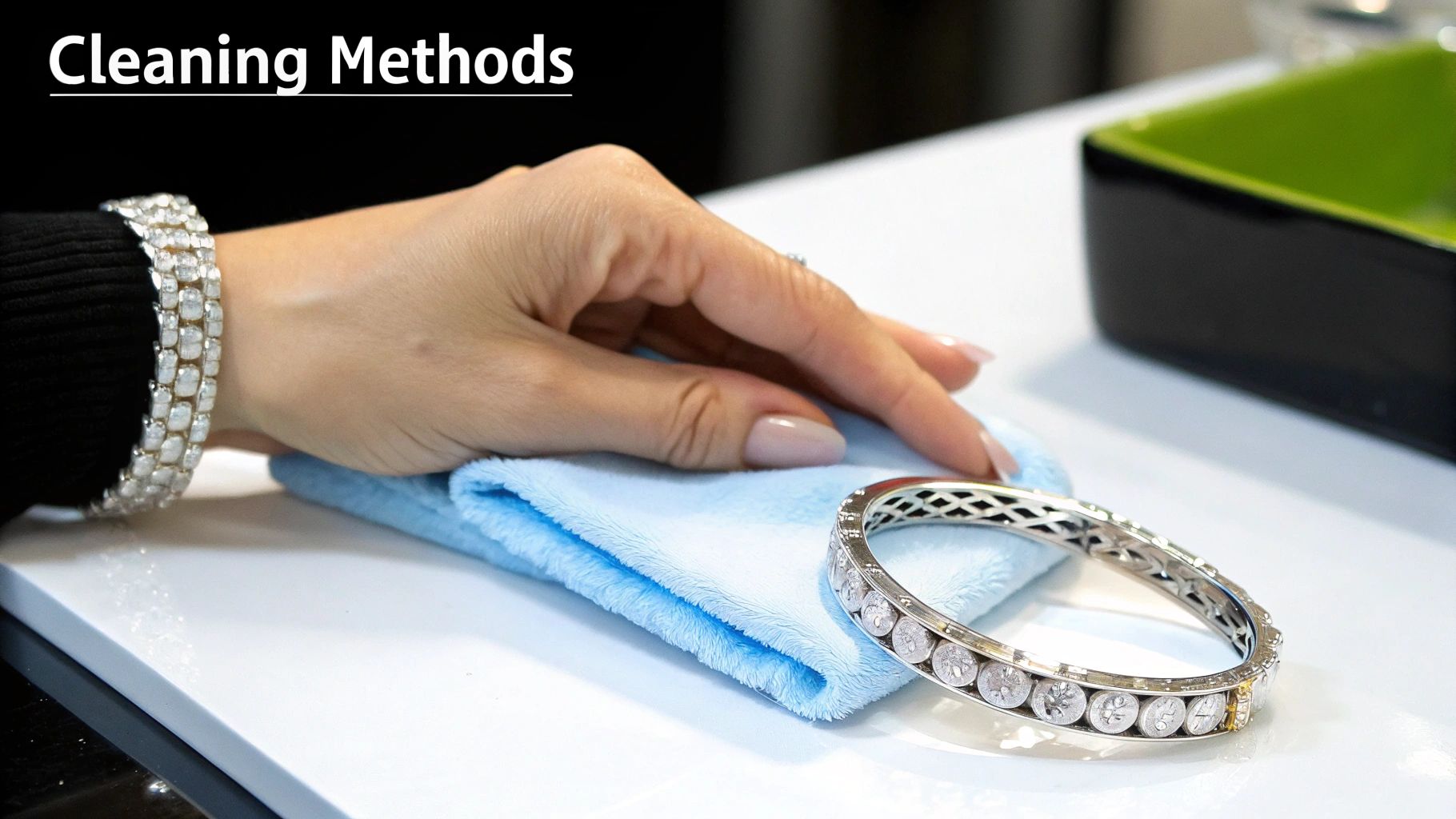
When you spot that first hint of tarnish, it’s tempting to grab something abrasive and just scrub it away. But hold on—that’s probably the worst thing you can do for silver-plated jewelry. Aggressive cleaning is the fastest way to destroy it.
Remember, that beautiful silver layer is incredibly thin. Any harsh scrubbing or chemical dips can strip it right off, revealing the less attractive base metal underneath for good. The real secret is a gentle touch. You want to lift the tarnish off, not scrub the silver away with it.
Your Gentle Cleaning Toolkit
For most light tarnish, a simple, mild approach is all you need. You likely already have the two essential items in your kitchen.
- Mild Soap: Just a few drops of a gentle, phosphate-free dish soap will do.
- Warm Water: Grab a small bowl and fill it up.
Mix the soap into the warm water to create a slightly sudsy solution. Let your jewelry soak for just a few minutes—no more than five—to loosen up any grime and light discoloration. Then, using only your fingertips or a super-soft cloth, gently wipe the surface.
Never use a brush, not even a soft-bristled toothbrush. The bristles might seem gentle, but they can easily create micro-scratches that will slowly wear away the plating over time.
Once you’re done, rinse the piece thoroughly under cool, running water to get rid of any soap residue, which can leave a dull film. The final step is critical: pat it completely dry with a fresh, soft, lint-free cloth. Any lingering moisture is an open invitation for tarnish to return, so make sure it's 100% dry before you put it away.
What to Avoid at All Costs
Knowing what not to do is just as important as knowing what to do. Many popular cleaning hacks you might see online are way too harsh for delicate plating.
Steer clear of these at all costs:
- Baking Soda or Toothpaste: These are surprisingly abrasive. On a microscopic level, they act like sandpaper, scratching and removing the silver layer.
- Commercial Silver Dips: These potent chemical baths are designed for solid sterling silver. They're so strong they can dissolve a thin silver plate in a matter of seconds.
- Boiling Water or Ultrasonic Cleaners: Extreme heat and intense vibrations can easily damage the plating and might even harm any gemstones set in the piece.
If you're dealing with more stubborn tarnish, your safest bet is a professional silver polishing cloth. These cloths are treated with a special cleaning compound that removes tarnish without being abrasive.
For a deeper dive into different methods, check out our complete guide on how to clean silver jewelry at home.
Your Top Questions About Silver-Plated Jewelry
Let's dive into some of the questions I hear all the time about silver-plated pieces. Getting straight answers helps you know what to expect and how to keep your jewelry looking its best.
How Long Does Silver-Plated Jewelry Actually Last?
This is probably the number one question people ask. Realistically, you can expect your silver-plated jewelry to last anywhere from 2 to 4 years. But—and this is a big but—its lifespan really comes down to how you treat it.
Think of the silver plating as a very thin, delicate coat of paint. It's constantly up against air, moisture, and all the chemicals in our daily lives, like perfumes, lotions, and even sweat. If you want to dig deeper, this article on the durability of silver plated items on dgjewerly.com offers some great insights.
Keep in mind that rings and bracelets tend to have a shorter life. They’re always bumping and rubbing against things, which means the plating can wear away much faster than on a pair of earrings.
Can I Get a Piece Re-Plated When It Wears Out?
Yes, you absolutely can! If a favorite piece starts to look a little sad and the base metal is showing through, don't despair. A professional jeweler can re-plate it for you.
This process basically adds a fresh layer of silver, bringing back that original shine and protection. It’s a fantastic way to give a sentimental piece a whole new lease on life.
Re-plating can be a great, budget-friendly option for restoring jewelry you love. Just be sure to get a quote from your jeweler first, as costs can vary, and you'll want to make sure it makes sense for your particular item.
Why Is My Jewelry Turning My Skin Green?
Ah, the dreaded green finger! It's a super common issue, but it's probably not the silver's fault. That green stain is almost always caused by the base metal underneath, which is often copper.
Here’s what happens: over time, the thin silver layer wears thin. When your skin’s natural oils and sweat come into contact with the exposed copper, a chemical reaction occurs. This creates copper salts, which are what leave that harmless, but annoying, green mark behind.
To avoid this, look for pieces with a thicker plating or those made with a hypoallergenic base metal from the start.
At Hidden Forever, we believe your most precious memories deserve to be held in equally precious materials. We craft our projection photo jewelry with quality in mind, creating timeless gifts that last. Discover your perfect piece at Hidden Forever.


