

Yes, silver plated jewelry absolutely tarnishes. It’s not a sign that something is wrong with your piece; it's just a completely natural chemical process. Think of it like a freshly cut apple turning brown when you leave it on the counter—it's simply reacting to the world around it.
Why Does Silver Plated Jewelry Tarnish?
That dark, filmy layer that can creep onto your favorite necklace isn't dirt, nor is it a sign of poor quality. It's the result of a predictable chemical reaction. The thin layer of real silver on your plated jewelry is interacting with its environment, specifically with sulfur compounds that are surprisingly common in our daily lives.
When this happens, a new substance called silver sulfide forms right on the surface. That’s the dark film we call tarnish. Understanding this simple bit of chemistry is the first step toward keeping your jewelry looking its best. The good news is that tarnish isn't permanent damage if you catch it early, and you have more control over it than you might think.
The Air We Breathe and The Humidity We Feel
The main culprit behind tarnish is a gas called hydrogen sulfide (H₂S). It's all around us, found in the air from things like pollution and decaying organic matter. When your silver plated jewelry is exposed to this gas, the silver and sulfur molecules chemically bond.
This reaction gets a serious boost from humidity. Moisture in the air acts like a catalyst, kicking the tarnishing process into high gear. This is exactly why you might notice jewelry tarnishing faster in a steamy bathroom or during a humid summer. In fact, research shows that under typical conditions, visible discoloration can pop up in as little as two to three months of regular exposure. You can dive deeper into the science behind silver tarnish on Valence Surface Technologies.
So, the very air in your home is part of the equation. Things you wouldn't even consider, like cooking certain foods (think onions or eggs) or living near industrial areas, can increase the sulfur levels and accelerate tarnishing.
Key Takeaway: Tarnish isn't just about what your jewelry touches; it's about the chemistry of the air itself. Controlling the environment where you store your pieces is one of the most powerful ways to keep them bright and shiny.
Everyday Culprits That Speed Up Tarnish
Beyond just the air, many common substances are loaded with sulfur or other chemicals that react with silver plating. Being mindful of these everyday items can make a world of difference.
Here’s a look at some of the most common factors that can cause your beautiful silver plated pieces to tarnish more quickly.
| Tarnish Factor | What It Is | How It Affects Your Jewelry |
|---|---|---|
| Cosmetics & Skincare | Lotions, perfumes, hairsprays, and makeup. | These products contain chemicals that can react with silver. Wait for them to fully absorb or dry before putting on your jewelry. |
| Household Chemicals | Cleaning products with ammonia or chlorine bleach. | These are extremely harsh and can cause immediate, severe discoloration or even strip the silver plating right off. |
| Perspiration & Skin Oils | The natural sweat and oils produced by your body. | Your unique body chemistry, including skin pH, can cause silver to tarnish. This is why a piece might tarnish faster on one person than another. |
| High-Sulfur Foods | Onions, garlic, eggs, and mayonnaise. | Handling these foods can transfer sulfur compounds to your jewelry, leading to tarnish. It's best to remove rings before cooking. |
| Chlorinated Water | Swimming pools, jacuzzis, and tap water in some areas. | Chlorine is highly corrosive to silver and will rapidly cause dark, blotchy tarnish. Always remove jewelry before swimming. |
| Direct Sunlight | Prolonged exposure to UV rays. | Sunlight can warm the jewelry and speed up chemical reactions with substances on the surface or in the air. |
As you can see, many of these triggers are just a part of our normal routines. You don't have to live in a bubble, but being aware of them helps you build better habits to protect your jewelry. Some of the most common culprits include:
- Cosmetics and Skincare: Lotions, perfumes, hairsprays, and even makeup often contain chemicals that are bad news for silver. The best approach is the "last on, first off" rule—put your jewelry on after all your products have dried, and take it off before you start your nightly skincare routine.
- Household Chemicals: Cleaners, especially anything with ammonia or chlorine bleach, are a silver-plated piece's worst enemy. They can cause immediate discoloration or, even worse, permanently damage the plating.
- Your Own Body Chemistry: Believe it or not, your skin's pH and your sweat can also play a role. This is the main reason why the exact same piece of jewelry might tarnish much faster on you than on your friend.
Understanding Silver Plated Jewelry
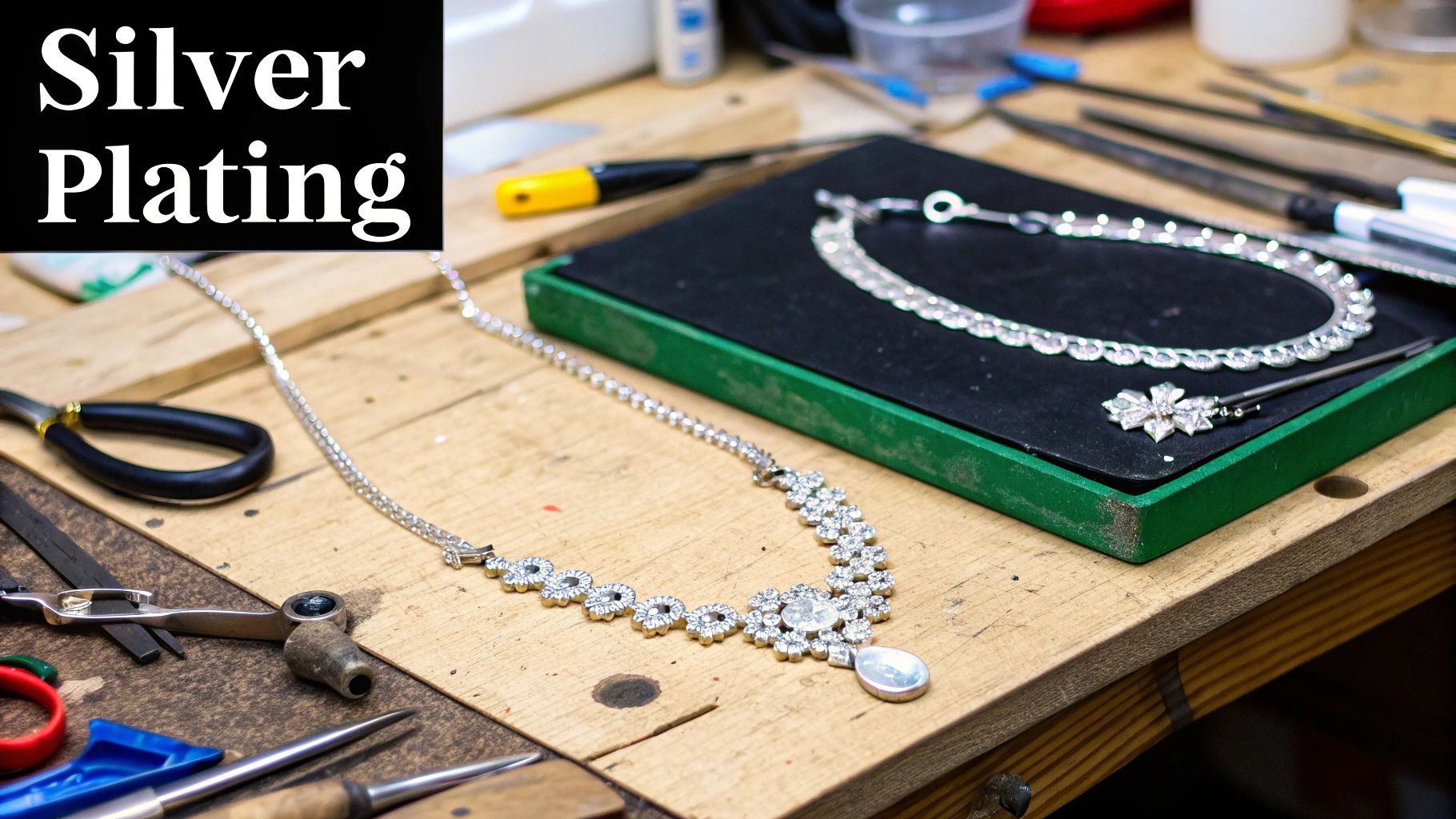
Before we can tackle why jewelry tarnishes, we first need to get a clear picture of what we're working with. Think of it like a chocolate-dipped strawberry. You have the core fruit, which gives it substance, covered in a beautiful (and more delicate) outer layer of chocolate. Silver-plated jewelry is made in much the same way.
The process starts with a sturdy, affordable base metal—usually brass or copper—that forms the core of the piece. This core is then dipped into a special solution and, using an electrical current, coated with an incredibly thin layer of pure silver. This electroplating process is what gives the jewelry its stunning, bright-white shine at a fraction of the cost of solid silver.
It’s this clever construction that makes silver-plated jewelry so popular and accessible. But it also means you need to treat it with a bit more TLC than you would a solid silver piece.
Plating Thickness and Durability
So, what separates a high-quality plated piece from one that wears out in a few weeks? It all comes down to the thickness of that silver layer. This is measured in microns (a micron is just one-thousandth of a millimeter), and it's the single biggest factor in how long your jewelry will last.
A thicker plating, usually between 1 to 2.5 microns, creates a much more durable shield over the base metal. It stands up better to the everyday friction and exposure that cause wear and tarnish.
On the other hand, you have "fast fashion" jewelry, which often has a plating of less than 0.5 microns. This is sometimes called a "flash plating." While it looks great on the rack, that paper-thin layer can wear off in no time, exposing the base metal beneath. This is why we believe it's so important to invest in pieces with a quality, substantial plating. If you're curious to learn more, feel free to check out our complete expert guide on what silverplate is and why it matters.
Silver Plated Versus Sterling Silver
It's really easy to get "silver plated" and "sterling silver" mixed up, but they are completely different materials that behave in very different ways.
- Sterling Silver: This is a precious metal alloy made of 92.5% pure silver mixed with 7.5% other metals (like copper) to make it stronger. The entire piece is made of this silver alloy.
- Silver Plated: This is a base metal item that just has a thin coating of silver on the outside.
Because sterling silver is a solid material through and through, you can polish it for decades and it will still be silver. With a silver-plated item, however, if you polish it too hard or too often, you can actually rub right through that thin silver layer. This reveals the different-colored base metal underneath, and unfortunately, that kind of damage is usually permanent.
The Science Behind Why Tarnish Happens
Ever wonder why that beautiful silver-plated necklace starts to lose its shine? It’s not a defect or a sign of poor quality. It's actually a completely natural chemical reaction happening right on the surface of the jewelry. The main culprit is an invisible gas that’s all around us: hydrogen sulfide (H₂S).
This gas is surprisingly common, coming from sources like industrial pollution and even just the natural decay of organic matter. When molecules of hydrogen sulfide bump into the silver layer on your jewelry, they start a chemical reaction. This creates a brand-new compound called silver sulfide—that dark, filmy coating we all know as tarnish.
The Role of Humidity and Environment
While hydrogen sulfide is the star of the show, it has a powerful sidekick: humidity. Moisture in the air acts like a supercharger for the tarnishing process, speeding up the chemical reaction between silver and sulfur. Think of humidity as an express lane for tarnish—it helps that discoloration form much faster than it would in a dry climate.
This is why you might notice your favorite bracelet looking a bit dull after you’ve left it in a steamy bathroom or worn it on a muggy summer day. The speed of tarnishing is tied directly to how much of these sulfur-containing gases are in the air. For a bit more insight on how a controlled environment can protect silver, you can check out this explanation from The Assay Office. In places like museums where the air is filtered to have extremely low hydrogen sulfide levels, it can take months or even years for any tarnish to appear.
This breakdown shows exactly how tarnish comes to be on your silver-plated pieces.
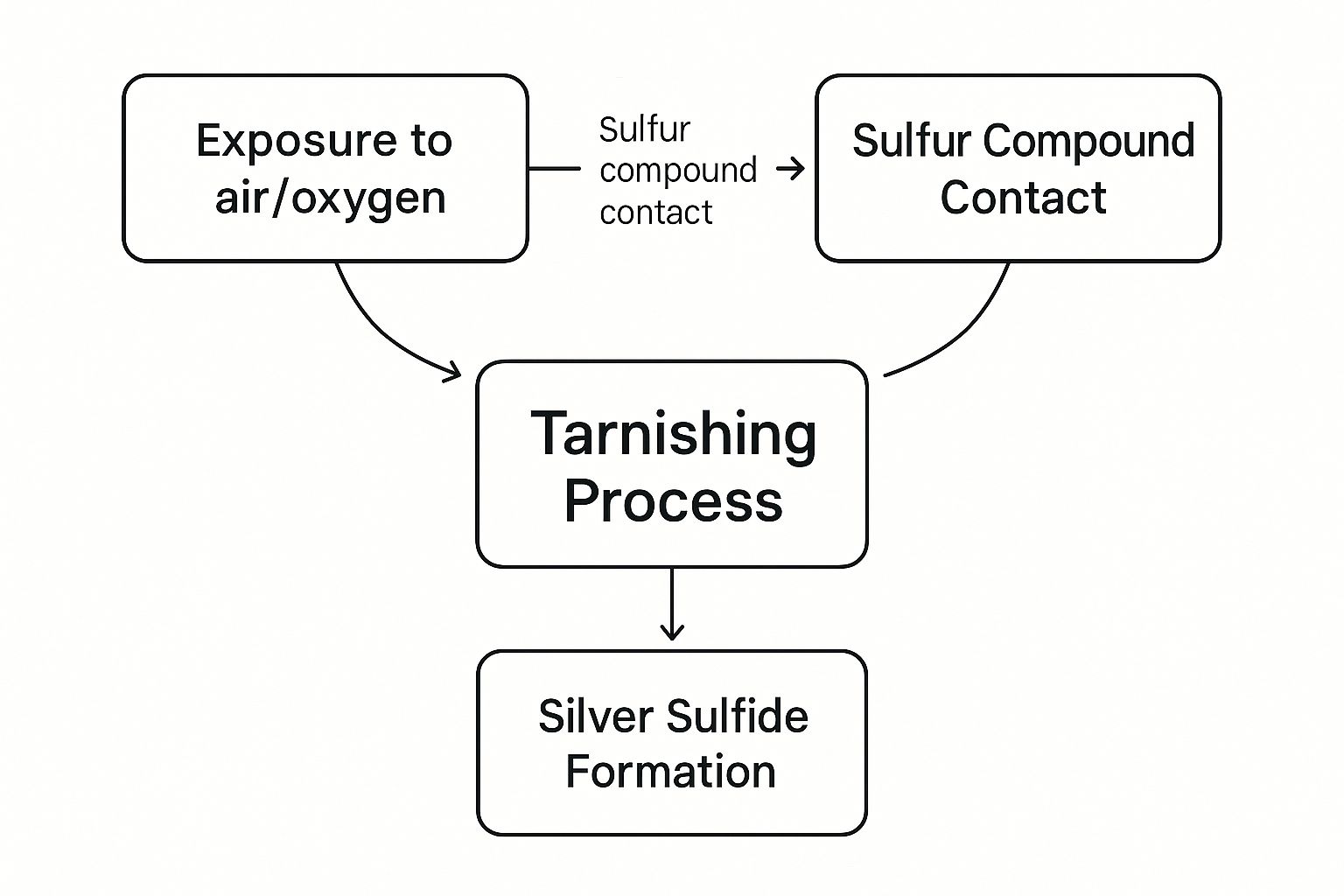
As you can see, tarnishing isn't random. It’s the direct result of silver reacting with elements in its immediate surroundings.
Surprising Sources of Sulfur in Your Daily Life
Knowing that sulfur compounds cause tarnish is the first step. The next is learning to spot where they hide in plain sight. You’d be surprised how many everyday things can expose your jewelry to sulfur, and being mindful of them is the best way to keep your pieces looking brilliant.
Here are some of the most common—and often surprising—sources:
- Foods: Some foods are naturally high in sulfur. If you're handling onions, garlic, eggs, or even mayonnaise, those compounds can transfer right onto your rings and bracelets.
- Textiles: It sounds cozy, but storing your jewelry in wool or felt is not a great idea. These materials can release sulfur gases over time.
- Personal Care Products: The lotions, perfumes, and creams you use every day often contain chemicals that can react with silver plating and accelerate discoloration.
- Water: Tap water, especially from a well, can have high levels of minerals and sulfur. And definitely take your jewelry off before hopping into a hot tub or swimming pool—the chlorine is extremely harsh on silver.
Key Insight: Tarnish on your silver-plated jewelry isn’t a mystery. It’s a predictable chemical reaction with the world around it. The good news is that you have a lot of control. By being mindful of these triggers, you can dramatically slow down the tarnishing process and keep your jewelry shining.
How to Keep Your Jewelry from Tarnishing
The good news about tarnish is that it’s just a chemical reaction. And because we know what causes it, we have the power to slow it way, way down. This isn’t about locking your favorite pieces away and never wearing them. It’s about building a few simple, thoughtful habits into your routine.
Think of these strategies as small rituals that protect your investment and keep your jewelry looking brilliant. Preventing tarnish really comes down to three things: when you wear it, how you store it, and what it’s exposed to. If you get these right, you’ll create a protective bubble around your accessories, shielding them from the elements that cause that frustrating discoloration.
Adopt Smart Wearing Habits
If you remember one thing, make it this: “last on, first off.” This simple rule is your single best defense against damage from everyday products.
- Last On: Always put your jewelry on after you’ve finished with lotions, makeup, hairspray, and perfumes. Give those products a minute to dry completely on your skin. This simple step minimizes direct contact with chemicals that can corrode the silver.
- First Off: Before you wash your hands, hop in the shower, or do your nightly skincare routine, take your jewelry off. Soap, cleansers, and even water can leave residue that speeds up tarnishing.
It also goes without saying, but always take off your silver-plated pieces before hitting the gym or jumping in a pool. The salts and acids in your sweat are a recipe for tarnish, and pool chlorine is incredibly harsh—it can cause noticeable discoloration almost instantly.
Master Proper Storage Techniques
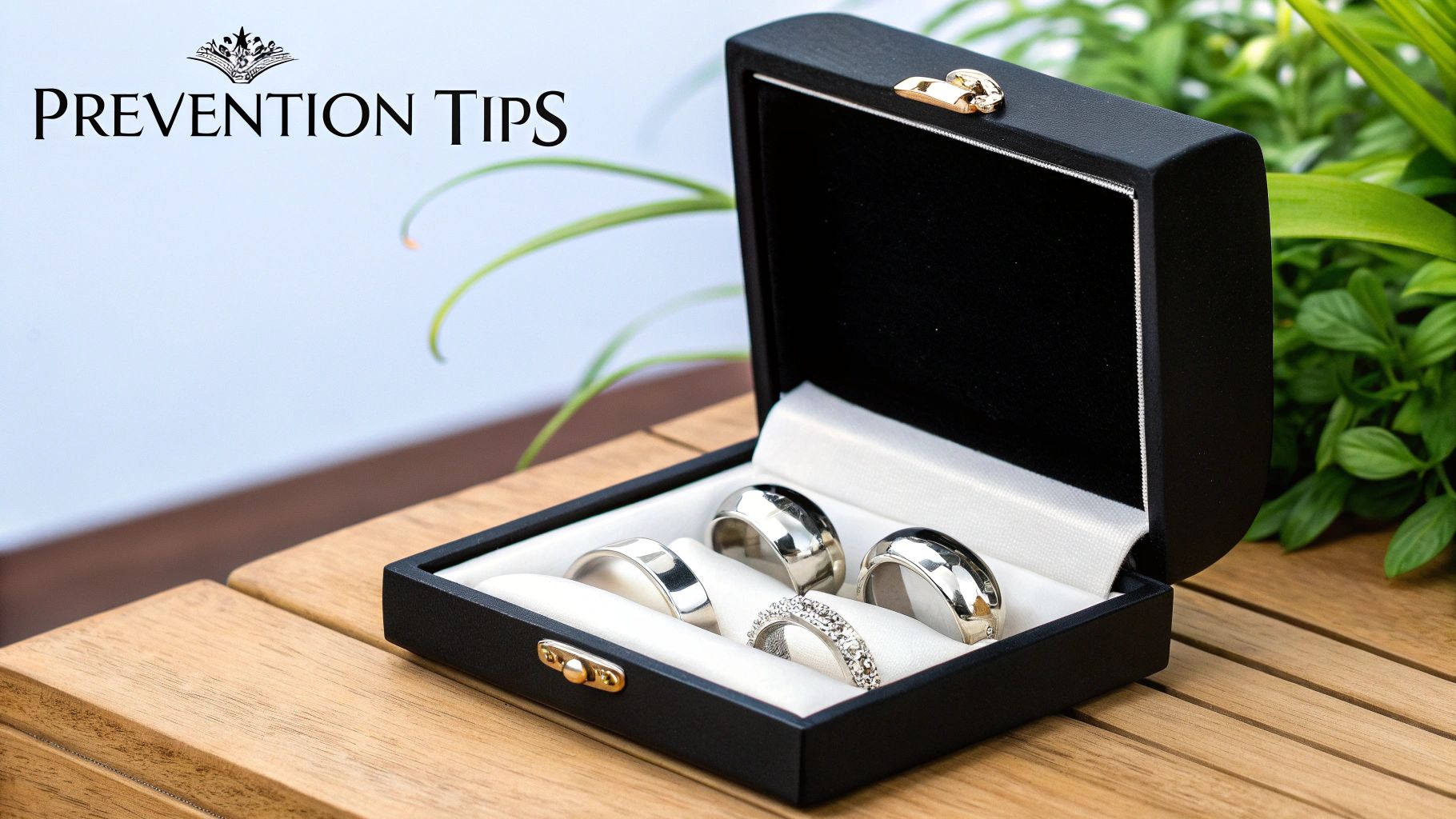
Where your jewelry lives when you’re not wearing it is just as crucial as how you wear it. Your main goal here is to cut off its access to air and humidity, which are the two key ingredients tarnish needs to form.
The Big Idea: Tarnish simply can't happen in a vacuum. By storing your jewelry properly, you're essentially hitting the pause button on the chemical reaction by removing the air and moisture it feeds on.
Here are a few easy and effective ways to do that:
- Airtight Containers: You don't need anything fancy. Small, sealable plastic baggies are a fantastic, budget-friendly choice. Just be sure to squeeze as much air out as possible before you seal them up.
- Anti-Tarnish Help: You can buy specially treated cloths or small paper strips to tuck into your jewelry box. These little wonders work by absorbing the airborne sulfur and other pollutants that cause tarnish.
- A Cool, Dry Place: The absolute worst place to store jewelry is a humid bathroom. Instead, opt for a dedicated drawer in your bedroom or a lined jewelry box kept in a consistently dry part of your home.
Be Mindful of Everyday Exposure
Even though silver is an excellent conductor, its beautiful surface is still susceptible to humidity and corrosive elements in the environment. Industry research confirms that proper storage in dry, low-humidity conditions can make a massive difference. For a deeper dive into how different environments affect various metals, you can learn more about how environmental factors affect electroplated metals at ProPlate.
Ultimately, your best defense is simply being aware of your surroundings. A little mindfulness goes a long way. For instance, if you're cooking with high-sulfur foods like eggs or onions, slip your rings off first. By combining these smart habits, you’ll dramatically extend the life and luster of your silver-plated treasures.
A Step-By-Step Guide to Safely Clean Tarnish
When you first spot that tell-tale shadow of tarnish on your silver-plated jewelry, your gut reaction might be to reach for a strong polish and start scrubbing. But hold on—that’s actually the fastest way to ruin your favorite piece for good. The silver layer is incredibly thin, and aggressive cleaning will strip it right off, exposing the base metal beneath.
The secret is to be gentle. This isn’t a deep-cleaning mission; it’s more like a delicate surface treatment. Think of it less like scouring a pan and more like carefully dusting a priceless antique. Your goal is simply to lift the tarnish away without disturbing the delicate silver plating it sits on.
The Gentle Cleaning Method
To safely bring back your jewelry's shine, all you need are a few basic household items. You can forget about those abrasive silver polishes or chemical dips made for solid sterling silver—they are way too aggressive for plated pieces.
Here’s your simple toolkit:
- A small bowl of lukewarm water
- A few drops of mild, phosphate-free dish soap
- A soft, lint-free cloth (a microfiber cloth or even an old cotton t-shirt is perfect)
- A separate dry, soft cloth for the final polish
This straightforward soap-and-water method is the gold standard for plated jewelry. It works wonders at removing skin oils and light tarnish without introducing harsh chemicals or abrasive textures that would scratch or wear down the plating.
Crucial Reminder: Never, ever use baking soda pastes, toothpaste, or commercial silver polishes on plated jewelry. While these are popular for solid sterling silver, their abrasive nature will act like sandpaper on the thin silver layer and cause permanent damage.
Just follow these easy steps:
- Create the Solution: Add a few drops of mild dish soap to your bowl of lukewarm water. Swish it around a bit to create some light, gentle suds.
- Soak Briefly: Place your jewelry in the soapy water and let it soak for about 5 to 10 minutes. This gives the solution time to gently loosen any surface dirt and early-stage tarnish.
- Gently Wipe: Take your piece out of the water and use your soft, lint-free cloth to gently wipe the surface. Pay a little extra attention to the tarnished spots, but remember to use a very light touch. No scrubbing!
- Rinse Thoroughly: Hold the jewelry under clean, lukewarm running water to wash away all the soap residue. This is a critical step because any leftover soap can leave a film and dull the shine.
- Dry and Buff: Pat the item completely dry with a clean, dry cloth. Once it's fully dry, you can take another soft cloth and give it a gentle buff to bring back its brilliant shine.
This gentle approach is usually all you need to handle light tarnish. For more stubborn discoloration or for insights into other materials, our guide on proven methods to clean 925 silver offers some valuable tips. Even though the methods for solid silver can be stronger, understanding the principles is still quite helpful. Likewise, if you're curious about techniques for different items, there’s a great resource for cleaning tarnished sterling silver jewelry that explores other approaches.
Why Quality Plating Matters for Longevity
 While it’s true that any silver-plated piece can eventually tarnish, it’s a mistake to think all plating is the same. The quality of that silver layer makes all the difference.
Think of it like painting a house. A quick, thin coat of paint might look good for a moment, but it’s not going to stand up to the weather. It will start to chip and peel away in no time. But a few expertly applied, thick coats? That creates a durable barrier that protects the wood underneath for years. The exact same principle applies to your jewelry.
A lot of fast-fashion jewelry uses what's called "flash plating," which is often less than 0.5 microns thick. That incredibly thin layer can wear away with just a little bit of friction, exposing the base metal underneath almost immediately.
Key Insight: A thicker, more robust plating—typically between 1 to 2.5 microns—creates a much stronger shield over the base metal. This is what really slows down the tarnishing process and protects your beautiful piece from the realities of daily wear.
Setting Honest Expectations
Here at Hidden Forever, our commitment is to create beautiful keepsakes that you can cherish. A piece with high-quality plating is absolutely designed to last, but it's important to remember that it isn't indestructible. Over time, that silver layer will naturally wear, especially on items that see a lot of contact, like rings.
For a deeper dive into this, we put together an expert guide that directly answers the question, "do silver plated rings tarnish?"
By starting with well-crafted jewelry and following the simple care tips in this guide, you’re giving your pieces the best possible chance to stay gorgeous for a very long time.
Of course! Here is the rewritten section, designed to sound like it's from an experienced human expert.
Your Silver Plating Questions, Answered
When you're investing in a beautiful piece of jewelry, it's natural to have questions about how to care for it. Let’s tackle some of the most common ones I hear about silver-plated pieces, so you can keep yours looking its best.
Can I Wear My Silver-Plated Jewelry in the Shower?
I get this one a lot. The short answer? It’s better if you don't. While a single accidental splash of water won't ruin it, the real problem is everything else that comes with showering—soaps, shampoos, and conditioners are full of chemicals that can accelerate tarnish.
Plus, the warm, steamy air in a bathroom is basically the perfect environment for that tarnish-causing chemical reaction to kick into high gear. Making a habit of taking your jewelry off before you hop in is one of the easiest, most effective ways to protect it.
How Long Does Silver Plating Last?
This really boils down to three things: the quality and thickness of the original plating, how often you wear it, and how you care for it. A well-made piece with a generous layer of silver can look great for years if you treat it right.
But remember, it is a layer. Constant friction from your skin, clothing, or just daily activity will eventually wear it down. That's why I always advise against wearing plated rings or bracelets during a workout, cleaning, or any kind of manual work.
A Quick Tip: Think of your silver-plated jewelry as you would a silk scarf or a great pair of heels—it's an accessory for adding that finishing touch, not something you'd wear to go hiking. Adopting this mindset makes all the difference in its longevity.
Is It Dangerous If My Jewelry Turns My Skin Green?
Seeing that dreaded green tint on your skin can be a bit startling, but rest assured, it’s not dangerous. The green isn't from the silver; it’s a tell-tale sign that the plating has worn through to the base metal underneath, which is usually copper.
When your skin’s natural oils and sweat react with the exposed copper, it creates a harmless green deposit. It's simply a chemical reaction. While it won't hurt you, it can be a nuisance, especially for those with sensitive skin. If this happens, it's a clear signal that the plating in that spot is gone.
Your most precious memories deserve to be held in something made with quality and care. At Hidden Forever, we craft each piece of projection jewelry with premium materials, ensuring your cherished moments shine brightly for years to come.


