

Ever pulled out a favorite silver necklace only to find it looking dull and dark? It’s a common frustration, but it’s not your fault. It’s a natural process called tarnishing, which happens when silver reacts with sulfur in the air.
Don't worry, though. This guide will walk you through proven, safe ways to clean your silver jewelry at home using things you probably already have in your kitchen.
Why Does Silver Jewelry Tarnish Anyway?
Before we jump into the "how-to," it helps to know what you’re up against. Tarnish is that dark, often black or grey, film that creeps over your sterling silver pieces over time. It's not dirt, and it's definitely not a sign of poor quality—it's just simple chemistry at work.
The reaction happens when silver, specifically the copper mixed into sterling silver (which is 92.5% pure silver), meets sulfur compounds floating around in the air. Everyday things like humidity, your favorite perfume, and even certain foods can speed this process up.
Thankfully, tarnish is just a surface issue. Unlike rust, which eats away at metal and causes real damage, tarnish can be polished away without harming the jewelry underneath.
What Makes Silver Tarnish Faster?
A few everyday culprits can cause your silver to lose its shine much quicker than you'd like. Knowing what they are is half the battle.
- Humidity and Moisture: Storing your jewelry in a steamy bathroom is a surefire way to invite tarnish. Moisture in the air is a major accelerator.
- Chemicals in Your Products: Think about your daily routine—perfumes, lotions, hairspray, and even household cleaners are loaded with chemicals that react with silver. A good rule of thumb is to make your jewelry the very last thing you put on.
- Your Own Body Chemistry: The natural oils and sweat on your skin can also contribute to tarnishing. That's why giving your pieces a quick wipe-down after you wear them is such a great habit to get into.
The best part? Tarnish is completely reversible. With the right techniques, you can safely lift that dark layer and bring back the brilliant shine of your treasured pieces.
This guide is all about sterling silver, but it's important to remember that silver-plated items need a much gentler approach. Our article on how silver-plated jewelry tarnishes explains this in more detail. We’ll cover methods for both delicate and heavily tarnished pieces, so you can restore that sparkle safely and effectively.
The First Step: Gentle Care for Light Tarnish
When your favorite sterling silver pieces start to lose their shine and look a little dull, don't reach for harsh chemicals just yet. The best approach is always the gentlest one first. This protects the finish, prevents unnecessary wear and tear, and is by far the safest method for routine cleaning, especially for your more delicate items.
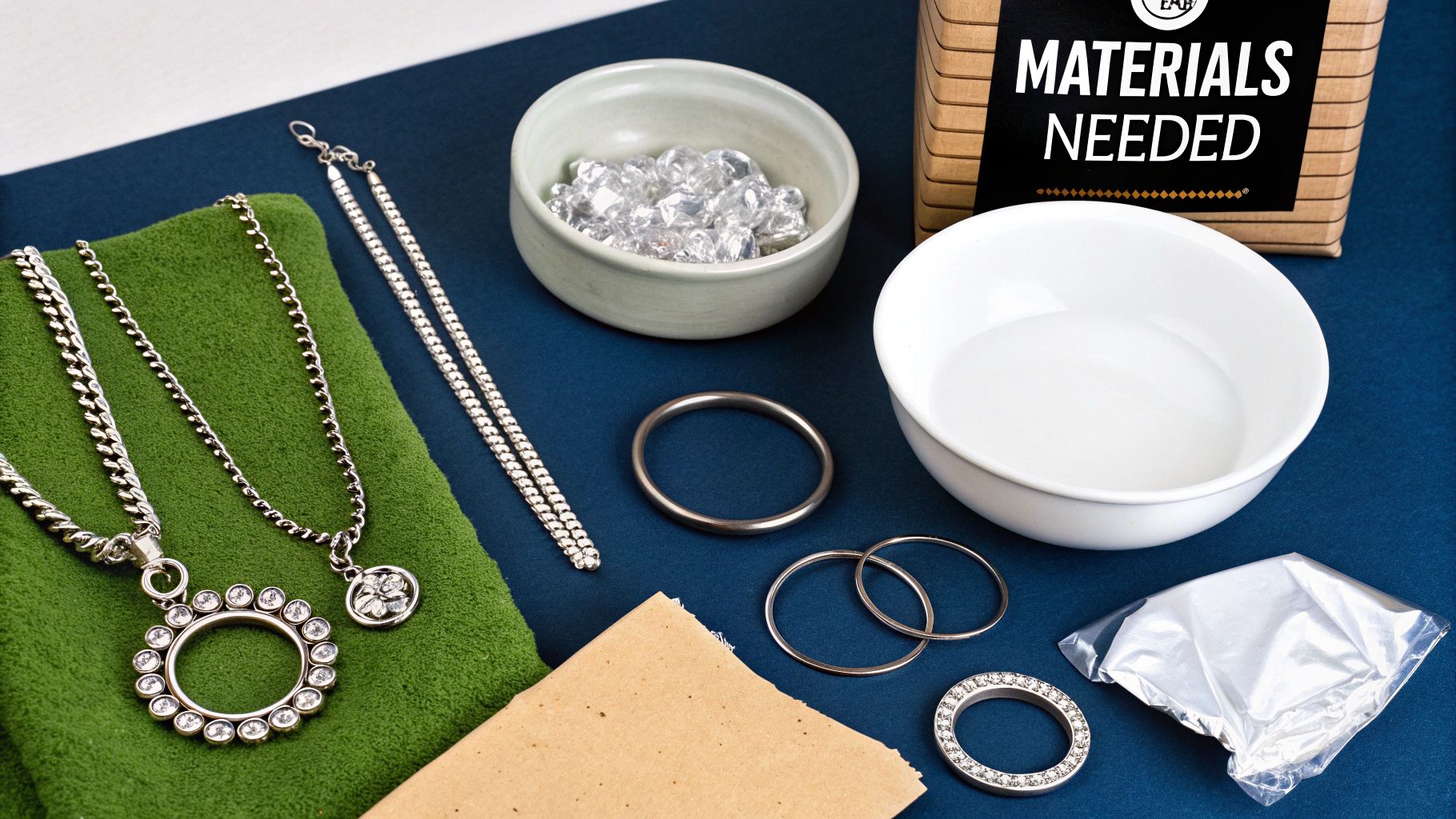
Start with a simple soap and water bath. The trick is to use just a few drops of a mild, phosphate-free dish soap in a bowl of warm water. Never use hot water, as the sudden temperature change can actually damage certain gemstones set in your jewelry.
Give your pieces a nice soak for about 5 to 10 minutes. This little bath is surprisingly effective at loosening up the everyday grime, oils, and lotion residue that cause that lackluster look.
Getting into the Details
Once the soak is done, it's time for a bit of hands-on work. For those tiny nooks and crannies—like in an intricate ring setting or between the links of a chain—a very soft-bristled toothbrush works wonders. An old, soft baby toothbrush is perfect for this.
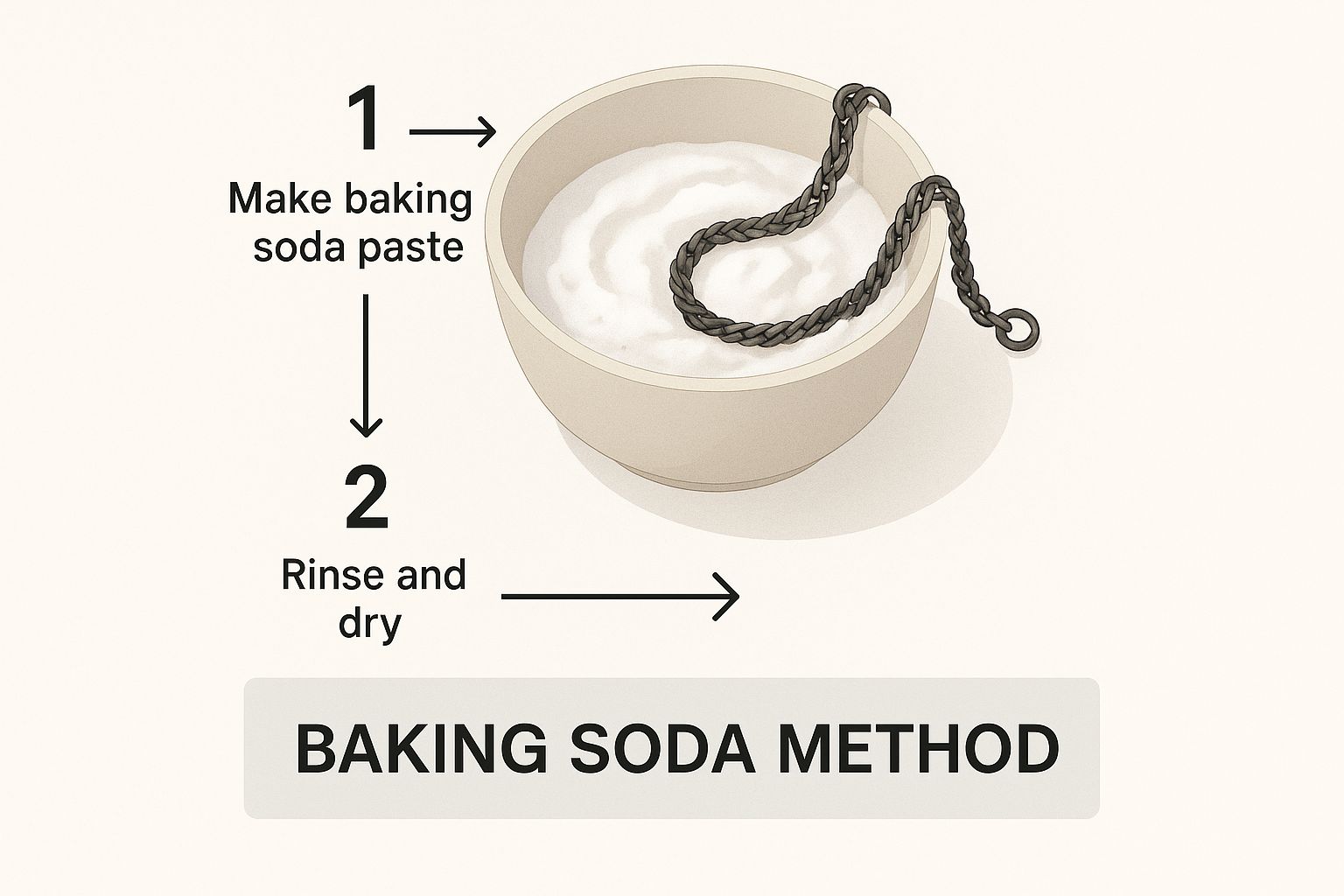
If you come across a few slightly more stubborn spots, a simple, non-abrasive baking soda paste can give you a little extra cleaning power without being too harsh.
- Make the Paste: Just mix a bit of baking soda with a few drops of water. You're looking for a consistency similar to toothpaste.
- Apply It: Use your fingertips or a soft cloth to gently rub the paste onto the silver. The key here is gently. You're trying to lift the tarnish, not scratch the metal.
- Rinse and Dry Thoroughly: Rinse the piece completely under cool running water. Now for the most crucial step: dry it immediately and thoroughly with a soft, lint-free cloth. Letting it air-dry is a recipe for water spots, which will undo all your hard work.
Keep in mind that silver-plated jewelry is a different beast—it only has a very thin layer of actual silver. While these methods are gentle, you need to be extra careful. You can learn all about it in our complete expert guide on what silverplate is and how to care for it.
Tackling Heavily Tarnished Silver Safely
Sometimes a simple polish just won't cut it. When your favorite silver pieces have developed that deep, stubborn, almost-black tarnish, it's time to bring out the big guns—and I don't mean harsh chemicals.
There's a fantastic little chemistry trick you can do right in your kitchen using just aluminum foil and baking soda. This isn't about scrubbing away the tarnish (and your silver with it!). Instead, this method creates a gentle electrochemical reaction that actually reverses the tarnishing process, lifting the discoloration off your jewelry and onto the foil.
The Foil and Baking Soda Bath
Ready to work some magic? First, grab a bowl and line it completely with a sheet of aluminum foil, making sure the shiny side is facing up.
Place your tarnished silver jewelry directly onto the foil so it's making good contact.
- Sprinkle a heaping tablespoon of baking soda over everything.
- Next, carefully pour in very hot water—just off a boil is perfect—until the pieces are fully submerged.
- Let it all sit for 5 to 10 minutes. You might even smell a faint sulfur-like odor, which is a great sign! It means the tarnish is leaving your silver for good.
Once the time is up, use tongs to carefully fish out your jewelry. Give it a good rinse under cool running water and then buff it dry with a soft, clean cloth. You'll be amazed at the difference.
As you can see, even intricate pieces like chains, which are impossible to polish by hand, come out looking brilliant with this simple soak.
A Quick Word of Caution: This technique is a lifesaver for solid sterling silver, but it's a definite no-go for certain pieces. Avoid this method if your jewelry features soft or porous stones like pearls, opals, or turquoise, as the heat and reaction can ruin them. It's also not for antique silver where a dark patina is part of its character and value.
If you're curious about other techniques, our guide offers several other proven methods to restore shine to 925 silver. You'll be sure to find the perfect fit for every piece you own.
Common Mistakes That Can Ruin Your Silver
Knowing what not to do when cleaning your silver jewelry is just as important as knowing the right way to do it. One wrong move with a seemingly innocent household product can cause permanent damage, turning what should have been a quick polish into a real headache.
Let's start with a big one: step away from the toothpaste. I know, it's an old "hack" you see everywhere, but it's a terrible idea. Most toothpastes contain tiny abrasive particles, like silica, designed to scrub tough tooth enamel. On a soft metal like silver, these act like fine-grit sandpaper, creating a web of microscopic scratches that will make your piece look dull and tired over time.
Harsh chemicals are another absolute no-go. Bleach and ammonia, for example, are incredibly corrosive to the alloys mixed into sterling silver. They can cause pitting and ugly discoloration that you simply can't polish away.
Abrasives and Unsuitable Materials
It’s not just the cleaners you have to worry about; the tools you use for wiping and polishing are a huge part of the equation.
- Paper Towels and Tissues: They feel soft to us, but their wood pulp fibers are surprisingly coarse. Using them to polish silver will leave behind a network of fine scratches. Stick with a soft, lint-free microfiber cloth instead.
- Abrasive Polishing Cloths: Not all cloths are made the same. Make sure you're using one specifically designed for silver, not a generic one that might be too rough.
There's a reason people are becoming more aware of proper maintenance. The global market for specialized gold and silver cleaners was valued at around USD 2.5 billion in 2023, and it's only expected to grow. This tells you that more people are ditching risky DIY methods for products they know are safe. You can see more on this market trend over at Dataintelo.
Key Takeaway: Treat your silver gently. To keep it looking beautiful for years, steer clear of abrasive materials and harsh chemicals like bleach, ammonia, and toothpaste that can permanently damage its delicate surface.
It's also worth remembering that different types of jewelry require different care. These tips are perfect for solid sterling silver, but plated pieces need a much more delicate touch. For more on that, take a look at our guide on caring for gold-plated jewelry, as many of the same principles apply.
Keeping Your Silver Sparkling for Longer
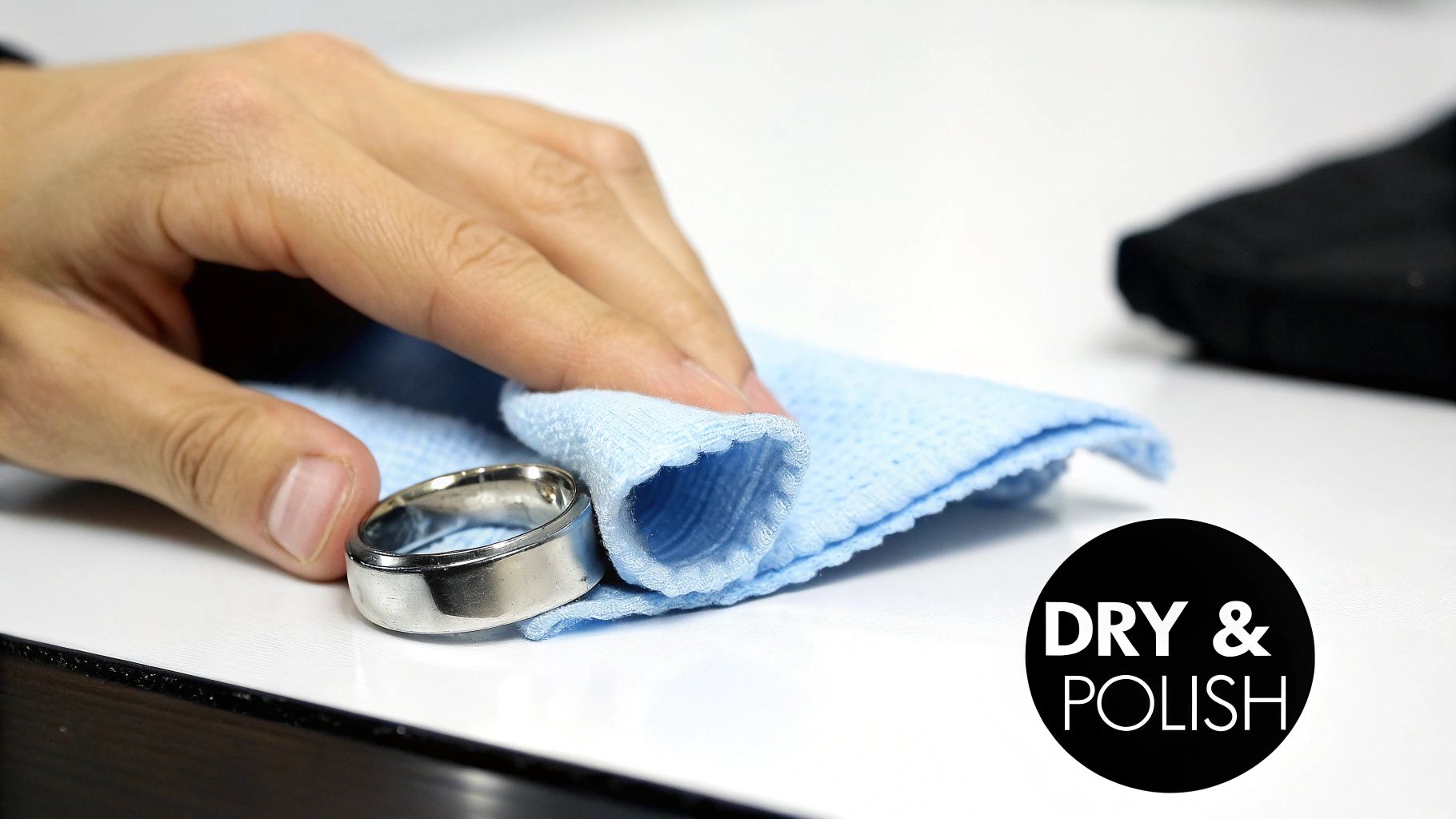
Now that your jewelry looks brand new again, you'll want to keep it that way. The real secret to less time spent cleaning isn't some magic potion—it's all about smart storage and a few simple daily habits. Honestly, preventing tarnish before it even starts is the best way to maintain that brilliant shine.
Think of tarnish as your silver’s reaction to its environment, especially to moisture and sulfur in the air. The mission, then, is to simply create a barrier between your silver and those elements. This is where good storage habits become your most powerful tool.
The single best thing you can do is store each piece of silver individually in something airtight. A small zip-top bag with all the air squeezed out is perfect, as is a dedicated anti-tarnish pouch.
This simple trick keeps airborne culprits away and has the added bonus of preventing your jewelry from scratching against other pieces. A fabric-lined jewelry box with separate compartments is another fantastic option for keeping everything safe, sound, and organized.
Simple Daily Habits for a Lasting Shine
Believe it or not, your daily routine can make a huge difference in how quickly your silver starts to look dull. Common chemicals in things we use every day—perfume, lotion, hairspray, even sunscreen—can speed up tarnishing.
Get into the habit of putting your jewelry on last, only after all your lotions and sprays have completely dried. It's also a good idea to take your silver off before you do certain things. Always remove it before:
- Hopping in the shower or going for a swim
- Doing the dishes or using household cleaners
- Working out, since sweat can also cause tarnish
It’s clear people care about keeping their nice things looking good. The market for jewelry cleaners is expected to hit USD 2.5 billion by 2033, which just shows how much we've shifted from just cleaning messes to actively preventing them. This focus on proactive care is why knowing these simple tips is so valuable.
If you're curious to learn more about the metal itself, our guide can help define 925 sterling silver and what makes it so special.
Your Silver Cleaning Questions Answered
When you're about to clean a piece of jewelry you love, it's completely normal to have a few questions. You want to get it right and bring back that amazing shine without accidentally causing any damage. Let’s walk through some of the most common concerns so you can feel confident taking care of your silver.
One of the first things people ask is how often they should be cleaning their silver. Honestly, there's no magic number. It really depends on how often you wear a piece and where you keep it.
My best advice? Deal with tarnish the moment you spot it. A little bit of discoloration is a breeze to handle compared to the heavy, dark buildup that can happen over time.
For your daily-wear pieces, just giving them a quick wipe with a polishing cloth when you take them off can make a huge difference. For a deeper clean, a gentle wash every few weeks usually does the trick. If you’ve rediscovered a long-lost piece that’s looking pretty dark, it might need a more intensive cleaning every few months to bring it back to life.
What About Silver-Plated Jewelry?
You can use these methods on plated items, but you have to be extremely careful. That shiny silver layer is paper-thin and can be rubbed right off with too much scrubbing or harsh chemicals. It's not solid sterling silver, so it just can't take the same kind of treatment.
If you're cleaning a silver-plated piece, stick with the gentlest method: the mild soap and warm water bath. If you’re tempted to try the baking soda and foil trick for some stubborn spots, limit the soak time to just a minute or two and keep a close eye on it. Absolutely avoid abrasive pastes or vigorous polishing—they’re notorious for stripping the plating completely.
Is It Safe to Clean Jewelry Set with Gemstones?
This is a big one, and the answer is: it depends entirely on the stone. Gemstones have wildly different levels of hardness and porosity.
- Hard, non-porous stones like diamonds, rubies, and sapphires are pretty tough. They can usually handle a quick, gentle dip in soapy water without any trouble.
- Soft or porous stones, on the other hand, are a different story. Think pearls, opals, turquoise, and coral. You should never submerge these in water or expose them to cleaning solutions. They can absorb liquids, which can lead to permanent damage, cloudiness, or discoloration.
For any jewelry with these more delicate stones, your best and safest bet is to use a polishing cloth only on the metal parts, carefully working around the gem. If you're ever unsure, don't risk it—take it to a professional jeweler.
Why Does My Silver Tarnish So Fast?
If you feel like you're fighting a losing battle against tarnish, a few things could be at play. High humidity is a major culprit, as moisture in the air speeds up the chemical reaction that causes tarnish.
Everyday chemicals are another big factor. Things like the chlorine in pools, harsh cleaning products, and even the sulfur in foods like eggs can accelerate the process. Even your own body chemistry—the oils and sweat from your skin—can contribute. To slow it all down, make a habit of storing your silver in a dry, dark place. An anti-tarnish bag or a lined jewelry box is your best friend here.
At Hidden Forever, we craft our pieces from high-quality 925 sterling silver to ensure your memories last a lifetime. Explore our collection of premium projection photo jewelry and find the perfect, personal keepsake today.


