

When it comes to caring for gold-plated jewelry, the secret is simple: be gentle. You want to keep it away from chemicals, moisture, and anything that might cause friction. I always tell people to remember one simple rule: last on, first off. Your jewelry should be the very last thing you put on after your lotions and perfumes, and the first thing you take off before you hop in the shower or get into bed. This little habit makes a huge difference in preserving that delicate finish.
What Is Gold Plated Jewelry, Really?
Before we dive into the how-to's, it’s super important to understand what you're actually working with. Gold-plated jewelry isn’t solid gold through and through. Instead, it’s made by electroplating a very thin layer of real gold onto a more affordable base metal, like brass, copper, or stainless steel.
This process is why you can get that gorgeous, luxurious gold look without the hefty price tag. But that thin golden layer is also its biggest weakness. It's not like solid gold; it can, and will, wear away over time, eventually showing the different metal underneath.
For a deeper dive, you can explore the differences between solid gold, gold filled, and gold plated jewelry in our detailed guide. It really helps put things in perspective.
To quickly see how these jewelry types stack up, here’s a simple table.
Gold Jewelry Types At-a-Glance
| Attribute | Gold Plated | Gold Filled | Solid Gold |
|---|---|---|---|
| Gold Content | Minimal (less than 0.05%) | Higher (5% or more) | Varies by karat (e.g., 14k is 58.3%) |
| Durability | Delicate; prone to wear | Durable; tarnish-resistant | Very durable; will not tarnish |
| Lifespan | 6 months to 3 years | Several years to decades | A lifetime |
| Care Level | High; requires gentle care | Low maintenance | Very low maintenance |
| Price Point | Most affordable | Mid-range | Highest price |
As you can see, gold-plated pieces are fantastic for their price but demand the most attention to keep them looking great.
Understanding Its Lifespan and Durability
How long your gold-plated pieces last really comes down to two things: the thickness of the plating and, more importantly, how you treat them. Sure, a thicker plating will naturally hold up better, but your daily habits are what truly make or break that brilliant shine. Without proper care, you might see fading and tarnishing much sooner than you'd like.
One of the most common mistakes I see is people treating their plated jewelry like it's solid gold. You have to remember, all that beauty is in a very delicate surface layer. It needs to be protected from scratches, chemicals, and general wear and tear to keep it from rubbing off.
The image below gives a great visual of how plating thickness directly impacts the average lifespan of a piece.
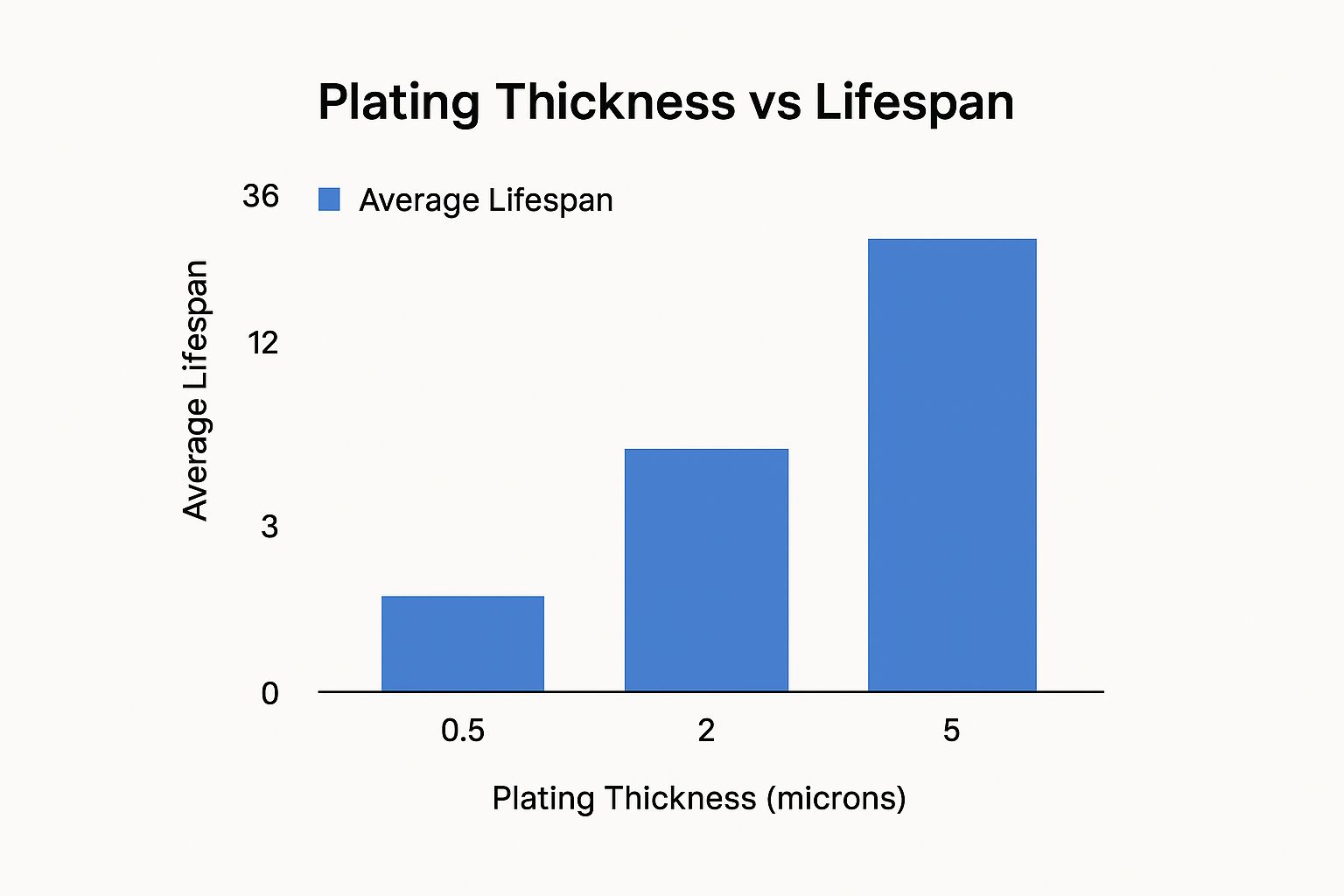
It’s clear that even a tiny bit more plating can significantly extend how long your jewelry looks brand new.
Ultimately, you can expect gold-plated jewelry to last anywhere from six months to three years, but that's a huge range. It all depends on how often you wear it and how well you maintain it. In fact, studies show around 68% of pieces will show noticeable wear within just six months if worn daily under normal conditions.
Since the gold layer makes up less than 0.05% of the item's total weight, it’s incredibly fragile. By understanding what it's made of, you’re in a much better position to protect your favorite pieces and keep them sparkling for as long as possible.
Daily Habits to Preserve the Gold Finish
Honestly, the best way to care for your gold-plated pieces isn't about deep cleaning. It's all about prevention. The small, mindful habits you weave into your day-to-day life make the biggest difference in keeping that beautiful finish looking new.
Think of your plated jewelry as the final flourish to your outfit. This brings me to the absolute golden rule of jewelry care: last on, first off. Your pieces should be the very last thing you put on before you head out the door and the first thing you take off when you get home.
The Last On, First Off Rule
One of the quickest ways to dull a gold finish is by exposing it to chemicals and water. Think about it—your daily routine is full of them. Cosmetics, perfumes, lotions, and even soaps can contain ingredients that react with the gold, speeding up the fading process.
This is why jewelry experts always advise putting on your products first. Let them dry, let them absorb, and then put on your jewelry. This simple act creates a crucial barrier, shielding the delicate plating from direct contact with anything that might harm it. For instance, give your hand lotion a few minutes to sink in before you slide on your favorite gold-plated rings.
The goal here is to treat your jewelry like the special accessory it is, not a permanent part of your skin. Making it the finishing touch protects it from the chemical assault of your morning routine and the wear-and-tear of winding down at night.
Activities to Avoid While Wearing Your Jewelry
Beyond your getting-ready routine, some everyday activities are secret saboteurs of your jewelry's shine. That thin layer of gold is susceptible to moisture, sweat, and friction, so it's smart to establish some "no-jewelry zones" for certain tasks.
Being mindful of these moments can dramatically extend the life of your most-loved pieces. A little prevention truly goes a long way. And if you do notice your jewelry getting a bit dirty, a gentle clean is all it needs. You can find our complete instructions in this guide on the best way to clean gold jewelry.
Here are the main situations to watch out for:
- Showering and Bathing: Water alone can get between the gold layer and the base metal, weakening the bond. When you add soaps and shampoos to the equation, you've got a recipe for tarnish and fading.
- Exercising: Your sweat is both acidic and salty, which can corrode that delicate plating over time. Not to mention, the friction from moving around can literally rub the finish right off, especially on rings and bracelets.
- Swimming: This is a big one. Pools and hot tubs are a hard no. Chlorine is an incredibly harsh chemical that will strip the gold layer faster than just about anything else.
- Household Chores: Think about the products you use to clean your house—bleach, ammonia, and other strong chemicals are disastrous for plated jewelry. Always slip your rings off before doing the dishes or scrubbing the bathroom.
A Gentle Cleaning Method That Actually Works
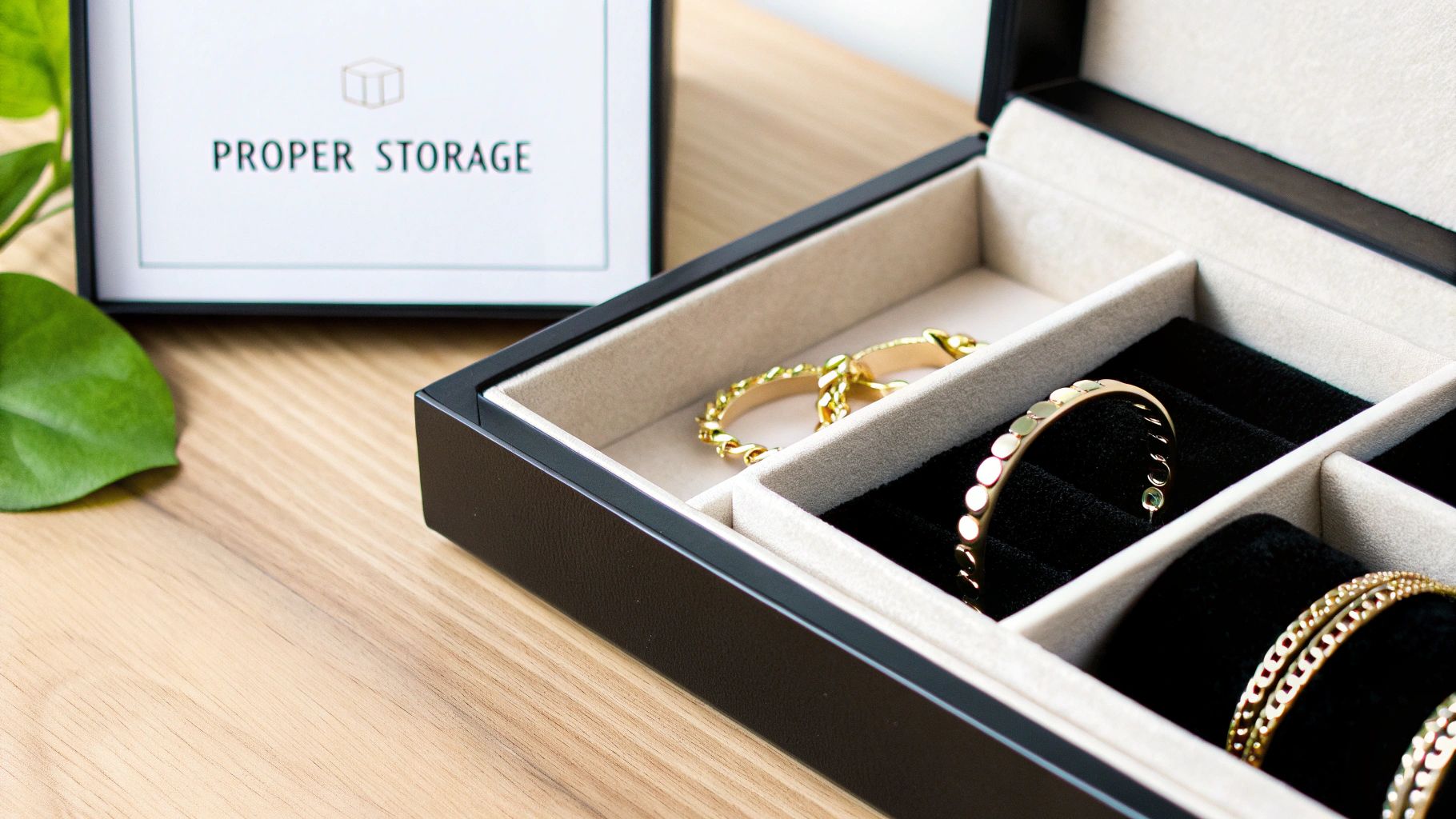
When your favorite gold-plated necklace starts looking a little dull, it's easy to think a strong cleaner is the answer. But hold on—that’s actually the fastest way to ruin the delicate finish. The real secret to restoring its shine is a gentle touch, not aggressive scrubbing or harsh chemicals that can strip the thin gold layer right off.
The best approach is surprisingly simple and uses things you probably already have at home. You can skip the special jewelry dips and abrasive polishing cloths, which are often way too harsh for plated pieces. A soft, methodical clean is all it takes to lift away the daily buildup of oils, dust, and lotions.
Creating Your Simple Cleaning Solution
First things first, forget about commercial cleaners or those DIY pastes with baking soda or vinegar. While great for other things, they can be far too abrasive for gold plating. All you really need is a bowl of lukewarm water and just a few drops of a mild, phosphate-free soap. A gentle dish soap works perfectly; just avoid anything with heavy-duty degreasers.
Stir the water until you have a light, sudsy solution. This simple mixture is powerful enough to dissolve grime but gentle enough that it won't corrode the finish. You're trying to clean, not strip.
Remember, you're trying to preserve that thin layer of gold. Harsh chemicals don't distinguish between dirt and gold—they’ll attack both, causing the piece to fade prematurely and revealing the base metal underneath.
This simple, mild soap solution is truly the safest and most effective way to care for your gold-plated jewelry at home.
The Right Tools and Technique
Once your cleaning bath is ready, it's all about using the right tools. Your everyday toothbrush is way too coarse and will leave tiny scratches all over the surface. Instead, grab one of these ultra-gentle options:
- A soft-bristled baby toothbrush: They're designed to be incredibly gentle, making them perfect for cleaning delicate jewelry without causing any damage.
- A cotton swab or Q-tip: These are fantastic for getting into small crevices and around stone settings without applying too much pressure.
- A microfiber cloth: Keep one of these handy for the final buff and polish after the piece is completely dry.
Let your jewelry soak in the soapy water for just a few minutes—five minutes is plenty. This gives the solution enough time to loosen dirt without over-exposing the piece. Then, use your soft brush or swab to gently clean the surface, paying a little extra attention to nooks and crannies where grime likes to hide. For more details on maintaining your jewelry's shine, check out this guide: https://hiddenforever.com/blogs/projection-jewelry/caring-for-gold-plated-jewelry.
The Most Important Final Step
After a gentle scrub, rinse the jewelry under clean, lukewarm running water. People often rush this part, but any leftover soap residue will leave a dull film on your piece, undoing all your hard work.
Finally, and this is the most critical step, you have to dry each piece thoroughly. Use a soft, lint-free cloth to gently pat it dry. Whatever you do, don't rub aggressively. Any moisture left behind can cause water spots or, even worse, speed up the tarnishing process. For an even deeper dive into specific techniques, consult this comprehensive guide on cleaning gold plated jewelry.
To be extra safe, let the piece air dry for at least an hour before you put it away. This ensures every last bit of moisture is gone before it's stored.
Smart Storage to Prevent Scratches and Tarnish
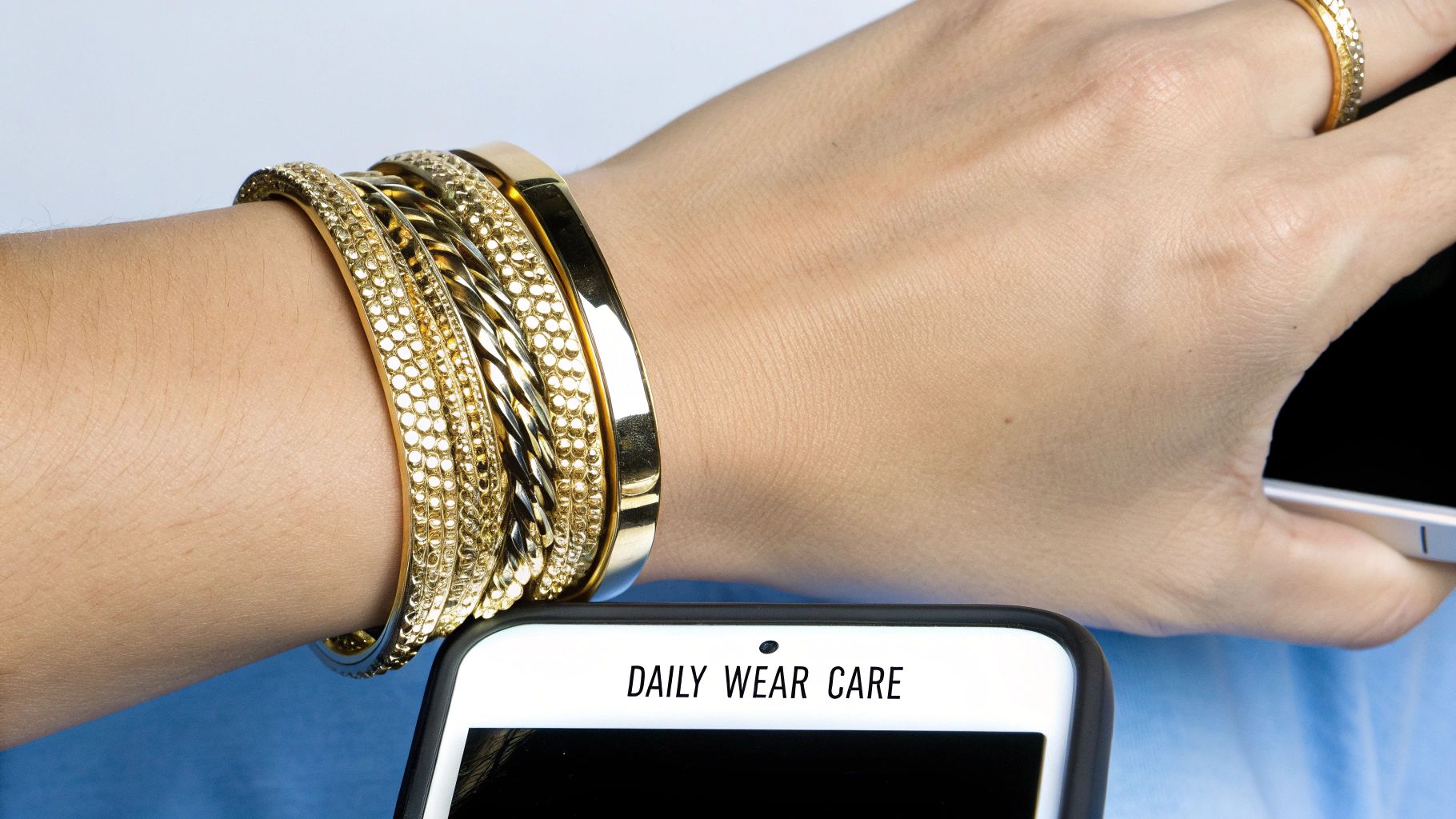
How you store your gold-plated jewelry is just as critical as how you clean it. We’ve all been guilty of tossing our accessories into a single drawer or bowl at the end of the day, but that’s a recipe for disaster. That jumbled pile leads to scratches, tangled chains, and tarnish as pieces constantly grind against each other.
The secret to smart storage is simple: separation is key. Every piece needs its own little home to prevent the friction that slowly wears away that delicate gold layer. You wouldn't park cars by stacking them on top of one another, and your jewelry deserves the same respect to avoid dings and damage.
Give Each Piece Its Own Space
For anyone serious about learning how to care for gold plated jewelry, giving each item its own home is non-negotiable. This one habit prevents the metal-on-metal contact that’s a primary cause of wear. Even subtle rubbing can degrade the plating over time, eventually exposing the base metal underneath.
Here are a few practical ways I’ve found to keep a collection safe and organized:
- Soft Pouches: A small fabric pouch is a lifesaver for individual items like earrings or a favorite pendant. They're cheap and provide a perfect soft cushion.
- Lined Jewelry Boxes: Invest in a box with built-in dividers and a soft lining like velvet or felt. These compartments are literally designed to stop rings, bracelets, and necklaces from ever touching.
- Anti-Tarnish Bags: For special-occasion pieces you don't wear often, specialized anti-tarnish bags or cloths are brilliant. They absorb airborne elements like sulfur that cause that ugly discoloration.
These aren't just about being neat; they are a core part of preserving the finish and extending the life of your accessories. Taking this step now saves you from the headache of premature fading and scratches later on.
The most common damage I see on plated jewelry doesn't come from wear, but from improper storage. A tangled mess of chains in a dish is literally sanding the gold finish off every time it's moved.
Create the Right Environment
Beyond keeping things separate, the environment where you store your jewelry plays a huge role. You’re looking for a cool, dry place away from any wild temperature swings. This is exactly why your bathroom countertop is one of the worst spots imaginable. The constant humidity from showers creates the perfect breeding ground for tarnish.
Direct sunlight is another enemy. Over time, prolonged exposure to UV rays can actually cause the color of the gold plating to fade. A dresser drawer in your bedroom, a closet shelf, or a dedicated jewelry armoire are all fantastic choices. By controlling the environment, you’re actively fighting the elements that want to dull your jewelry's shine, keeping every piece brilliant and ready to wear for years to come.
Recognizing Wear and When to Call a Professional
No matter how carefully you treat it, the thin layer of gold on your plated jewelry will eventually begin to age. It’s just the nature of the piece. But knowing what to look for can help you decide what to do next to save a piece you truly love.
The first clues are usually pretty subtle. You might catch a glimpse of the color looking a little less brilliant, or maybe a dull spot appears where it used to gleam. This happens most often on high-contact areas that are constantly rubbing against your skin, clothes, or desk.
Identifying the Telltale Signs
Think about the parts of your jewelry that see the most action—the bottom of a ring, the clasp on a necklace, or the side of a bracelet that rests on your wrist. These are the hotspots where wear and tear will almost always show up first. Catching it early gives you more options.
Keep an eye out for these specific signs:
- Fading Color: The warm, rich gold tone starts to look a bit washed out or pale in certain spots.
- Dull Patches: Areas that were once bright and reflective now seem flat and lackluster, even right after you’ve cleaned them.
- Base Metal Peeking Through: This is the most obvious sign. You might start to see a different color—often silver, copper, or a greyish tone—showing through. That’s the base metal, and it means the plating has completely worn off in that area.
Once the base metal is exposed, it can react with the oils on your skin and the air. That's what causes that dreaded green or black mark on your skin—it's not dirt, but a chemical reaction telling you the protective gold layer is gone.
When to Consider Re-Plating
When you start seeing significant wear on a piece you adore, you don't have to just tuck it away in a drawer. You have a great option: professional re-plating. A jeweler can use a process called electroplating to apply a brand-new layer of gold, completely restoring its original shine and color.
So, is it worth the cost? That really depends on the piece.
For a cheap, trendy item you bought on a whim, the cost to re-plate it might be more than what you paid for it in the first place. But for a unique design you can't find anywhere else or a gift that holds deep sentimental value, re-plating is a fantastic way to give it a second life. A good jeweler can make it look brand new again.
If you want to learn more about the different metals involved, our guide comparing sterling silver vs gold plated has some great information.
Got Questions? We’ve Got Answers on Gold Plated Jewelry Care
Even when you follow all the right steps, some tricky questions are bound to pop up. I get these all the time. Let's walk through some of the most common head-scratchers so you can feel confident you're giving your gold plated pieces the best care possible.
Can I Make My Gold Plated Jewelry Waterproof?
I wish I could say yes, but the honest answer is no—you can't make gold plated jewelry truly waterproof. Think of the plating as a beautiful but delicate skin over a base metal. Water is its worst enemy.
Showering, swimming, or even doing the dishes with your rings on will slowly but surely break down the bond between the gold layer and the metal underneath. Over time, that constant exposure will cause the plating to fade, tarnish, or even flake right off. A quick accidental splash won't be the end of the world, but making it a habit is a surefire way to ruin the finish. The golden rule is always to take it off before you get wet.
What’s really happening is that water works its way into tiny, invisible cracks in the gold plating. Once it reaches the base metal, it starts a process of oxidation from the inside out, causing the gold layer to bubble up and peel away.
Why Did My Gold Plated Ring Turn My Finger Green?
Ah, the dreaded green finger. It’s a classic sign that the gold plating has worn thin. That green or black mark isn't harmful, but it's a dead giveaway that the base metal—usually copper or a copper alloy like brass—is now in direct contact with your skin.
It’s just a simple chemical reaction between the metal and the natural oils and acids on your skin. When the protective gold barrier is gone, the exposed copper oxidizes, leaving that noticeable stain. This is your jewelry’s way of telling you its protective layer is compromised. To keep this from happening, be extra careful about keeping your pieces away from moisture, lotions, and perfumes.
Is It Worth It To Re-Plate a Piece of Jewelry?
This is a great question, and the answer really depends on how much you love the piece. Re-plating can be an amazing way to breathe new life into a favorite item, especially if it was a special gift or has a design you can’t find anywhere else. A good jeweler can apply a fresh, thick layer of gold and make it look like the day you first got it.
But for inexpensive, trendy pieces, the cost to re-plate might actually be more than what you paid for the item in the first place.
Here’s how I help people decide:
- You should probably re-plate it if: The piece has deep sentimental value, it’s from a high-quality designer, or it's a unique style you can't easily replace.
- You might want to skip re-plating if: It's a cheap, mass-produced accessory that you could buy again for less than the cost of the repair.
Your best bet is to get a quote from a jeweler you trust. Then you can weigh the cost against how much the piece means to you. And if you have other special items in your collection, you might find our guide on how to clean projection jewelry useful for keeping them in pristine condition, too.
At Hidden Forever, we believe your most precious memories deserve to be held in equally precious keepsakes. Discover our collection of personalized photo projection jewelry, crafted with care to keep your moments close. https://hiddenforever.com


