

Taking good care of your sterling silver comes down to a few simple things: regular cleaning, careful handling, and smart storage. The biggest thing to remember is that tarnish is a totally natural process, not a sign of a problem. A little consistent care is all it takes to keep it looking its best.
Understanding Your Sterling Silver
Before you can really take care of your silver jewelry, you have to know what it is. That gorgeous necklace or ring you wear all the time isn't made of pure silver, and that's actually a good thing. Pure silver is beautiful, but it's way too soft to hold up to daily life. It gets mixed with other metals to make it stronger.
That's where the term "sterling silver" comes in. It’s a specific, high-quality blend known for its beauty and ability to last.
What Does the 925 Hallmark Mean?
If you look closely at your jewelry, you'll likely find a tiny stamp that says “.925.” This is the hallmark of sterling silver, and it means the piece is made of 92.5% pure silver and 7.5% other metals (usually copper). This specific mix gives you the best of both worlds: the brilliant shine of silver with the strength needed for a piece you can wear every day.
That little stamp is your proof of quality. It’s a sign that you’ve got the real deal. In fact, experts agree that .925 sterling silver is often easier to care for than purer forms like .950, which tend to tarnish much faster.
If you want to get into the nitty-gritty of the standard, you can learn more about what defines 925 sterling silver in our detailed guide.
For those who are really curious, learning about identifying silver hallmarks can tell you a lot more, like where your piece came from and even when it was made.
Why Sterling Silver Tarnishes
It’s a common myth that tarnish means your silver is cheap or low-quality. The truth is actually the complete opposite. Tarnish is just a natural chemical reaction that happens when silver comes into contact with sulfur compounds in the air we breathe. This reaction forms a thin, dark layer on the surface called silver sulfide.
This reaction is entirely normal and expected with genuine sterling silver. It proves that your piece contains real silver, which is reactive by nature. The presence of tarnish is a sign of authenticity, not a flaw.
Once you understand that tarnish is just a part of owning real silver, caring for it becomes much less intimidating. Every cleaning method and storage tip is designed to do one of two things: slow that reaction down or safely remove the tarnish that has already formed. You're not fighting a defect—you're just managing a natural process, which is the key to keeping your jewelry brilliant for years to come.
A Simple Daily Care Routine for Silver
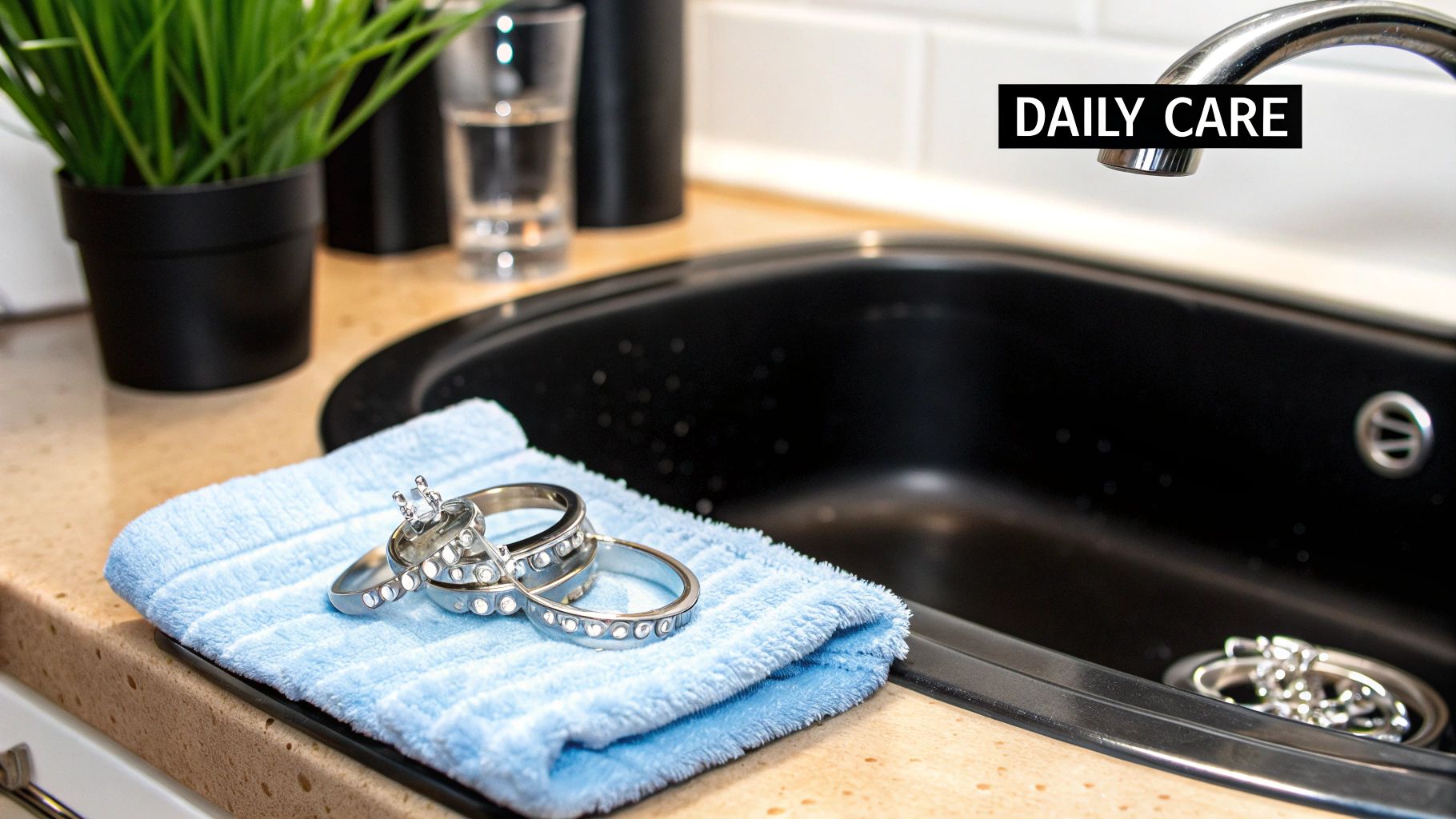
The real secret to keeping silver brilliant isn't about those intense, once-in-a-while polishing marathons. Not at all. It’s all about the small, consistent habits that shield your jewelry from the things that cause tarnish in the first place. A simple daily routine is genuinely your best defense.
Think of it like preventative care. By taking just a minute or two each day, you drastically cut down on the need for deep cleaning later. It’s the classic "work smart, not hard" approach to keeping your favorite pieces looking brand new.
Adopt the Last On, First Off Rule
If there's one habit to start today, make it this: the “last on, first off” rule. It’s simple. Your sterling silver jewelry should be the absolute last thing you put on when getting ready and the very first thing you take off when you're done for the day.
But why is this so crucial? Because the biggest enemy of silver is chemical exposure from products we use every single day. Things like hairspray, perfume, lotions, and even hand sanitizer can quickly stain or corrode the metal's surface. In fact, just putting your jewelry on after applying these products dramatically reduces harmful contact, potentially extending its life by years.
This simple change in your routine protects your pieces from a direct chemical assault that can cause irreversible damage.
The Power of a Post-Wear Wipe Down
Once you've taken off your jewelry, give each piece a quick, gentle wipe with a soft, dry cloth. A microfiber cloth or a dedicated jeweler’s cloth is perfect for this. It only takes a few seconds, but this little step removes the oils, sweat, and moisture that build up while you wear it.
Those substances contain compounds that react with silver and speed up the tarnishing process. A quick wipe essentially hits the reset button, leaving your jewelry clean and dry before you put it away. It’s a small habit that makes a huge difference over time. If you want to dive deeper into why some metals react this way, our guide on silver vs silver-plated jewelry offers some great insights.
A daily wipe-down is the single most effective action you can take to slow the formation of tarnish. It removes the primary catalysts—moisture and oils—before they have a chance to react with the metal.
Know Which Chemicals to Avoid
While everyday cosmetics can cause problems, some household chemicals are just plain destructive to sterling silver. It’s absolutely critical to take off your jewelry before you go anywhere near them.
Common Culprits to Avoid:
- Chlorine: Found in swimming pools and hot tubs, chlorine causes immediate and severe discoloration. It’s a definite no-go.
- Bleach: This household cleaner is incredibly harsh and can permanently pit and stain your silver.
- Ammonia: Often found in glass cleaners, ammonia is far too abrasive for sterling silver.
- Sulfur: Be mindful of contact with sulfur-containing things, like certain foods (eggs, onions) or even wool.
By weaving these simple actions into your daily rhythm, you build a protective shield around your sterling silver. This proactive care ensures your cherished pieces, especially delicate Hidden Forever projection jewelry, stay radiant and beautiful with very little need for heavy-duty cleaning.
Safe and Effective Silver Cleaning Methods
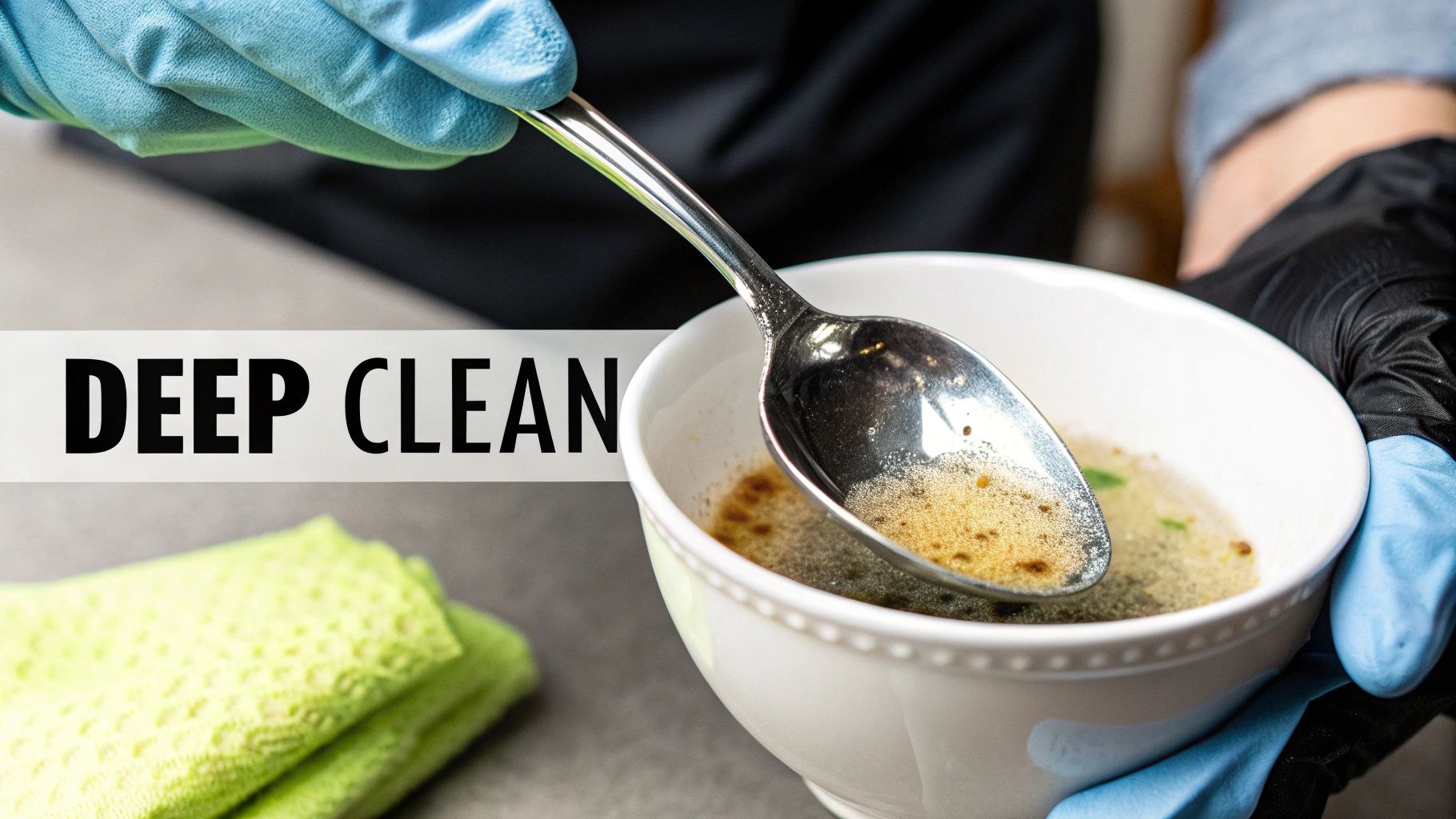
When you see that first hint of tarnish, the goal is always to remove it gently without scratching the beautiful metal underneath. It's easy to reach for something harsh, but that can turn a simple clean-up into a permanent mistake. I’ve learned over the years that the best techniques are usually the simplest ones, often using things you already have in your kitchen.
For everyday grime or very light tarnish, your first and best option is a classic soap and water bath. This is my go-to for pieces I wear all the time. It’s incredibly gentle and safe for almost any sterling silver piece, even those with intricate designs.
The Gentle Soap and Water Method
All you need is a small bowl of warm water with a few drops of mild, phosphate-free dish soap. Let your silver soak for just a few minutes to loosen things up.
If you need to get into tiny crevices, grab a super soft-bristled baby toothbrush or even a clean, soft makeup brush to gently scrub the piece. Once you're done, rinse it well with cool water and carefully pat it dry with a microfiber cloth.
A Quick Word of Warning: Never, ever use paper towels or tissues to dry your silver. They feel soft, but their fibers are actually abrasive and will leave tiny scratches over time, dulling that gorgeous shine. Stick to microfiber or a proper jeweler's cloth.
Tackling Tarnish With a DIY Paste
What about that more stubborn tarnish that soap and water won't touch? Before you reach for the heavy-duty stuff, try a simple DIY paste. It gives you a bit more cleaning muscle without the risk of harsh chemicals.
All you need to make it is:
- Baking soda
- Water
Just mix about two parts baking soda with one part water until you get a thick paste. Dab a little onto the silver with your fingers or a soft cloth and rub gently in a straight line—not in circles. For detailed spots, that soft toothbrush comes in handy again. Rinse it completely, and dry it like you mean it. We dive even deeper into this method in our guide on how to clean silver jewelry at home.
When to Use Commercial Silver Polishes
I think of commercial polishes as the "big guns." They're fantastic for removing heavy tarnish but can be a bit too aggressive for regular use. Save them for those pieces you found at the back of a drawer that haven't seen daylight in years.
If you go this route, always pick a high-quality, non-abrasive polish made specifically for sterling silver and follow the directions perfectly. These products work by removing a minuscule layer of silver to get to the shiny metal underneath, so overusing them can literally wear your jewelry away over the decades. For a broader look at different approaches, there are some great resources that explore other effective methods for cleaning tarnished jewelry.
So, you’ve given your sterling silver a brilliant clean. What now? The way you store your jewelry from this point on is your best line of defense against future tarnish. Honestly, most people underestimate just how critical proper storage is—it’s every bit as important as the cleaning process itself.
The mission is simple: cut off the chemical reaction that causes tarnish before it even starts.
Tarnish is just a fancy word for the result of silver reacting with sulfur in the air. Add a little moisture to the mix, and the process speeds up dramatically. That’s why leaving your favorite necklace on the bathroom counter or sitting out on a dresser is basically an invitation for discoloration. In fact, I've seen jewelry stored in humid places tarnish up to 30% faster than pieces kept in a dry, sealed spot.
Finding the Right Home for Your Silver
The secret to stopping tarnish in its tracks is limiting your silver’s exposure to open air. You don’t need an elaborate, expensive setup to do this. A few simple things work wonders. An airtight container—whether it's a dedicated jewelry box with a tight-fitting lid or even a humble Ziploc bag—can be incredibly effective.
For an extra layer of care, I always recommend wrapping each piece individually in a soft, acid-free cloth before you put it away. This stops your jewelry from scratching against each other. It's especially crucial for delicate items like our Hidden Forever projection jewelry, where that central lens needs to stay flawless. Storing pieces separately also means no more tangled chains or damaged details.
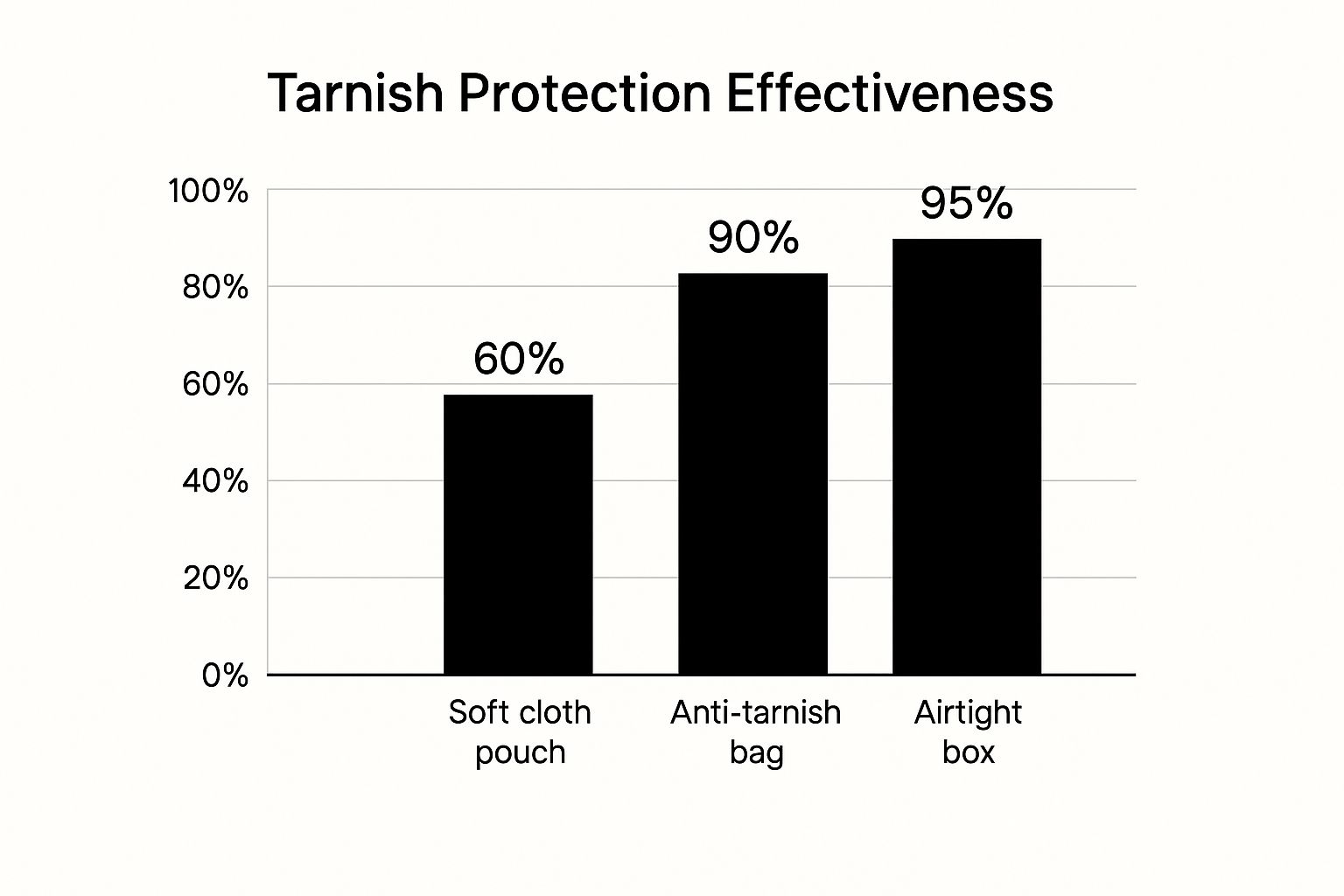
As the visual shows, just moving from a basic pouch to an airtight container gives you a huge advantage in the fight against tarnish.
Smart Add-Ins for Lasting Shine
Want to take your storage game to the next level? You can actively combat the two main enemies of silver: air and moisture. Here are a couple of practical additions I swear by:
- Anti-Tarnish Strips: These are little paper tabs treated to absorb airborne sulfur. Just tuck one into your jewelry box or bag, and it goes to work neutralizing the very pollutants that cause your silver to darken.
- Silica Gel Packets: You know those little white packets you find in new shoe boxes or purses? Don't toss them! They are fantastic moisture absorbers. Pop one inside your storage container to keep the environment perfectly dry.
Thinking about where to store your silver? Let's quickly compare some common options.
Comparing Sterling Silver Storage Options
This table breaks down a few popular storage methods, looking at how well they prevent tarnish and the good and bad of each.
| Storage Method | Tarnish Prevention Level | Pros | Cons |
|---|---|---|---|
| Open Jewelry Tray | Very Low | Easy access; displays jewelry nicely. | Maximum exposure to air and moisture. |
| Fabric Pouch | Low | Prevents scratches; good for travel. | Not airtight; offers minimal tarnish protection. |
| Lined Jewelry Box | Medium | Good organization; soft lining prevents scratches. | May not be fully airtight; tarnish can still occur. |
| Airtight Container | High | Excellent tarnish prevention; keeps moisture out. | Less decorative; can be inconvenient for daily wear. |
| Box with Strips | Very High | Actively absorbs tarnish-causing elements. | Strips need periodic replacement (every 6-12 months). |
Ultimately, combining a few of these methods—like placing your pieces in a pouch inside an airtight box—gives you the best of all worlds.
The golden rule I always tell people is to find a cool, dark, and dry spot for your silver. A bedroom drawer is a far better choice than a steamy bathroom or a sunny windowsill.
By making these simple storage habits part of your routine, you create a safe haven for your silver. This approach is particularly important for preserving pieces that are more sensitive to their environment. If you're curious about how other metals hold up, you might find our article on whether silver-plated jewelry tarnishes helpful.
Caring for Silver With Gemstones or Special Finishes
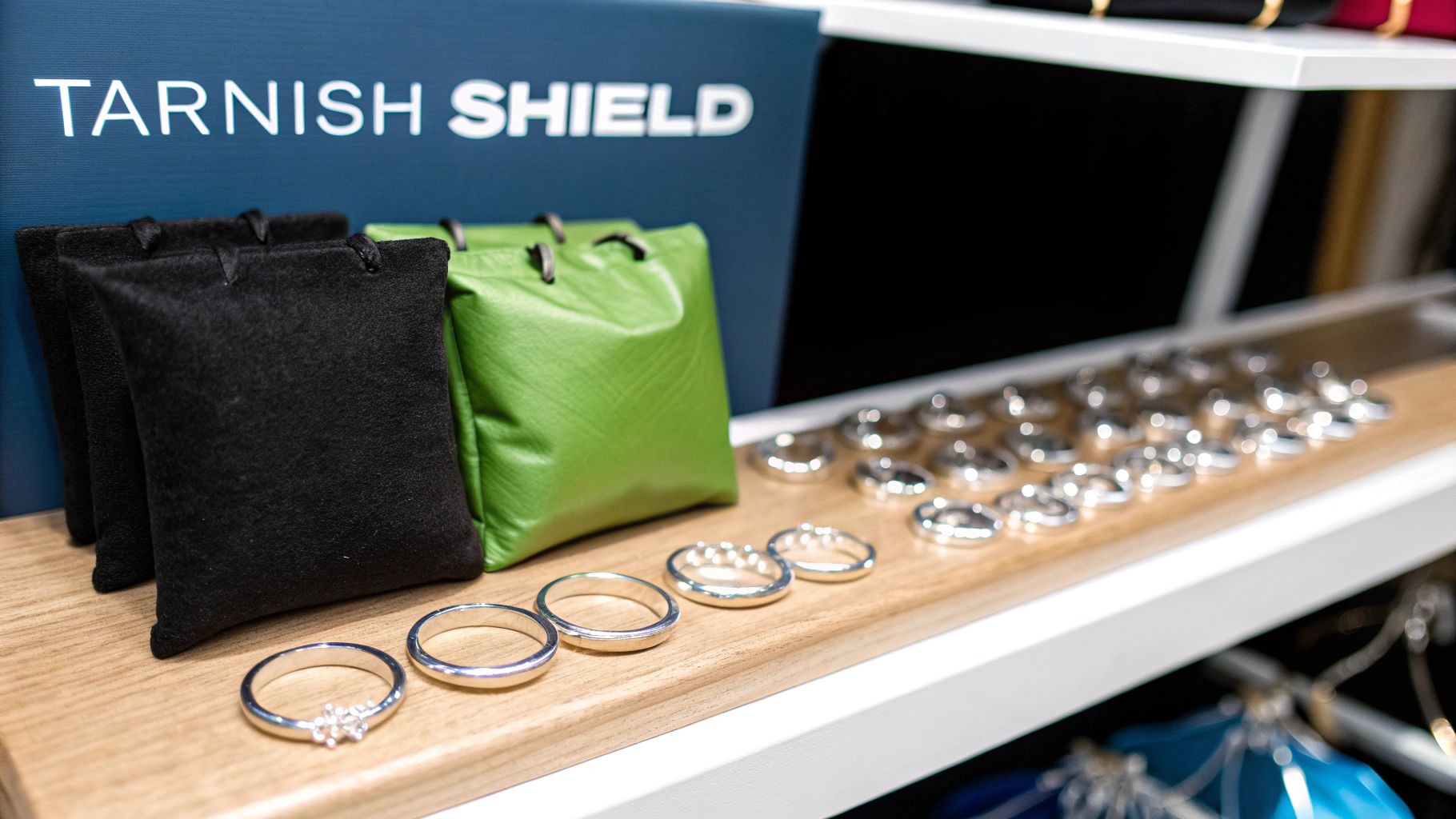
While standard cleaning methods are great for plain sterling silver, the rules change completely when your jewelry has other elements in the mix. Gemstones, special finishes, and unique features like our projection lenses require a much more delicate touch. A one-size-fits-all approach can easily damage these special details, turning a well-intentioned cleaning session into a heartbreaking mistake.
The trick is to always cater to the most fragile part of the piece. If you have a necklace with soft, delicate pearls set in sturdy silver, you clean it as if the entire piece is as fragile as the pearls. This careful mindset is the secret to preserving the beauty of your most cherished items, ensuring every detail stays perfect.
Handling Jewelry with Gemstones
It's surprising how sensitive many gemstones can be. Porous stones like pearls, opals, turquoise, and coral are especially vulnerable; they can absorb chemicals from cleaners, which can cause permanent discoloration or dull their shine. Even something as seemingly gentle as a baking soda paste can be abrasive enough to leave micro-scratches on these softer gems, ruining their beautiful luster.
For these pieces, you should always reach for the gentlest method possible. A soft cloth, slightly dampened with a little warm water, is usually all you need to clean the silver setting. Just carefully wipe around the stone, making sure to avoid direct contact with it.
Safe Cleaning for Specific Stones:
- Porous Stones (Pearls, Opals, Turquoise): Stick to a barely damp, soft cloth on the metal only. You should never soak these pieces.
- Hard Stones (Diamonds, Sapphires): These are much tougher. They can handle a gentle wash with some mild, phosphate-free soap and warm water. A very soft brush can help you clean around the setting.
Preserving Oxidized and Antiqued Finishes
You know those beautiful sterling silver pieces where some areas are intentionally darkened to make the details pop? That’s called an oxidized or antiqued finish. Over-polishing or using an abrasive cleaner on these items is a huge no-no—it will strip away that gorgeous contrast and effectively erase the design.
When cleaning oxidized jewelry, the goal is just to brighten the raised surfaces while leaving the recessed, darker areas untouched. Your best friend here is a silver polishing cloth. Use it to gently buff only the high points of the design. This will lift any tarnish and bring back the shine without destroying the piece's unique character.
When you're caring for jewelry with special finishes, remember that less is always more. You want to enhance the beauty that's already there, not scrub it until it's uniformly bright. Aggressive cleaning can remove the very details that made you fall in love with the piece.
Special Care for Projection Lenses
Our Hidden Forever jewelry has a truly unique feature at its heart: the projection lens. This little window holds a precious memory, and it's vital to protect it from scratches, smudges, and chemical damage.
Never, ever submerge your projection jewelry in any kind of cleaning solution. The focus should be on cleaning the sterling silver frame around the lens. Take a soft, dry polishing cloth and gently buff the metal. If the silver needs a bit more work, you can slightly dampen a Q-tip with water and carefully trace the frame, making absolutely sure no moisture gets on the lens itself.
For those of you who also have gold-plated items in your collection, you'll find that many of these gentle principles apply. You can learn more in our guide on caring for gold-plated jewelry.
Common Questions About Sterling Silver Care
Even when you've got your daily care and cleaning routine down, you're bound to run into a few tricky situations. Knowing how to look after sterling silver is one thing, but knowing what to do when something unexpected happens is another. I get asked a lot of the same questions, so I've gathered them here to give you some clear, confident answers for those little challenges.
Think of this as your go-to guide for the nuances of silver care. We'll cover everything from how often you should be polishing to whether that heavily tarnished family heirloom is a lost cause.
How Often Should I Polish My Silver?
This is the big one, and the honest-to-goodness answer is: it really depends. There's no one-size-fits-all schedule. How often you need to polish comes down to how you wear your jewelry and where you keep it when you're not.
If you're diligent about the "last on, first off" rule and store your pieces in an airtight bag, you might only need to give them a quick polish a couple of times a year. On the other hand, if a favorite piece is constantly exposed to the elements (or, let's be real, your perfume), you might find yourself polishing it monthly.
The best tool you have is your own eyes. Just polish your silver when it starts looking a little dull or you notice the first faint hints of yellow or brown tarnish. A little proactive polishing is always easier than trying to restore a piece that's gone completely dark.
Can I Put My Silver in the Dishwasher?
Ah, the great debate. You'll find people on both sides of this argument, and they're passionate about it. Some folks swear by putting their sterling silver flatware in the dishwasher, saying it’s the only way they’ll actually use and enjoy it every day.
But there are some serious risks involved. Most dishwasher detergents are pretty harsh and often contain citrus or phosphates, which can really mess with the silver's finish. The high heat of the drying cycle can also speed up tarnishing, especially on pieces with lots of little nooks and crannies.
My personal advice? Definitely avoid the dishwasher for jewelry. It’s just not worth the gamble with delicate items, especially for something like a Hidden Forever necklace where the projection lens could be permanently fogged or damaged. If you must for flatware, be incredibly careful and only use a gentle, citrus-free detergent.
What's the Best Way to Handle Severe Tarnish?
We've all been there. You find a piece you forgot about, tucked away in the back of a drawer, and it’s turned almost completely black. The good news is, you can almost always bring it back. Your first instinct might be to grab a brush and scrub for dear life, but that's the absolute worst thing you can do.
When you're dealing with heavy-duty tarnish, your best friend is a high-quality, non-abrasive commercial silver polish. These cleaners are made specifically to dissolve those thick layers of silver sulfide without scratching the metal underneath. Just apply the polish with a soft cloth, using gentle, straight back-and-forth motions. It might take a couple of rounds, but a little patience will get you there.
When Should I Take My Silver to a Professional Jeweler?
Most of the time, you can handle silver care right at home. But there are definitely moments when it’s smarter to call in an expert.
You should think about seeking professional help if:
- Your piece has really intricate details or delicate gemstones that you’re nervous about damaging.
- The item is a valuable antique or has major sentimental value.
- You've tried all the gentle home methods on heavy tarnish and it’s just not budging.
- The piece itself is damaged—think broken clasps, deep scratches, or dents.
A professional jeweler has the right tools and, more importantly, the experience to clean and restore your silver safely. They'll make sure your most precious items get the expert care they deserve.
Your cherished memories deserve to be held in something just as precious. At Hidden Forever, we craft beautiful sterling silver jewelry that keeps your favorite photo close to your heart, ready to be revealed with a touch of light. Discover the perfect piece to tell your story at hiddenforever.com.


