

Absolutely, silver plated jewellery does tarnish. Since that gorgeous shine comes from a very thin layer of genuine silver, it's bound to react with sulfur in the air and slowly darken. The good news is, how quickly this happens and how you manage it is largely within your control.
Understanding Why Silver Plated Jewellery Tarnishes
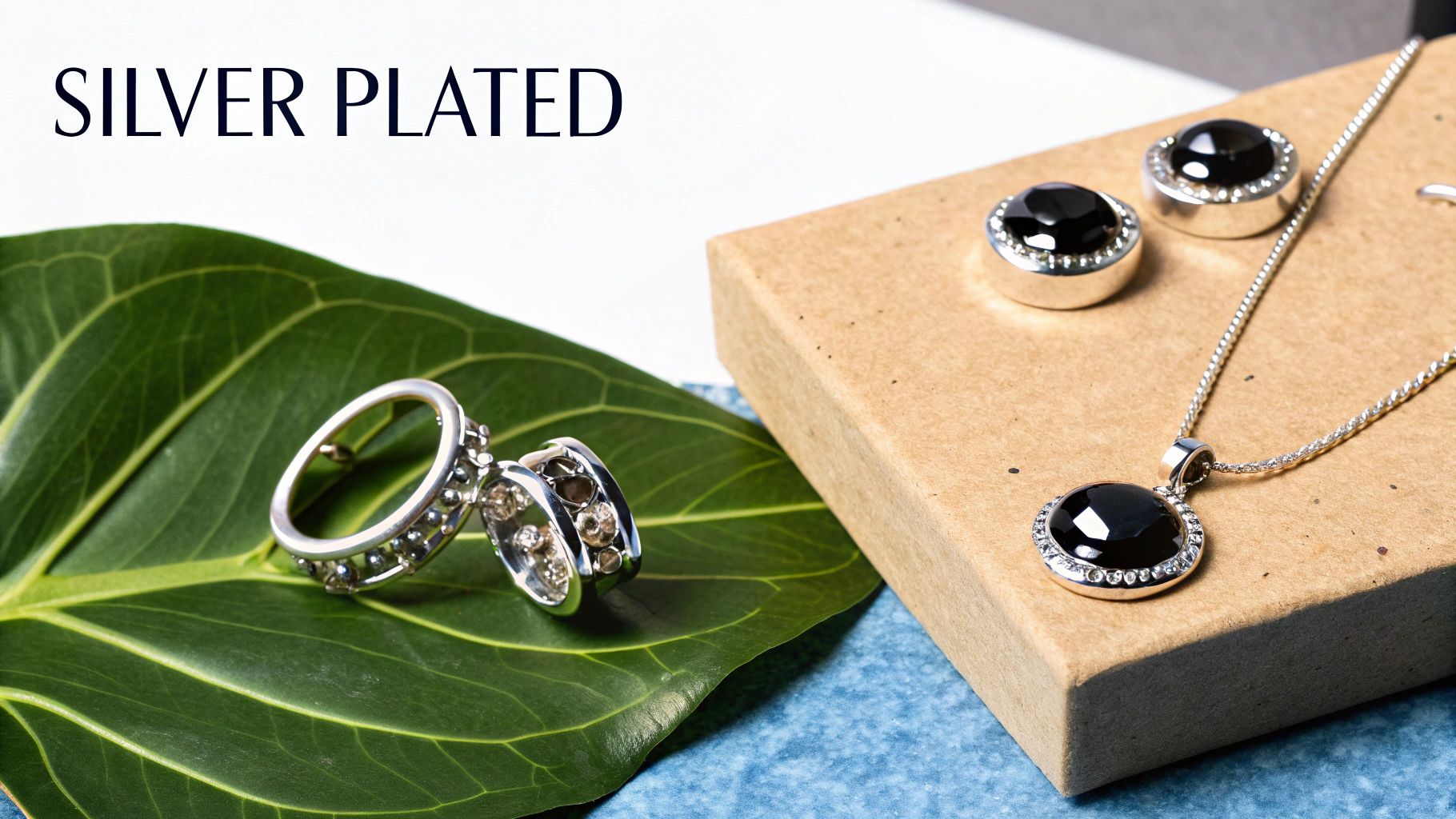
If you've ever been disappointed to see a favorite piece lose its sparkle, the reason is all about how it's made. The best way to think about silver plating is like a delicate coat of paint on a sturdy canvas. That "paint" is a micro-thin layer of pure silver, and the "canvas" underneath is a stronger, less expensive metal like copper, brass, or nickel.
It’s this layered design that makes tarnish a bit of a tricky subject. The outer silver layer is what reacts with sulfur compounds floating around in our environment—they're in the air, in our lotions, and even on our skin. When they meet, a chemical reaction creates silver sulfide, which is that dark, dull film we call tarnish. For those curious about the science, you can find more details on this chemical process and its effect on metals.
The Role of the Base Metal
What really sets plated jewellery apart from solid silver is the relationship between that thin silver layer and the metal hiding beneath it. Over time, simple friction from wearing your jewelry can wear down the silver plating.
Once that happens, the base metal is exposed to air and moisture. And metals like copper or brass oxidize (or corrode) much more aggressively than silver. This corrosion can start to creep underneath the edges of the remaining silver, pushing it up and making the tarnish look much worse, almost like it's happening from the inside out.
The combination of surface tarnish on the silver and the potential for corrosion of the base metal is exactly why silver-plated pieces need a bit of special, gentle care to look their best.
Key Factors in Tarnish Speed
So, what makes one piece tarnish in a month while another looks great for a year? Several things can hit the fast-forward button on tarnishing. Keeping them in mind can make a world of difference.
To make it easier to see what you're up against, here’s a quick look at the main culprits.
Key Factors Affecting Tarnish On Silver Plated Jewellery
| Factor | Impact on Silver Plating |
|---|---|
| Environmental Exposure | High humidity and air pollution mean more sulfur and moisture in the air, which speeds up the chemical reaction of tarnishing. |
| Contact with Chemicals | Everyday products like perfumes, lotions, and hairsprays contain chemicals that react directly with the silver, causing it to darken. |
| Frequency of Wear | The more an item is worn, the more friction it endures. This is especially true for rings and bracelets, which can wear down faster. |
| Skin Chemistry | Your body's natural oils and sweat can be acidic, which can accelerate how quickly the silver layer tarnishes and wears away. |
Understanding these factors is the first step to keeping your jewelry looking brilliant for as long as possible.
What Tarnish Really Is and Why It Happens
Ever sliced an apple and watched it turn brown on the counter? Tarnish on your silver jewelry is pretty much the same kind of chemical reaction. The first thing to get straight is that tarnish is not rust, and it definitely doesn't mean your jewelry is ruined. It’s a completely natural process.
Think of tarnish as a thin film of corrosion that slowly forms when silver comes into contact with sulfur compounds floating around in the air. This reaction creates a new substance called silver sulfide, which is that dark, dull layer you see. It's just slow-motion chemistry, not a red flag about the quality of your piece.
The Science Behind the Discoloration
You might be surprised to learn how common sulfur compounds are. They're practically everywhere, which is why tarnish feels almost inevitable. You'll find them in the air, in foods like onions and eggs, and even in the natural oils on your skin.
Even things you wouldn't expect can speed up the tarnishing process.
- Airborne Particles: Everyday air pollution and humidity are big offenders, carrying sulfur that can easily settle on your jewelry.
- Household Products: Your daily routine can be a minefield. Perfumes, lotions, hairsprays, and even household cleaners contain chemicals that accelerate tarnishing.
- Water Exposure: Taking a dip in a chlorinated pool or even just washing your hands with tap water can introduce minerals and chemicals that hasten the reaction.
This is why a piece can start to look dull even if it's just sitting in a jewelry box. For a deeper dive, this guide on what causes jewelry to tarnish and how to prevent it is a great resource.
Tarnish on Plated vs. Solid Silver
So, does this happen to all types of silver? Pretty much, but how you deal with it is very different. On a solid sterling silver piece, the tarnish is just a surface issue. You can polish it right off without worrying, because there's solid silver underneath.
Silver-plated jewelry, however, is a more delicate situation. The tarnish forms on that incredibly thin outer layer of silver. Our guide on what is silver plated breaks down just how this construction works. If you scrub too hard, you risk rubbing right through that fine coating and exposing the different base metal underneath.
Tarnish is simply silver's natural reaction to its environment. It’s a sign the silver is real, but it calls for a gentle touch—especially with plated pieces where that precious layer is only a few microns thick.
Getting your head around this is the first real step to taking better care of your jewelry. It’s not about stopping a natural process entirely, but about managing it smartly to keep your pieces looking their best for years to come.
Why Silver Plating Tarnishes Differently
Silver-plated jewelry has its own unique way of tarnishing, and it all boils down to how it's made. Think of it like a beautiful but delicate coat of paint over a piece of wood. The "paint" is a very thin layer of genuine silver, while the "wood" is a less expensive base metal—usually copper, brass, or nickel. This layered design is the secret to understanding its vulnerability.
That shimmering silver coating is what gives the piece its initial appeal. But because that layer is only a few microns thick, it's far more fragile than a piece made from solid silver.
The Double-Threat of Tarnish and Corrosion
The trouble really starts with everyday life. Simple friction from your skin, your clothes, or just bumping against a tabletop can slowly wear away that thin silver layer. The moment the plating is broken—even in a spot too small to see—the base metal underneath is exposed to the air. That’s when the real problem kicks in.
Base metals like copper and brass are much more reactive than silver. Once they're exposed to air and moisture, they start to corrode, creating discoloration that can literally push up from underneath the silver plating. This is why a plated piece can sometimes seem to tarnish much faster or more severely than solid sterling silver. Gentle handling isn't just a suggestion; it's essential.
If you're curious about the nitty-gritty of their makeup, you can learn more in our detailed guide on silver vs silver plated jewelry.
How Your Environment Speeds Things Up
The world around you is full of things that can accelerate wear and tear on your plated pieces. Think of your environment as a constant test for that delicate silver layer.
The image below breaks down the biggest culprits behind tarnish.
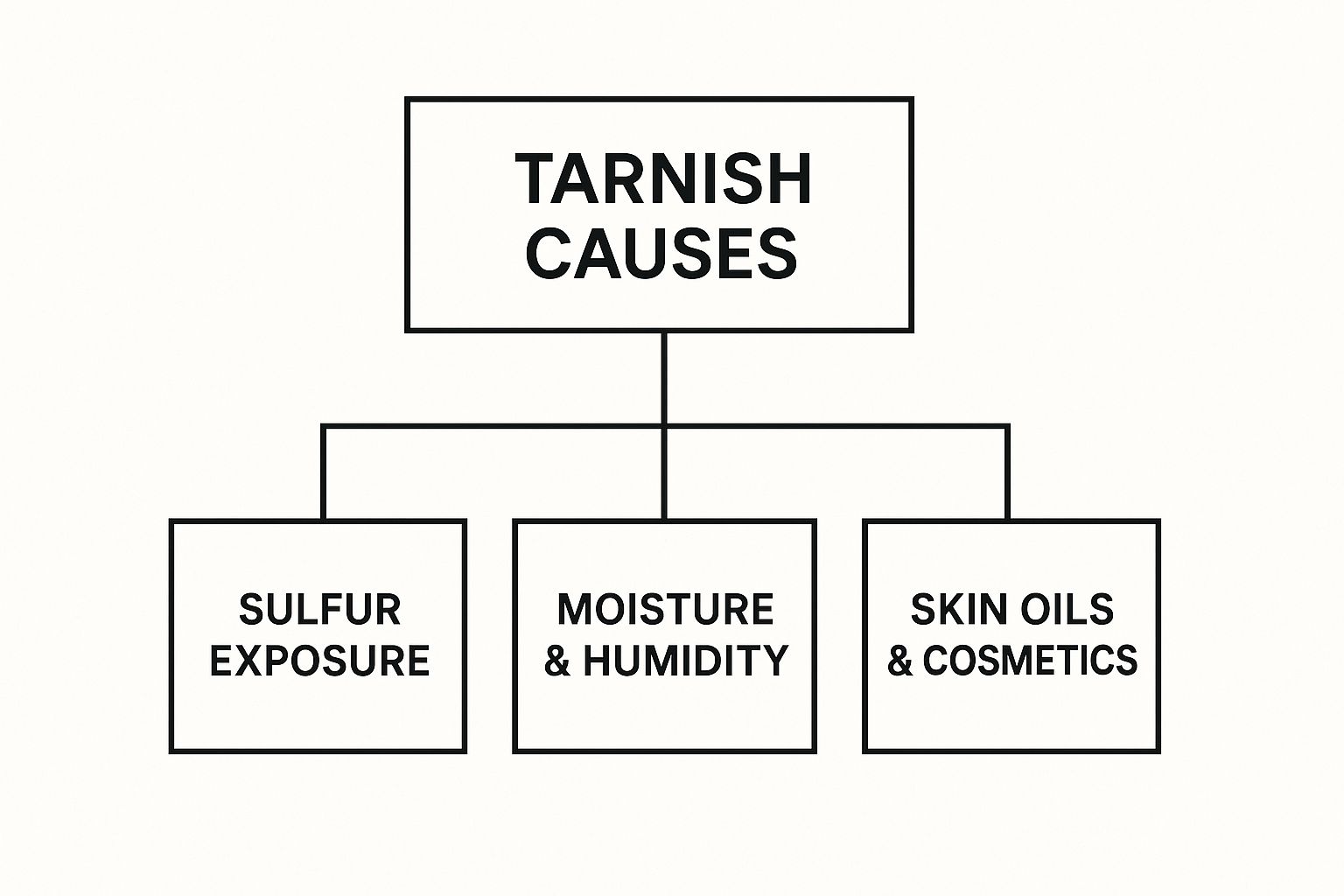
As you can see, things like sulfur in the air, moisture, and even the chemicals in your lotions and perfumes create a perfect storm for discoloration.
Sulfur, in particular, is silver's worst enemy. If you live in a city or an industrial area with more air pollution, you might see your jewelry tarnish in just a few weeks—or even days. Because the silver plating is so incredibly thin, it simply can’t hold up against that kind of constant chemical assault, leading to rapid tarnish and potential damage to the plating itself.
The main thing to remember is that tarnish on silver-plated items is a two-part problem. You've got the normal chemical reaction on the silver surface, plus the potential for the base metal underneath to corrode. Protecting that top layer is everything.
How Long You Can Expect Your Plated Jewellery to Last
When you buy a beautiful piece of silver-plated jewelry, the big question is always, "How long will this shine actually last?" The truth is, there's no single answer. The lifespan of that delicate silver layer really depends on how, where, and how often you wear it.
Think of it less like an expiration date and more like a sliding scale that's influenced by your daily habits. On average, you can expect the shine to last anywhere from 2 to 4 years before you start to see noticeable tarnish or wear. This timeline gets a lot shorter with daily contact with air, moisture, and common chemicals found in things like perfume and lotion.
Factors That Define Your Jewellery's Lifespan
So, what determines if your piece will last closer to two years or much, much longer? The biggest factor is usually the original thickness of the silver plating. A thicker, higher-quality plating is simply more durable and can handle more wear and tear before the base metal underneath starts showing through.
Your personal lifestyle also plays a huge role.
- How Often You Wear It: A necklace saved for special occasions is going to outlast a bracelet you never take off. It's just simple math—less exposure means a longer life.
- Where You Wear It: High-friction pieces like rings and bracelets are always rubbing against skin, clothes, and other surfaces. This constant contact physically wears down that thin silver layer much faster than it would on a pair of earrings.
- Your Body Chemistry: Everyone's skin is different. The natural oils and pH level of your skin can either be gentle on your jewelry or, unfortunately, speed up the tarnishing process.
Understanding these variables is key to setting realistic expectations. It’s not about if silver-plated jewelry tarnishes—it’s about when, and how your care routine can dramatically extend its brilliant shine.
Extending the Shine Through Proactive Care
While you can't stop the natural chemical reaction of tarnishing entirely, you can absolutely slow it down. The goal of any good care routine is to protect that fragile silver layer from its biggest enemies: friction, chemicals, and moisture.
Simple habits can make a monumental difference. For instance, always put your jewelry on after you've applied lotions and perfumes, and make it the first thing you take off at the end of the day. By being mindful, you can keep your pieces looking pristine for as long as possible.
For those of you who also own solid silver, our guide on how to care for sterling silver offers some fantastic tips that you can adapt for your plated pieces, too.
How to Prevent and Slow Down Tarnish

While tarnish on silver-plated jewelry is inevitable, you're not powerless against it. Far from it. You can dramatically extend the life and shine of your favorite pieces just by adopting a few simple, proactive habits. The whole idea is to create a barrier between that delicate silver layer and the elements that cause it to darken.
Don't worry, these strategies aren't complicated. They're just small adjustments to your daily routine that pay huge dividends. Each tip really just boils down to minimizing your jewelry's exposure to moisture, chemicals, and air—tarnish's three best friends.
Master the Art of Proper Storage
Where you keep your jewelry when you're not wearing it is probably the most important factor in fighting tarnish. Leaving it out on a dresser or in an open dish is practically an invitation for sulfur in the air to start its dirty work.
Think of it like putting your pieces to bed for the night, safe and sound.
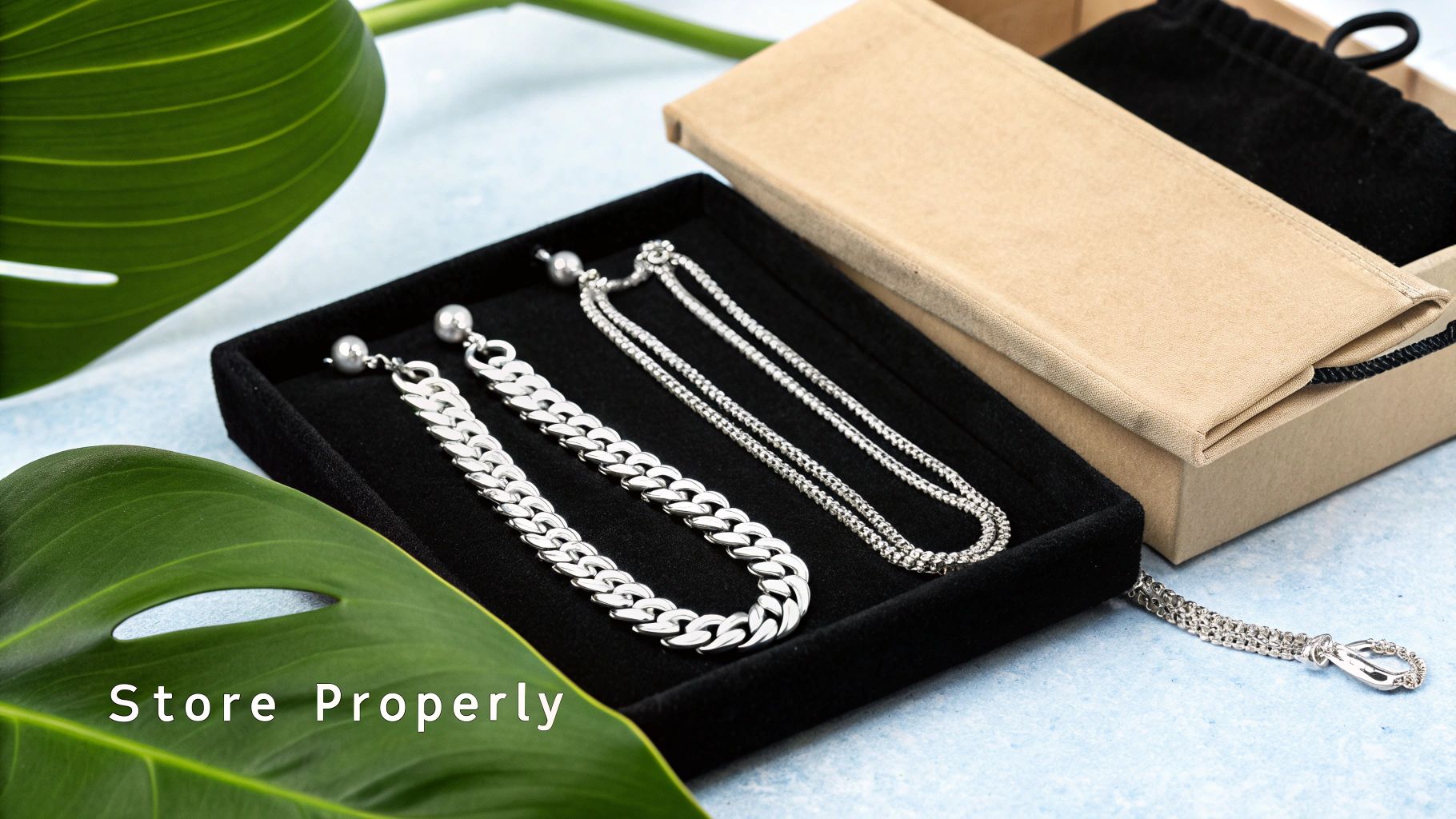
- Go Airtight: This is a big one. Store each piece in its own small, sealed plastic bag. Before you seal it, squeeze out as much air as possible. It's a simple trick, but incredibly effective.
- Use Anti-Tarnish Strips: For an extra layer of defense, toss a small anti-tarnish strip or even a piece of chalk into the bag. These little workhorses absorb any leftover moisture and sulfur.
- Keep It Cool and Dry: Store your bagged-up jewelry in a cool, dark place. Think of a dedicated jewelry box in your bedroom, not the steamy bathroom. Sunlight and humidity are the enemy.
This simple storage routine shields the silver plating from its primary adversaries, slowing that tarnishing process way, way down.
The most impactful habit you can form is treating your jewellery with intention. Protecting it from air and moisture when not in use can add years to its brilliant shine.
Follow the Golden Rule: Last On, First Off
If you remember one thing, make it this. This simple rule is a total game-changer for preserving your silver-plated items. Your jewelry should be the absolute last thing you put on before you head out the door and the first thing you take off when you get home.
Why? This easy sequence prevents direct contact with the harsh chemicals lurking in so many everyday products. Perfumes, hairsprays, lotions, and makeup all contain ingredients that can speed up tarnish and eat away at that thin silver layer. By putting your pieces on last, you give all those products time to dry and settle.
For a deeper dive into why this happens, our comprehensive guide on will silver plated jewelry tarnish offers more insights. Taking them off first ensures they dodge water when you wash your hands or cleansers when you remove your makeup, preserving their delicate finish for so much longer.
Safely Cleaning Tarnished Silver-Plated Jewelry
When that inevitable tarnish starts to creep onto your silver-plated jewelry, how you clean it makes all the difference. The most important thing to remember is that you're dealing with an incredibly thin layer of silver. This means aggressive cleaning is completely off the table.
Forget about those harsh chemical dips, ultrasonic cleaners, or abrasive polishes made for solid sterling silver. Those will strip the plating right off, exposing the less-attractive base metal underneath and ruining the piece for good.
The real secret is to be gentle. For most light dullness or the first signs of tarnish, a simple and soft touch is all you need. A bit of mild soap, some warm water, and a soft microfiber cloth can work wonders to bring back the shine.
A Gentle Approach for Tougher Tarnish
What about those more stubborn, discolored spots? You can step things up slightly with a gentle cleaning paste. Just mix a small amount of baking soda with a few drops of water. You're aiming for a thin, watery consistency, not a gritty, thick paste.
Dab a tiny bit of this paste onto the tarnish using a soft cloth or a cotton swab. Rub very gently in a straight line—never in circles, as that can create swirl marks. The idea is to lift the tarnish without scratching the delicate silver plating, so an extremely light touch is key.
Remember, the goal is preservation, not perfection. Heavy tarnish might not come off completely without risking damage to the plating. It's always better to leave a little discoloration than to remove the silver layer itself.
Once you're done, always rinse the piece thoroughly under cool water. Then, pat it completely dry with a fresh, soft cloth. This last step is crucial because any leftover moisture will just invite the tarnish to come right back.
By taking it slow and easy, you can confidently bring back that beautiful luster without causing any permanent damage. If you're looking for more techniques, our full guide on how to clean silver jewelry at home has even more tips. This careful approach is the best way to keep your cherished items looking their best.
Got More Questions About Silver Plated Jewellery?
Alright, so now you know the basics of why silver plating tarnishes and how to look after it. But a few common questions always pop up, so let's tackle those head-on. Getting these answers will make you feel much more confident about buying and wearing your plated pieces.
Does Sterling Silver Tarnish Differently?
Yes, and this is a really important distinction. The tarnish itself—that pesky dark layer of silver sulfide—is the result of the exact same chemical reaction on both solid sterling silver and silver-plated items. The real difference isn't the tarnish, but how you deal with it.
When you're working with a solid sterling silver piece, you can polish it pretty aggressively. The whole thing is made of that precious metal alloy, so when you buff away the tarnish, there's just more shiny silver waiting underneath.
Plated jewellery is a completely different story. You're dealing with a microscopically thin layer of silver over a base metal. If you polish too hard, you'll literally rub the silver right off. This exposes the metal underneath, which is permanent damage you can't just buff out.
The key takeaway is this: Tarnish on sterling silver is a surface issue you can fix. Tarnish on plated silver is a delicate problem that requires a gentle touch to avoid removing the plating itself.
Can I Get My Jewellery Replated?
You absolutely can! Replating is a fantastic way to bring a tired piece back to life. A professional jeweler will strip off any of the old, worn plating and apply a brand-new, gleaming layer of silver.
Just be aware, it's a process that requires a bit of consideration. The cost to have a piece professionally replated can sometimes be close to, or even more than, what you originally paid for it. Because of this, replating is usually reserved for pieces that have a lot of sentimental value, not just a trendy fashion item you bought last season.
How Can I Tell If a Piece Is Plated or Solid?
It’s usually pretty simple to spot the difference once you know the signs. The best place to start is by looking for tiny stamps, often hidden on the clasp or another out-of-the-way spot.
- Solid Sterling Silver: By law, sterling silver has to be marked. You'll see stamps like "925," "STER," or "Sterling."
- Silver Plated: Plated pieces might be stamped with "EPNS" (which stands for Electroplated Nickel Silver), or they might have no markings at all.
- The Wear Test: The clearest giveaway is wear and tear. If you see spots where the silver has rubbed off, revealing a yellow, coppery, or grey metal underneath, it is 100% silver plated.
At Hidden Forever, we believe jewellery should hold your most precious memories close. Take a look at our collection of handcrafted projection photo jewellery, all made with quality materials designed to make your special moments last.


