

Let's get right to it. The quickest and most popular way to find your birthstone is by looking at the modern monthly chart. This is the official list most jewelers use today, making it a simple and reliable starting point.
Just find your birth month, and you've found your stone. Easy as that.
Find Your Birthstone in Seconds
Ready to discover your gem? The most direct path is the modern birthstone list, which was standardized by the American National Association of Jewelers back in 1912 to create a clear, universally recognized system. It’s what most people think of when they hear the term "birthstone."
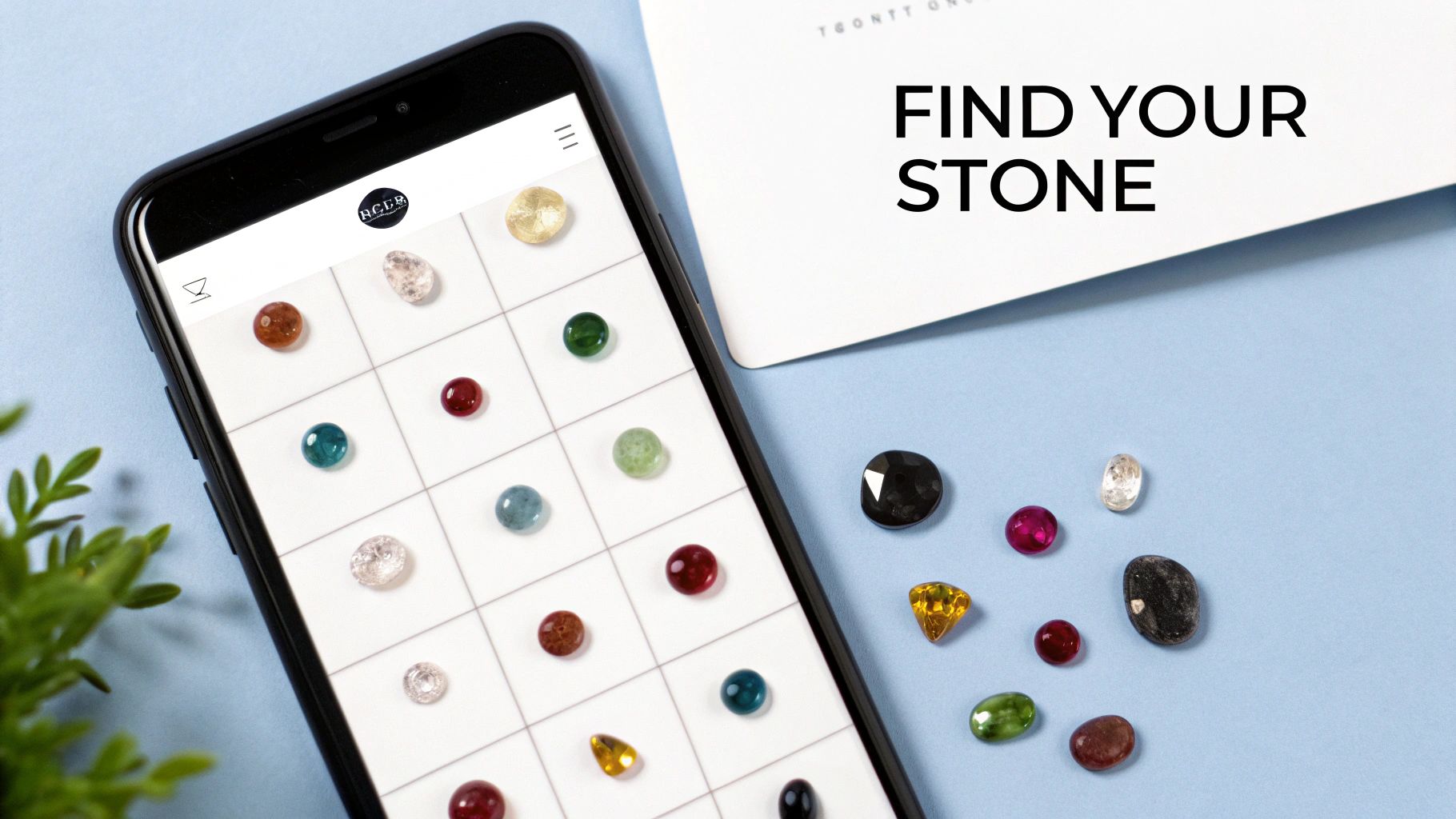
Use the chart below to find your stone in an instant. But don't feel like you have to stop there! Think of this as the first step in a much bigger adventure. Once you've found your primary gem, we can explore its deeper story, from ancient traditions to other systems like zodiac signs.
Official Modern Birthstones by Month
Here’s a quick reference chart with the modern, officially recognized birthstone for each of the twelve months of the year. Some months even have a few options to choose from.
| Birth Month | Modern Birthstone | Alternative Stone(s) |
|---|---|---|
| January | Garnet | Rose Quartz |
| February | Amethyst | - |
| March | Aquamarine | Bloodstone |
| April | Diamond | - |
| May | Emerald | - |
| June | Pearl, Alexandrite | Moonstone |
| July | Ruby | - |
| August | Peridot, Spinel | Sardonyx |
| September | Sapphire | - |
| October | Opal, Tourmaline | - |
| November | Topaz, Citrine | - |
| December | Turquoise, Zircon, Tanzanite | - |
While this table gives you an immediate answer, the real fun begins when you discover a gem that feels personal to you—a connection that might go way beyond just the month you were born.
Where the Birthstone Tradition Began
Have you ever wondered where the idea of wearing a single gem for your birth month came from? It’s not just some modern marketing gimmick. This beloved tradition has roots that go back thousands of years, long before jewelers created the official lists we use today.
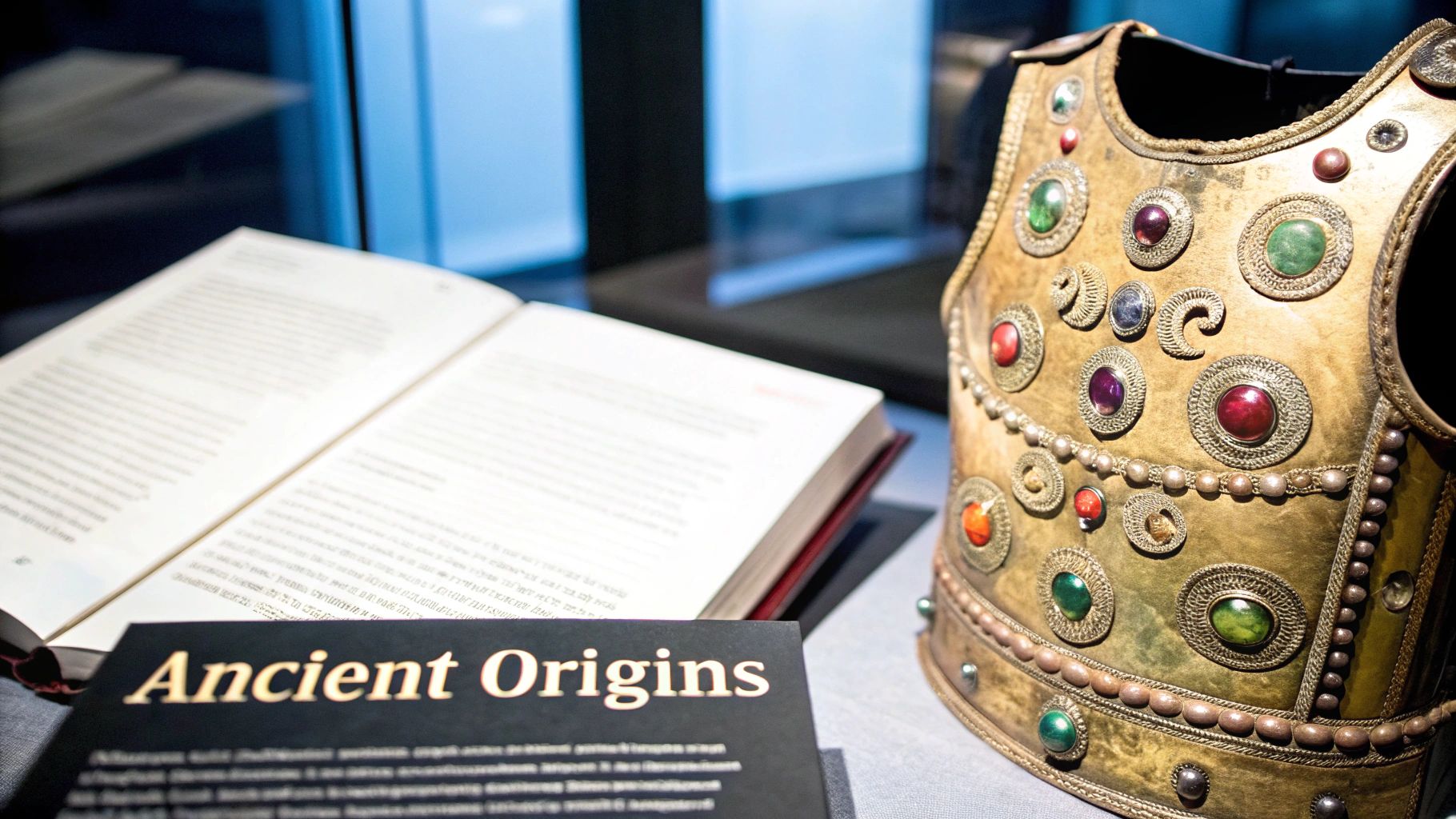
The story actually starts in the biblical Book of Exodus with the sacred breastplate of Aaron, the first high priest of the Israelites. This ceremonial garment was incredibly significant, set with exactly 12 gemstones in four neat rows. Each stone—from sapphire and emerald to topaz and amethyst—represented one of the twelve tribes of Israel.
It's fascinating how different cultures connect colors and gems with spiritual meaning. To get a better feel for this, you can learn more about how chakra colors and their significance play a role in ancient traditions.
From Sacred Garment to Personal Talisman
So, how did we get from a high priest's breastplate to the personal birthstone jewelry we wear today? The big leap in thinking happened much later.
In the 1st century CE, the historian Flavius Josephus was the first to draw a line connecting those 12 breastplate stones, the 12 months of the year, and the 12 signs of the zodiac. He saw the cosmic parallel, and that idea planted the seed for our modern tradition.
But the original practice was quite different from what we do now. The idea wasn't to own just one stone.
The initial custom was for a person to own all twelve stones and wear a different one each month, believing its power was strongest during its designated time.
Over the centuries, this practice of rotating through all twelve gems slowly evolved. People began to simplify things, focusing on just one powerful gem associated with their birth month and wearing it all year for luck and protection. This shift made the tradition far more accessible, turning it from a complex astrological ritual into the deeply personal custom we cherish today.
How We Got the Modern Birthstone List
While the idea of birthstones is ancient, the list most of us know today is surprisingly modern. It was really born out of commerce and the need for a little bit of order. Think about it—traditions were scattered all over the place, with different regions and cultures having their own ideas. European gem traders saw a golden opportunity in all that chaos.
They started to streamline the tradition back in the 16th century, promoting specific gems for each month. This was a brilliant marketing move. It took an old, complex custom and turned it into a simple, wearable trend that anyone could follow. Suddenly, you didn't need to be a king to own a special stone; you just needed to know your birthday. Today, that simple idea has blossomed into an industry worth over $10 billion in major markets. For more on this clever marketing history, check out this piece from the Farmer's Almanac.
But the real game-changer came much, much later.
Making It Official
The year 1912 was the moment everything snapped into place. The American National Association of Jewelers (which we now know as Jewelers of America) got together in Kansas with a clear mission: create one official, standard list. They wanted to make things simple for customers and align the chart with gems that were popular and readily available.
That meeting created the foundational birthstone list that jewelers across the country could finally use consistently.
Of course, that list wasn't the final word. It's been tweaked over the past century to keep up with new gem discoveries and what people actually want to wear.
Think of the "official" list as a living document. Tanzanite, for example, was only added for December in 2002, and spinel joined the party as an August alternative in 2016.
These updates keep the tradition feeling relevant and give us more beautiful options to choose from. After all, once you pick a stone, you still have to decide on its shape. Understanding the different diamond cuts can be incredibly helpful here, as the same principles of light and faceting apply to most colored gemstones, too. Thanks to that 1912 meeting, finding your stone became easier than ever, solidifying its place in modern personalized jewelry.
Exploring Alternative Ways to Find Your Stone
So, what if your official birth month stone just doesn't feel like you? That's perfectly fine. The modern birthstone list is just one way to find a meaningful gem, and there are several other traditions that might resonate more deeply with your personality or spiritual side.
One of the first places people look is the Traditional Birthstone List. This classic list includes stones like the elegant pearl for June and the earthy turquoise for December, which were cherished long before the modern list was standardized in 1912. These gems are steeped in history, carrying stories from ancient folklore and cultures around the world.
Zodiac, Numerology, And Other Paths
Another fascinating route is to look to the stars and explore Zodiac birthstones. This system connects each astrological sign with a gemstone thought to channel and enhance its unique energy. For instance, a fiery, passionate Leo might feel more drawn to a bold ruby than their birth month stone, peridot.
These astrological connections aren't random; they're rooted in ancient beliefs about planetary alignments and cosmic influence, adding a really personal layer to your choice.
There are other systems, too. Some people explore Ayurvedic gems from Vedic astrology, which link stones to celestial bodies. If you enjoy a more systematic approach to self-discovery, you might even find a connection through numbers. This guide on numerology for beginners can offer another unique perspective on finding a stone that aligns with your life path.
To get started, this chart offers a simple visual guide connecting each month to its modern stone.

Modern vs Traditional vs Zodiac Birthstones
It can get a little confusing with all the different lists out there. Let's break down how a few months and signs compare across the most popular systems.
| Month / Zodiac | Modern Stone | Traditional Stone | Zodiac Stone |
|---|---|---|---|
| June | Alexandrite | Pearl | Agate (for Gemini) |
| August | Peridot | Sardonyx | Ruby (for Leo) |
| December | Tanzanite | Turquoise | Zircon (for Sagittarius) |
As you can see, the "right" stone really depends on which tradition you connect with most. There's no single correct answer, which is part of the fun.
Choosing your stone is ultimately a personal journey. Whether you stick with the modern list, feel drawn to a traditional gem, or connect with your zodiac stone, the goal is to find something that feels special to you.
Exploring customized pieces like rings with birthstones and names is a great way to combine these different traditions into a beautiful keepsake that tells your own unique story.
How to Choose Your Perfect Gemstone
So, you've figured out your birthstone options. That's the easy part. The real fun begins when you have to pick the one gem that feels right for you and the jewelry you have in mind. How do you find a stone you’ll actually want to wear for years?
It all starts with a little soul-searching about your personal style and, let's be honest, your budget. For example, if you’re a July baby, you might dream of a classic ruby red. But did you know a vibrant Spessartine Garnet can give you that same fiery warmth, often at a friendlier price point? Don't be afraid to look at the alternatives.

Next, it helps to understand what makes one stone stand out from another. Jewelers live by the “Four Cs”—Color, Clarity, Cut, and Carat—and you can use them as a simple guide, too.
- Color: You're looking for rich, saturated color that's spread evenly throughout the stone. Think of a sapphire—is its blue deep and velvety, or does it look a bit washed out in places?
- Clarity: This is all about what's inside the gem. Fewer internal flaws (called inclusions) usually mean a higher value, but sometimes a unique inclusion can give a stone its own personality.
- Cut: The cut is what gives a gem its sparkle. It’s the way the facets are angled to catch and reflect light. A well-cut stone will look alive and brilliant from every angle.
- Carat: This one’s easy—it's just the weight of the stone. But remember, bigger isn't automatically better. A smaller stone with fantastic color and a brilliant cut will always outshine a larger, duller one.
Buying With Confidence
Once you've got a stone in mind, you want to be sure you're getting a quality, authentic piece. Getting the right fit is just as important, especially for rings. Our guide on how to measure for a ring size is a lifesaver for getting it right the first time.
When it comes to the gem, don't be shy—ask where it came from. Knowing the difference between natural, lab-grown, and imitation stones can save you a lot of heartache and money.
Natural stones come straight from the earth, and their rarity is part of their magic. Lab-grown stones are the real deal—chemically identical to natural ones—but made in a lab. Imitations are just look-alikes, like glass or plastic, with no real gemstone value.
For any significant purchase, always ask for a certificate from a trusted gemological lab, like the Gemological Institute of America (GIA). This report is like a birth certificate for your stone, confirming exactly what it is. With this knowledge in your back pocket, you can confidently find a genuine gemstone that’s not just beautiful, but truly meaningful.
Common Questions About Birthstones
As you start exploring the world of birthstones, you'll probably run into a few common questions. It happens to everyone! Let's clear up some of the usual points of confusion so you can feel confident in your choice.
Can I Wear a Stone That Isn't My Birthstone?
This is easily the question I hear most often. The answer is a huge, resounding yes! There are no strict rules, and the "gemstone police" won't come after you.
While traditional beliefs connect certain gems to birth months for good luck, the most powerful connection is the one you feel. If you're an October baby who has always been drawn to the deep, calming green of an emerald, go for it. The best gemstone for you is always the one you love.
Modern vs. Traditional Stones: What’s the Deal?
You've probably seen a few different birthstone lists floating around, which can be confusing. The "modern" list, which is what most jewelers use today, was standardized back in 1912. It was created to make things more consistent and often includes gems that are more widely available.
The "traditional" list, on the other hand, comes from older customs that existed long before that 1912 update. A great example is June: its modern stone is the color-changing Alexandrite, but its classic, traditional counterpart is the Pearl.
Lab-Grown or Natural?
Another big consideration is whether to choose a natural stone mined from the earth or one created in a lab. It really comes down to what matters most to you.
- Lab-created stones are chemically identical to natural ones. They’re often more affordable and typically flawless, which is a big plus for many.
- Natural stones have a deep-rooted connection to the earth, and their unique, tiny imperfections tell a story of their billion-year journey.
Your choice is a personal one. Do you value the organic history of a stone that grew in the earth, or do you prefer the ethical sourcing and visual perfection that a lab can offer? There's no wrong answer.
Why Do Some Months Have So Many Options?
You might notice that some months, like December, have multiple birthstones. This isn't an accident! It usually happened when a traditional stone became too rare or a stunning new gem was discovered.
December, for instance, gives you a choice between Turquoise, Zircon, and Tanzanite. This gives you a whole spectrum of gorgeous blue hues and different price points to choose from.
Of course, the stone is only part of the story; the setting is just as important. If you want to make sure you're choosing a quality metal for your jewelry, it's worth taking a moment to learn more about 925 sterling silver and why it's a fantastic choice.
At Hidden Forever, we believe the perfect stone is the one that tells your story. Our projection photo jewelry turns your chosen gemstone into a secret keeper, holding a cherished memory you can reveal with a touch of light. Find your perfect piece and carry your memories with you.


