

When you hear "diamond cut," what comes to mind? Many people picture the diamond's outline—round, square, or pear-shaped. But in the world of gemology, "cut" means something much more profound.
It’s all about the craftsmanship. The cut is what dictates a diamond’s fire, its brilliance, and that mesmerizing sparkle. In fact, it's the single most important factor in a diamond's beauty. A perfect cut can make a diamond come alive.
Cut vs. Shape: What’s the Real Difference?
Let's clear up one of the most common points of confusion right away: cut is not the same as shape.
Think of it like this: shape is the silhouette of the diamond (round, oval, emerald). The cut, however, is the intricate system of facets, angles, and proportions carved into the stone. It’s the art and science that determines how light performs once it enters the diamond.
Imagine a diamond as a tiny room full of perfectly angled mirrors. A master cutter's goal is to arrange these mirrors (the facets) so that any light entering the stone is captured, bounced around internally, and shot back out through the top. This is what creates that stunning sparkle. A poorly cut diamond, on the other hand, lets light escape through the sides or bottom, leaving it looking flat and lifeless.
The Three Main Families of Diamond Cuts
At the end of the day, every diamond cut falls into one of three main families. Each one has a completely different personality and visual appeal.
This quick overview helps put the main categories into perspective.
Quick Overview of Major Diamond Cut Categories
| Cut Category | Key Characteristic | Popular Example |
|---|---|---|
| Brilliant Cuts | Engineered for maximum sparkle and fire. | Round Brilliant |
| Step Cuts | Emphasizes clarity with a "hall-of-mirrors" effect. | Emerald Cut |
| Mixed Cuts | A hybrid approach blending sparkle and unique shapes. | Radiant Cut |
As you can see, the cutting style completely transforms how a diamond looks and feels.
Let's take a closer look at what makes each family unique.
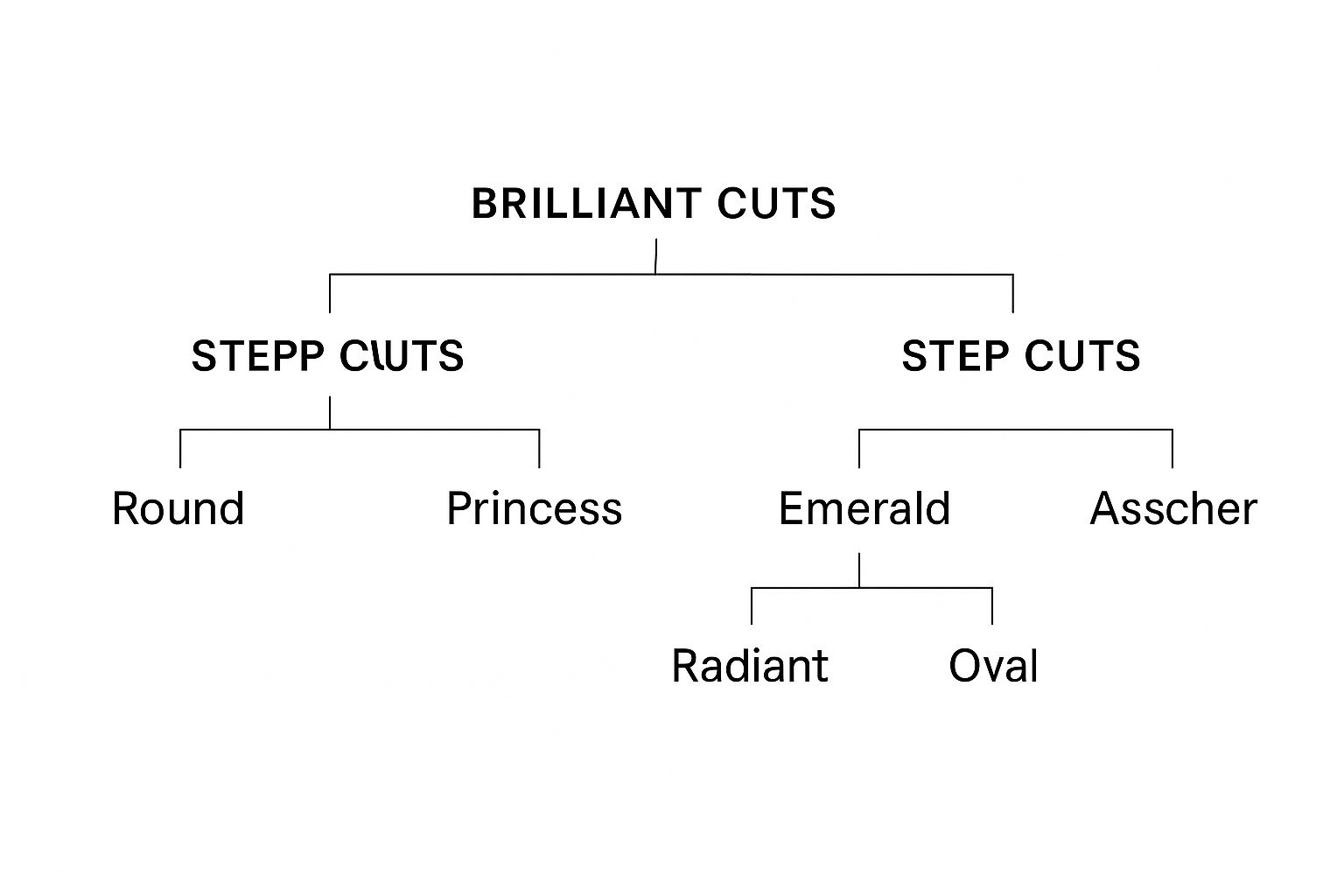
A Deeper Dive into the Cut Families
-
Brilliant Cuts: These are the undisputed champions of sparkle. They’re designed with dozens of triangular and kite-shaped facets all arranged to catch and reflect as much light as possible. The classic Round Brilliant is the most famous member of this family.
-
Step Cuts: If you love clean lines and understated elegance, you’ll be drawn to step cuts. Their long, parallel facets are arranged like a staircase, creating a mesmerizing "hall-of-mirrors" effect. This style highlights a diamond's clarity over its sparkle, with the Emerald cut being the prime example.
-
Mixed Cuts: Can't decide between sparkle and structure? Mixed cuts offer the best of both worlds. They combine the dazzling facet patterns of brilliant cuts with the sleek outlines of step cuts, resulting in truly unique and eye-catching stones like the Radiant or Princess cut.
Understanding the cut is just as important as knowing how to maintain the beauty of your jewelry's setting. Speaking of which, if you want to keep your pieces looking pristine, these tips on how to care for sterling silver are a great place to start.
The Round Brilliant Cut: A Timeless Icon
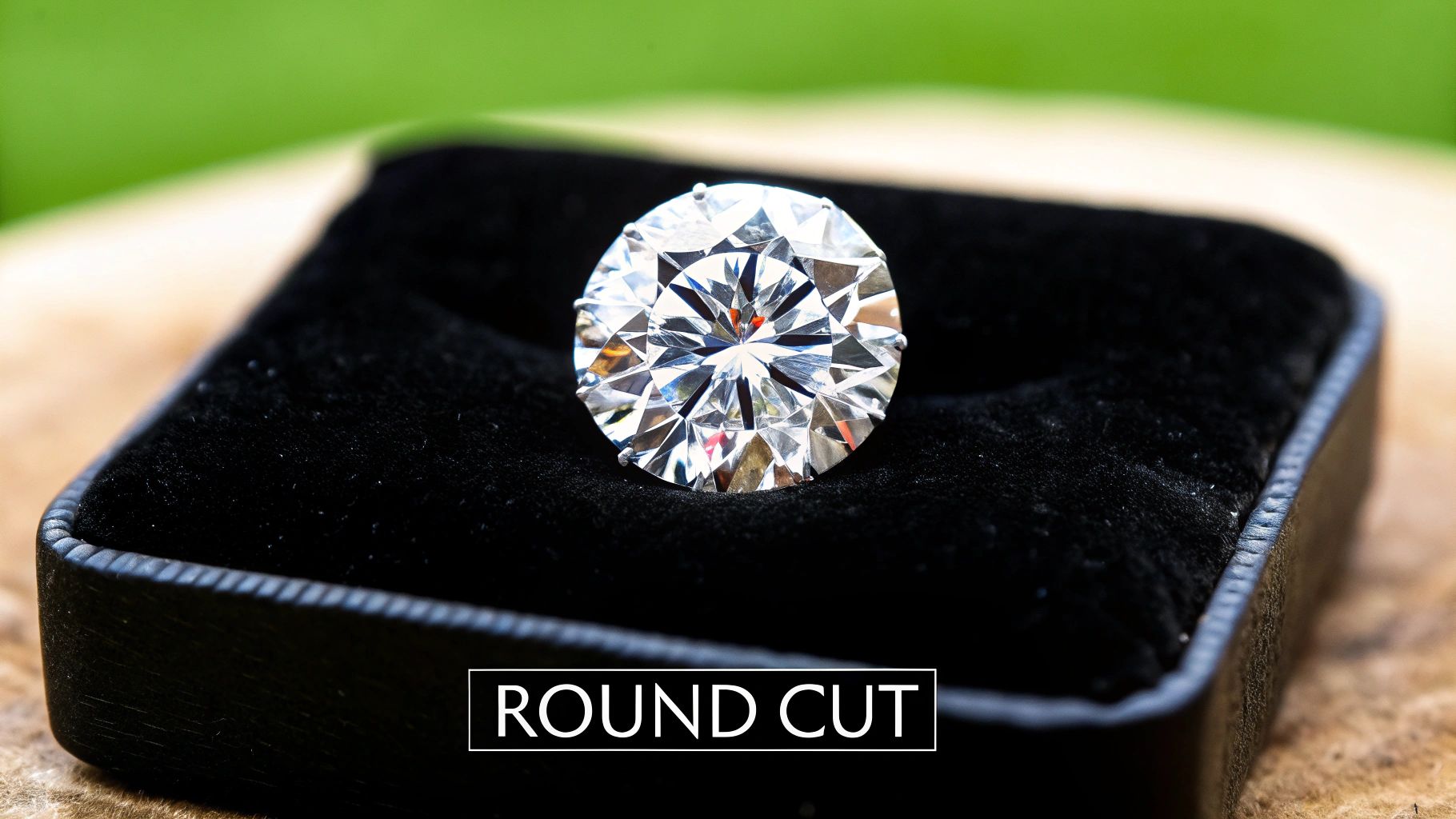
When someone says "diamond," this is almost always the shape that comes to mind. The Round Brilliant Cut is the undisputed king of the jewelry world, the absolute pinnacle of sparkle and timeless style. But it's not just a simple circle; it's a finely tuned masterpiece of optical science.
Think of it as a tiny, perfectly engineered disco ball. The Round Brilliant uses 58 meticulously angled facets that act like a complex system of mirrors. Each one is cut with mathematical precision to grab any available light, bounce it around inside the stone, and shoot it back out to your eye in an explosion of brilliance and fire.
This incredible sparkle isn't a happy accident. It’s the result of over a century of studying how light travels through a diamond.
The Science Behind the Sparkle
The magic of the Round Brilliant is all in its proportions. Its design was refined over years of intense study, eventually becoming the industry standard for light performance. This scientific approach is why a well-cut Round Brilliant will outshine almost any other shape when it comes to pure, unadulterated sparkle.
The big breakthrough happened in 1919 when a mathematician named Marcel Tolkowsky published his thesis on ideal diamond proportions. His work laid out the blueprint for cutters to maximize a diamond’s brilliance (the bright white light) and fire (the rainbow-colored flashes). Today, the Round Brilliant absolutely dominates the market, making up about 75% of all diamonds sold worldwide. You can dig deeper into its journey by exploring the development and global standard that it set for the industry.
The Round Brilliant Cut is engineered to be a perfect light-return machine. Every single angle and facet is part of a complex system designed for one purpose: maximum sparkle.
Why Is It So Popular?
The universal love for the Round Brilliant really boils down to a few simple things that make it a foolproof and breathtaking choice for any piece of jewelry.
- Unmatched Brilliance: No other cut is so deliberately designed to maximize sparkle. It consistently delivers that classic, fiery look that people dream of when they think of diamonds.
- Goes With Everything: Its classic, symmetrical shape works with literally any style of setting you can imagine, from a sleek, modern solitaire to a complex, vintage-inspired design. It just never goes out of style.
- Hides Flaws: The intense sparkle and fire created by all those facets are great at camouflaging small internal flaws, or inclusions. This can make the diamond appear cleaner than it actually is.
For anyone looking for that perfect blend of tradition, beauty, and head-turning performance, the Round Brilliant Cut is still the gold standard. It’s not just one of the many different diamond cuts—it’s the benchmark all others are measured against.
Discovering Brilliant Fancy Shape Cuts
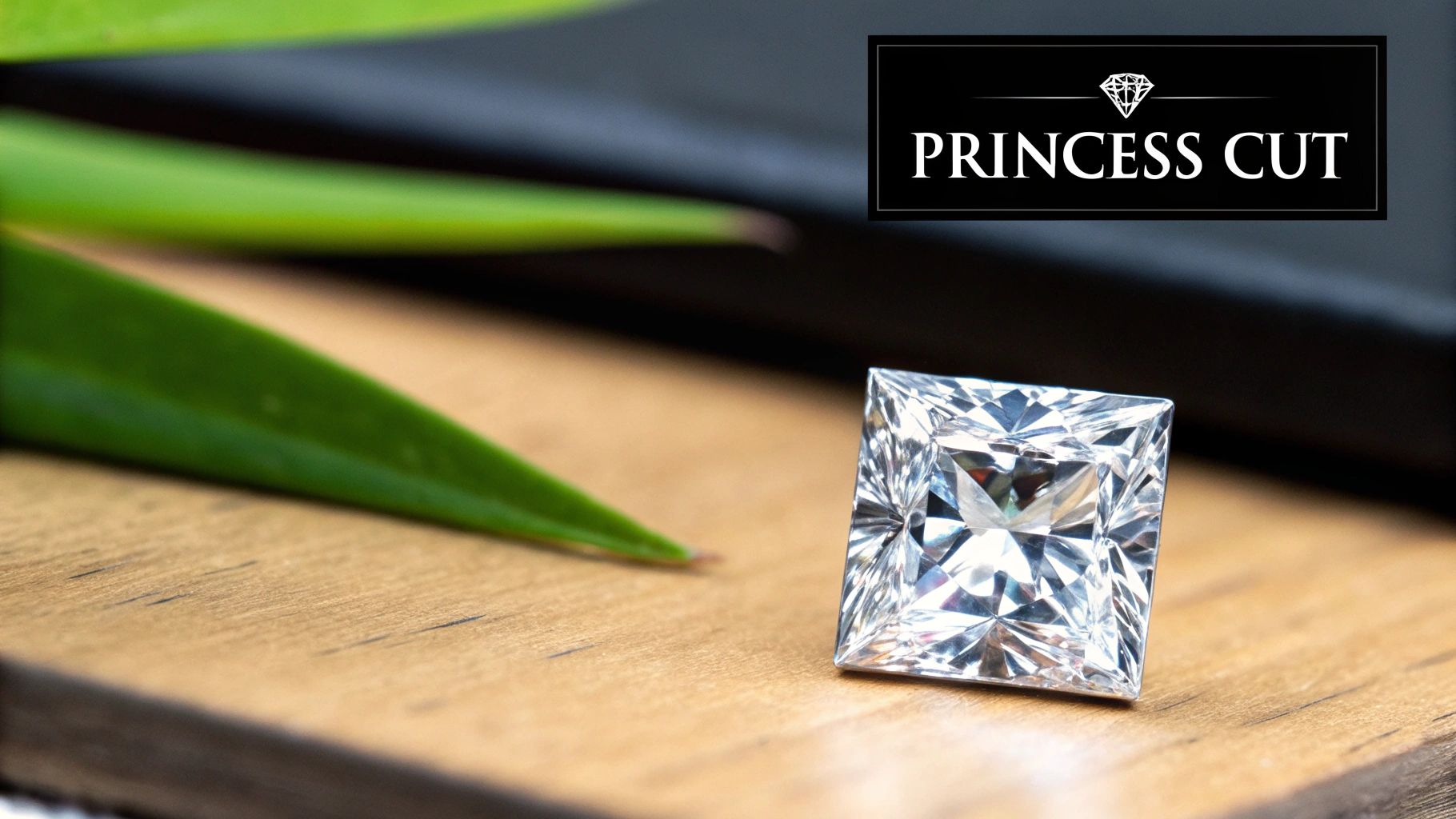
While the Round Brilliant is the undisputed king of sparkle, the real fun begins when you explore fancy shapes. This is where you find diamonds with true personality. These cuts still use the brilliant faceting style—meaning they're built for maximum flash—but they trade the traditional circle for a more unique silhouette.
Think of them as powerful style statements, not just alternatives to the round. Each shape tells a different story. Some are modern and edgy, others are soft and romantic. Choosing a fancy shape is about finding a diamond that feels like it was made just for you.
The Princess Cut: A Modern Classic
Right behind the Round Brilliant in popularity, the Princess Cut is all about sharp, contemporary style. It has a square or rectangular shape with pointed corners, giving it a clean, geometric look. But don't let its modern edge fool you; it’s designed to throw off a ton of fire and brilliance, easily rivaling a round cut.
It’s a fantastic choice for sleek, minimalist settings. Just one word of caution: those sharp corners are vulnerable. They really need the protection of a prong or bezel setting to keep them from chipping.
The Oval Cut: Elongated Elegance
Love the classic sparkle of a round but want something a little different? The Oval Cut might be your perfect match. It brings all the fire and brilliance you'd expect from a round cut, just wrapped in a graceful, elongated package.
This shape has a secret superpower, too. Its length makes it look bigger than a round diamond of the same carat weight. It also has a lovely way of making the wearer's finger appear longer and slimmer. This flattering effect, combined with its timeless sparkle, is why ovals have become so incredibly popular.
A key advantage of many fancy brilliant shapes, like the Oval and Marquise, is that they can appear larger than a Round Brilliant of the same carat weight due to their elongated outlines and larger table surface.
The Cushion Cut: Vintage Charm
With its soft, rounded corners and square or rectangular outline, the Cushion Cut just screams romance and vintage charm. People have loved this "pillow cut" for more than a century, and for good reason. It blends old-world character with modern faceting, resulting in a beautiful, brilliant glow.
When people ask "what are the different diamond cuts?" the cushion is always a favorite for its soft, inviting sparkle. It's also incredibly versatile. Some have larger facets that create a "chunky," almost watery sparkle, while others feature an extra row of facets for a dazzling "crushed ice" effect.
Pear and Marquise Cuts: Dramatic Silhouettes
Finally, let's talk about two shapes that were born to stand out. If you're looking for drama, you've found it.
-
The Pear Cut: Often called a teardrop, this shape is a stunning hybrid of a round and a marquise. With one sharp point and one beautifully rounded end, its asymmetry is what makes it so graceful and eye-catching.
-
The Marquise Cut: This one is all about maximizing its presence. The long, narrow shape with two pointed ends makes a marquise look bigger than any other cut of the same carat weight. It has a regal, striking look that's impossible to ignore.
Exploring the Elegance of Step Cuts
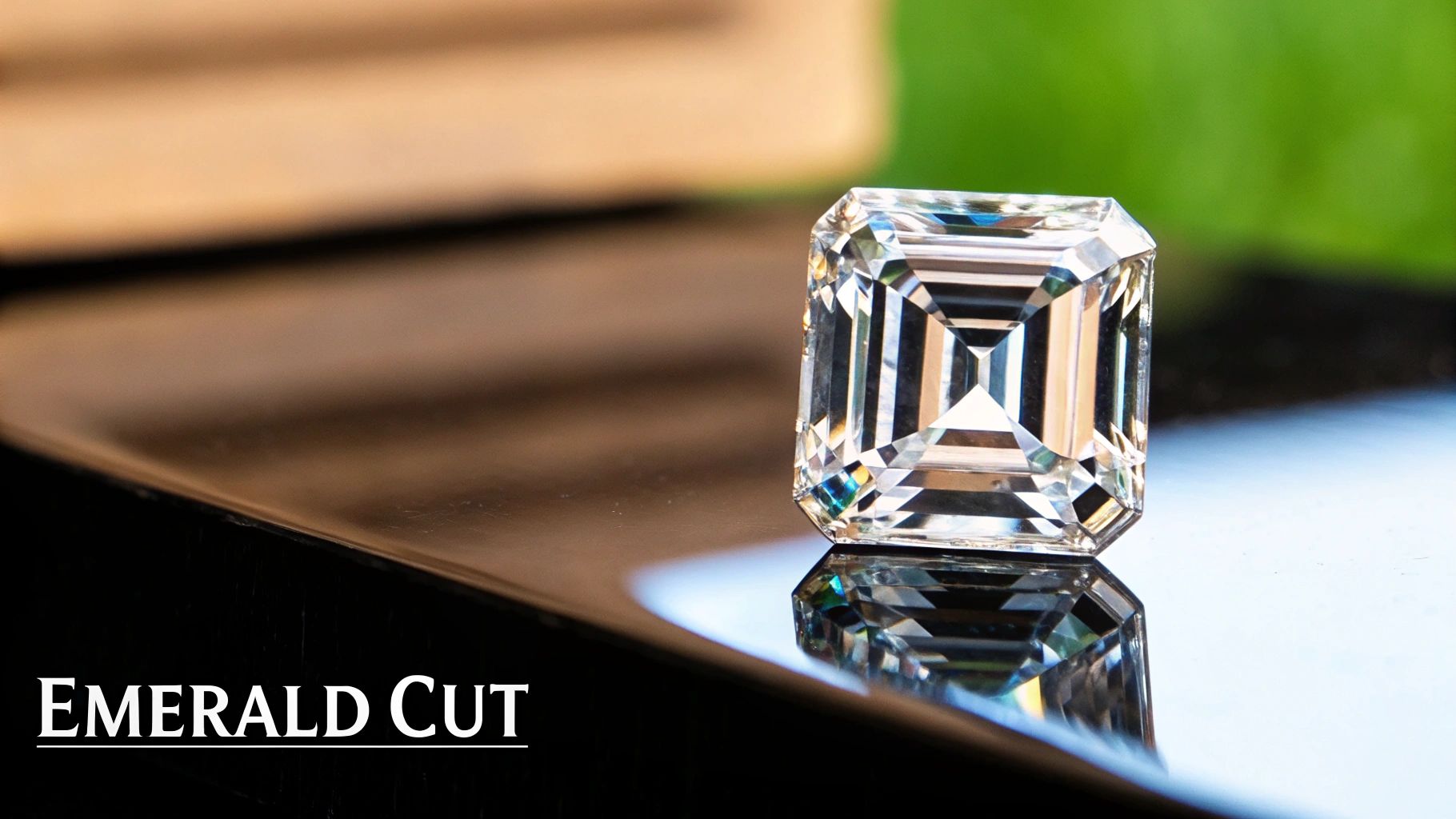
If you're drawn to clarity and sophisticated geometry more than an explosion of sparkle, step cuts offer a completely different kind of beauty. Unlike the fiery brilliance we see in other cuts, these diamonds are known for their long, parallel facets. They’re arranged almost like a staircase, which creates a mesmerizing ‘hall of mirrors’ effect when you look into the stone.
This style doesn't try to compete with the flash of a Round Brilliant. Instead, it’s like a crystal-clear window, drawing your eye deep into the diamond’s soul. This effect beautifully showcases the stone’s purity and quality, making clarity a top priority if you're considering this style. Step cuts are really for someone who appreciates understated, architectural elegance.
The Iconic Emerald Cut
When people ask what are the different diamond cuts in the step-cut family, the Emerald Cut is always the star of the show. Its classic rectangular shape and large, open table (the flat top facet) produce dramatic flashes of light, not a constant twinkle. Think of it less like a disco ball and more like a perfectly still, reflective pool of water.
This cut has a fascinating history. It was first developed for emerald gemstones way back in the 15th century to bring out their color while reducing the risk of chipping. It wasn't until the late 19th century that it caught on for diamonds, eventually becoming a staple of the Art Deco era in the 1940s. You can learn more about its journey from a practical cutting solution to an icon of elegance and clarity.
The Emerald Cut’s elongated shape is also incredibly flattering on the hand, often making the wearer’s finger appear longer and more slender. It’s a choice that speaks of confidence and timeless style.
The beauty of a step cut lies in its subtlety. It doesn't scream for attention with sparkle; it captivates with its clean lines, deep perspectives, and elegant flashes of light.
The Distinctive Asscher Cut
Often called the Emerald Cut’s square-shaped sibling, the Asscher Cut shares that same step-cut faceting but with a bold, almost octagonal outline. Its cropped corners and a deep pavilion create a signature look that feels both vintage and dramatic all at once.
What really sets the Asscher apart is the distinctive ‘X’ pattern you can see when you look straight down into the stone. This windmill-like effect is created by the precise alignment of its facets, giving it a unique visual depth that is truly hypnotic. Just like the Emerald, it demands a high clarity grade because there are no brilliant facets to hide any internal flaws or inclusions.
So, how do you choose between these two legendary step cuts? It really just comes down to personal style:
- Emerald Cut: Perfect if you're after a classic, elongated, and elegant look.
- Asscher Cut: Ideal for making a bold, geometric, and vintage-inspired statement.
Both offer a refined alternative to brilliant cuts, appealing to that art deco sensibility that feels both bold and gracefully understated.
How Diamond Cutting Has Evolved
The breathtaking diamonds we see in jewelry cases today didn’t just appear out of nowhere. They're the product of hundreds of years of trial, error, and sheer artistic genius. Looking back at how diamond cutting has evolved gives you a real appreciation for why different shapes have their unique sparkle and explains the undeniable charm of antique diamonds.
From Simple Polishing to True Faceting
Believe it or not, the earliest diamond "cutting," which dates all the way back to the 6th century, was incredibly simple. Jewelers would just polish the diamond's natural crystal faces to make them a bit shinier. These early cuts, like the Point Cut, were all about following the rough stone’s shape, not creating brilliance. The main goal was to keep as much of the original diamond's size as possible.
The Spark of Mechanical Genius
Everything changed when technology finally caught up with human ambition. The late 19th century was a turning point, thanks to the invention of mechanical cutting tools. The introduction of mechanical bruting in the 1870s was especially huge. This technique allowed cutters to shape a diamond’s girdle—its widest edge—with a symmetry that was previously unimaginable. You can see how this breakthrough paved the way for modern styles.
This new level of precision made the Old European Cut possible. As the direct ancestor of the modern Round Brilliant, it had fewer facets and a chunkier, more "pillowy" look. It was specifically designed to glitter in the soft, romantic glow of candlelight, giving it a warm, deep fire that you just don't see in today's stones.
The leap from the Point Cut to the Old European Cut shows a massive shift in thinking—from simply saving carat weight to intentionally shaping a diamond to capture and play with light.
This period marked the true beginning of understanding how a diamond's angles and facets create sparkle, setting the stage for the mathematically perfected cuts we have now. Of course, the cut is only part of the story; the metal it's set in matters, too. To learn more, check out our guide on the differences between silver and silver-plated jewelry.
Every antique cut tells a story about the tools and trends of its era. It’s what makes these older diamonds more than just beautiful gems—they're tiny, sparkling pieces of history. The journey from a simply polished rock to a complex, dazzling stone is a testament to our never-ending search for the perfect sparkle.
How to Choose the Right Diamond Cut for You
Picking the right diamond cut isn't about following a strict set of rules. It’s all about you. With so many options out there, the best choice is the one that speaks to your personal style, looks great on your hand, and fits seamlessly into your life. This is where the fun really begins.
Think of your diamond as the star of your own story. If you love clean, modern lines, the sharp geometry of a Princess or Asscher cut might be a perfect fit. On the other hand, if you’re drawn to a more romantic or vintage vibe, you might fall for the soft, pillowy glow of a Cushion cut or the elegant teardrop shape of a Pear.
Matching Cut to Your Hand and Lifestyle
Did you know the shape of your diamond can actually change the way your hand looks? It's true. Elongated shapes, in particular, are fantastic for making fingers appear longer and more slender.
- For a lengthening effect: Look at Oval, Pear, or Marquise cuts. Their long shapes naturally guide the eye up and down your finger, creating a graceful, slimming illusion.
- For a bold statement: A square cut like a Princess or Asscher delivers a strong, contemporary look that’s impossible to ignore.
Don't forget to consider your daily routine. Cuts with sharp corners, like the Princess and Marquise, are more prone to chipping. If you lead an active life or work a lot with your hands, you’ll want to pair these cuts with a more secure setting—like a bezel or V-prongs—to protect your beautiful stone.
Your ideal diamond cut should feel like a natural extension of who you are. It’s a balance of aesthetic preference, how it feels on your hand, and practical considerations for everyday wear.
At the end of the day, choosing a diamond is a deeply personal decision, much like finding other personalized memory gifts that capture your unique story. And once you’ve found the one, knowing how to care for it is just as important. Learning a few tips on how to clean diamond earrings will ensure your gems keep their brilliant sparkle for a lifetime. The right cut won't just look stunning—it will feel like it was always meant to be yours.
Common Questions About Diamond Cuts
It's completely normal to have a few questions when you're diving into the world of diamonds. Getting a handle on what makes each cut different—from sparkle to price—is the key to feeling great about your choice. Let's clear up some of the most common things people ask.
Think of this as your final cheat sheet. We'll break down what really matters when you're comparing all the beautiful options out there.
Which Diamond Cut Sparkles the Most?
If you're looking for that jaw-dropping, fire-and-ice sparkle, the Round Brilliant Cut is in a league of its own. It’s not just a classic for no reason; its 58 facets are the result of careful mathematical calculations designed to bounce light around like a tiny hall of mirrors.
Sure, other brilliant cuts like the Cushion and Oval put on a dazzling show. But the Round Brilliant was literally engineered from the ground up for one mission: maximum sparkle. It remains the benchmark against which all other diamonds are measured for brilliance.
One of the biggest things to get straight is the difference between a diamond's 'cut' and its 'shape.' Shape is simply the outline you see—like a pear or a square. The cut is all about the human craftsmanship that unlocks its inner fire.
Does the Diamond Cut Affect the Price?
Absolutely, and it often has a bigger impact on the final price tag than you might think. The Round Brilliant usually costs the most per carat, and there are two simple reasons why. First, everyone wants one, so demand is always sky-high. Second, shaping that perfect circle is a wasteful process—sometimes, cutters have to discard over 50% of the raw stone to achieve those ideal proportions.
On the other hand, "fancy" shapes like the Emerald or Princess cut can be more forgiving. They often follow the natural, squarish shape of the rough diamond, meaning less of the precious material gets cut away. This translates into better value, letting you get a stone that looks bigger for the same amount of money. Of course, the cut is only half the story; the setting is just as important. For more on materials, our expert guide on what is silverplate offers some great insights into jewelry metals.
At Hidden Forever, we believe the best jewelry is the kind that tells your story. We invite you to discover our custom projection jewelry—a beautiful way to keep your favorite memories close. Explore our personalized keepsakes at Hidden Forever.


