

When a loved one passes away and is cremated, the question of what to do with their ashes can feel heavy and overwhelming. The most common choices include scattering them somewhere meaningful, burying them, keeping them at home in an urn, or turning them into personal keepsakes like memorial jewelry.
Finding The Right Path After Cremation
Making any decision while grieving is incredibly difficult. If you're struggling with what to do next, please know you are not alone. This guide is here to gently walk you through the possibilities, without any pressure. There's no single "right" answer—only the one that feels right for you and honors the person you’ve lost.
The journey often begins by understanding the main paths people take. These generally fall into three broad categories: returning them to the earth, keeping them close, or creating a new way to remember. Each option offers a different way to process loss and celebrate a life. Learning how to deal with grief is a deeply personal process, and choosing a memorial is a powerful step on that path.
Exploring Your Memorial Options
When deciding what to do with a loved one's ashes, it helps to see the options at a glance. This table summarizes the most common choices to provide a clear starting point.
Quick Guide to Memorial Options
| Memorial Option | What It Involves | Best For |
|---|---|---|
| Keeping Ashes at Home | Placing the ashes in a decorative urn or memorial box inside your home. | Families who want to keep their loved one's presence nearby and have a physical focal point for remembrance. |
| Scattering Ashes | Releasing the ashes into the air, water, or on land in a location that was special to the person. | Honoring a love for nature or a specific place, and creating a sense of freedom and a return to the earth. |
| Burial of Ashes | Interring the ashes in a cemetery plot, columbarium niche, or private land. | Those who prefer a traditional, permanent resting place that can be visited by future generations. |
| Memorial Jewelry & Keepsakes | Infusing a small portion of ashes into jewelry, glass art, or other custom keepsakes. | Individuals who wish to carry a tangible reminder of their loved one with them always. |
Each of these paths leads to a different kind of connection and closure. To help visualize how these choices branch out, the flowchart below simplifies the initial decision you might face.
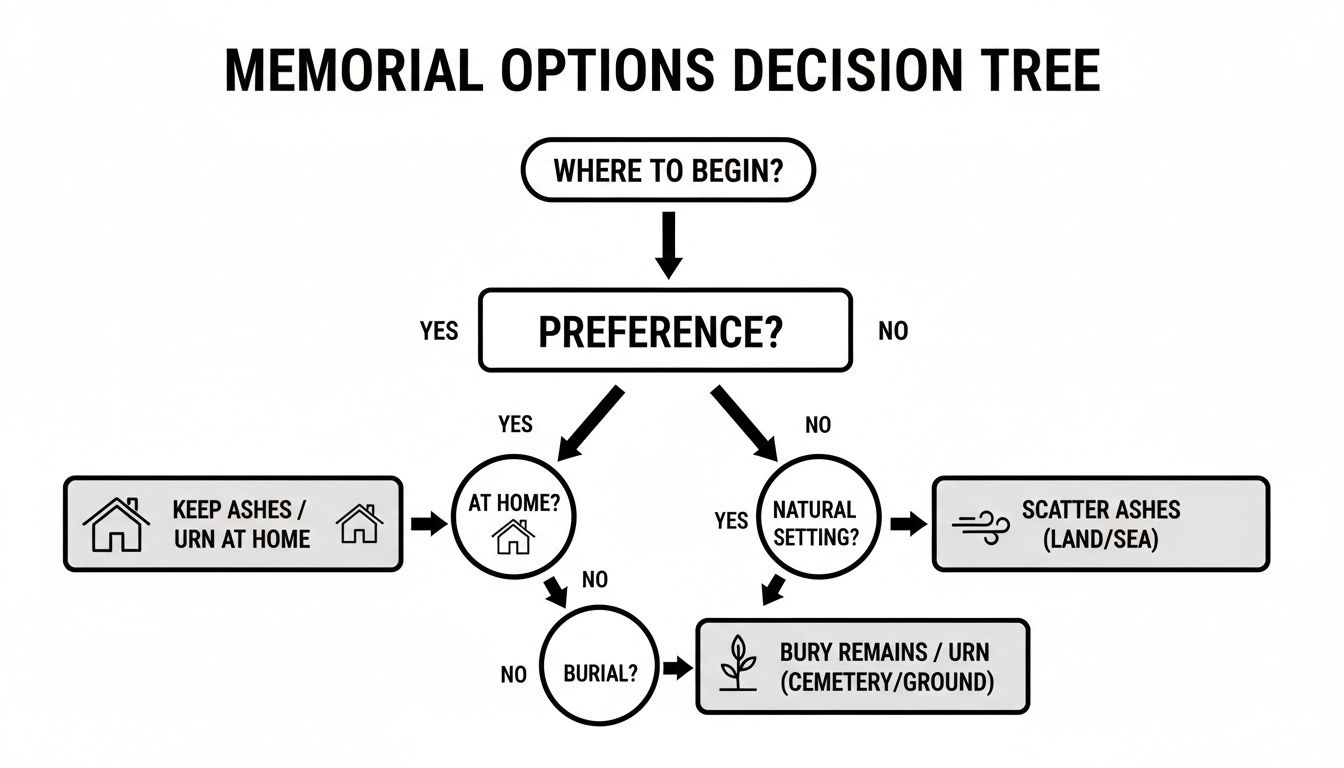
This simple visual breaks it down into three core ideas: keeping the remains, scattering them, or burying them. From these fundamental choices, a whole world of personal and healing possibilities opens up.
The most important factor in your decision is comfort. The right choice is the one that brings you and your family a sense of peace, connection, and closure as you navigate your loss.
Ultimately, this is a profound act of love. Whether you opt for a traditional ceremony or a modern keepsake, the goal is to create a lasting tribute that feels true to the unique relationship you shared.
Scattering and Burial: The Enduring Traditions
For centuries, when it comes to honoring someone after cremation, two paths have stood out: scattering and burial. These traditions are timeless for a reason. They connect us to the earth, to history, and give us a powerful, tangible way to say our last goodbyes.
One offers the poetic release of letting go, while the other provides the comfort of a permanent place to visit. Deciding between them is a deeply personal process. It’s about listening to what your loved one would have wanted, what your family needs for closure, and ultimately, what feels right in your own heart. Let's walk through what each of these options really looks and feels like.
The Symbolism of Scattering Ashes
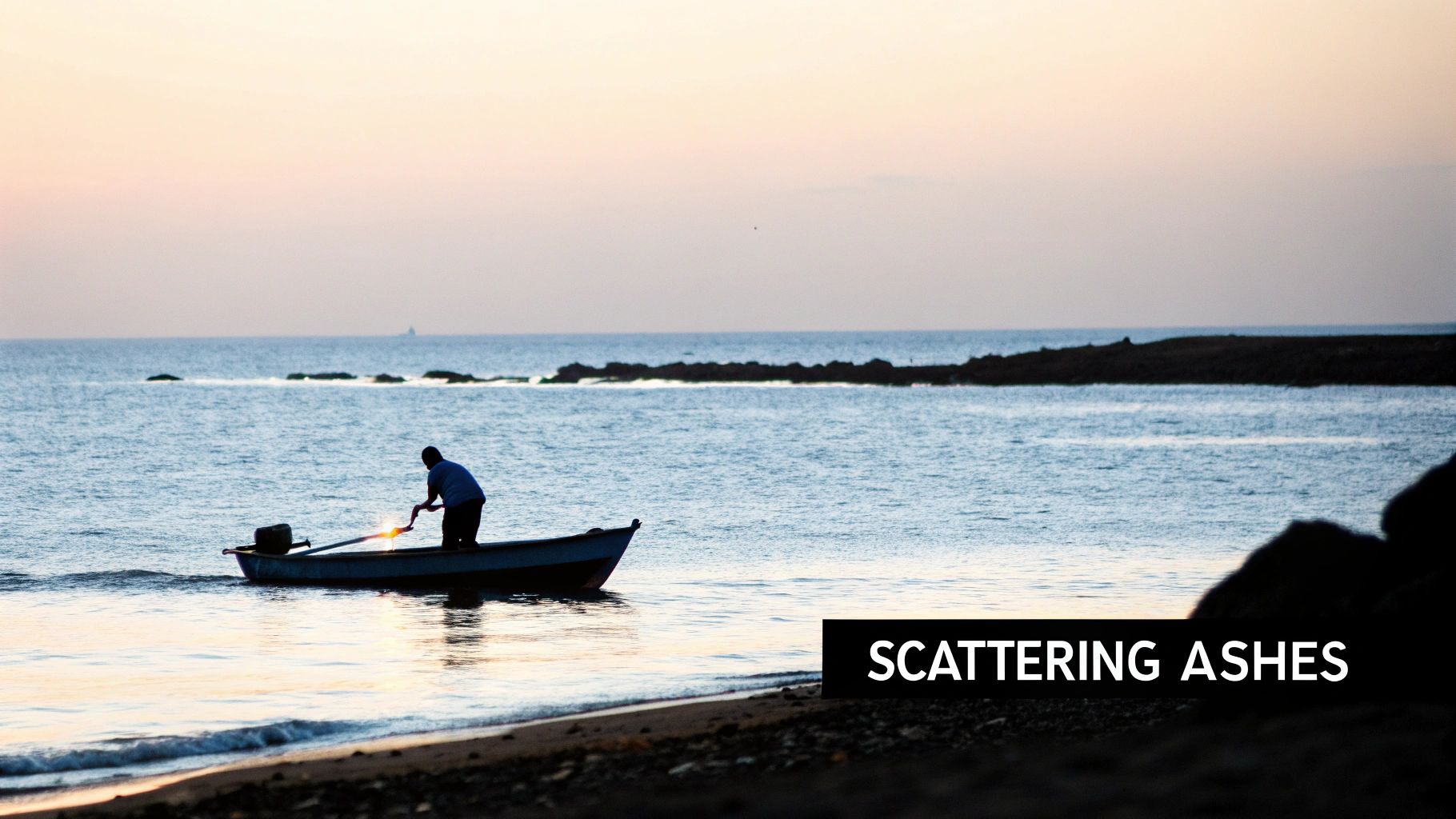
Scattering ashes is more than just an act; it's a symbolic return. It’s a final journey back to a place that brought them joy, a merging with the natural world they loved. For many, it's a beautiful and freeing ceremony that provides a deep sense of peace.
The location is everything. Think about that special hiking trail, the peaceful ocean view they always talked about, or the quiet forest where they felt most at home. Choosing a place that held personal meaning transforms the moment from a simple act into a profound and loving tribute.
As cremation becomes more common—with rates in North America and Europe now exceeding 60%—more families are finding themselves with the remains of a loved one. The average adult cremation results in 5-7 pounds of ashes, and it’s estimated that about 30% of families choose to scatter them in meaningful places like gardens, mountains, or the sea.
Common Places to Scatter Ashes
If scattering feels like the right choice, there are a few places people often turn to for their beauty and significance.
- Scattering at Sea: A classic choice, releasing ashes into the ocean often symbolizes a return to the source of all life. You can arrange a private boat charter for a ceremony or simply release them from a pier.
- A Favorite Natural Spot: Was it a beloved national park, a mountain peak they conquered, or a serene forest trail? These can be perfect final resting places. Just be sure to check local regulations first—many parks require permits and have specific rules to protect the environment.
- On Private Property: With permission from the landowner, scattering ashes on private land like a family farm or in a beautiful garden can create an incredibly personal and easily accessible place for remembrance.
A scattering ceremony doesn't have to be elaborate. The most meaningful tributes are often the simplest: a few words spoken from the heart, a favorite song played, or a moment of shared silence in a place filled with love.
The Permanence of Burial
While scattering offers a beautiful sense of release, burial provides something different: a permanent, physical place for remembrance. For many people, having a designated spot to visit is a vital part of grieving. It’s a place to lay flowers, to talk, to simply sit and reflect. It creates a focal point for remembrance that can be passed down through generations, connecting them to their family story.
Interring an urn is a beautiful way to honor tradition while still choosing cremation. It blends the old with the new, giving you a stable and lasting tribute.
Options for Burying Cremated Remains
If burying the ashes feels right for you and your family, you have several options for a final resting place.
- Family Cemetery Plot: An urn can often be buried in an existing family plot, sometimes even alongside a casket. This allows loved ones to rest together, continuing the family bond.
- Cremation Gardens: Many cemeteries now have beautifully landscaped gardens designed specifically for interring urns. These spots offer a serene and peaceful environment for visitation.
- Columbarium Niche: A columbarium is a wall or structure with small spaces, called niches, designed to hold cremation urns. This provides a secure, above-ground option that is sheltered and well-maintained.
Ultimately, deciding what to do with a loved one's ashes is a final, profound act of love. Whether you choose to scatter them to the winds or place them gently in the earth, the most important thing is to create a tribute that truly honors their memory and brings you peace. For those seeking other ways to keep a memory alive, our guide on unique ways to memorialize a loved one offers additional ideas.
Keeping Your Loved One Close with Home Memorials
For some of us, scattering ashes or burying them feels too final—a last goodbye we just aren't ready for. Keeping a loved one's ashes at home offers a different path. It's a way to feel their presence every day, finding comfort in that closeness.
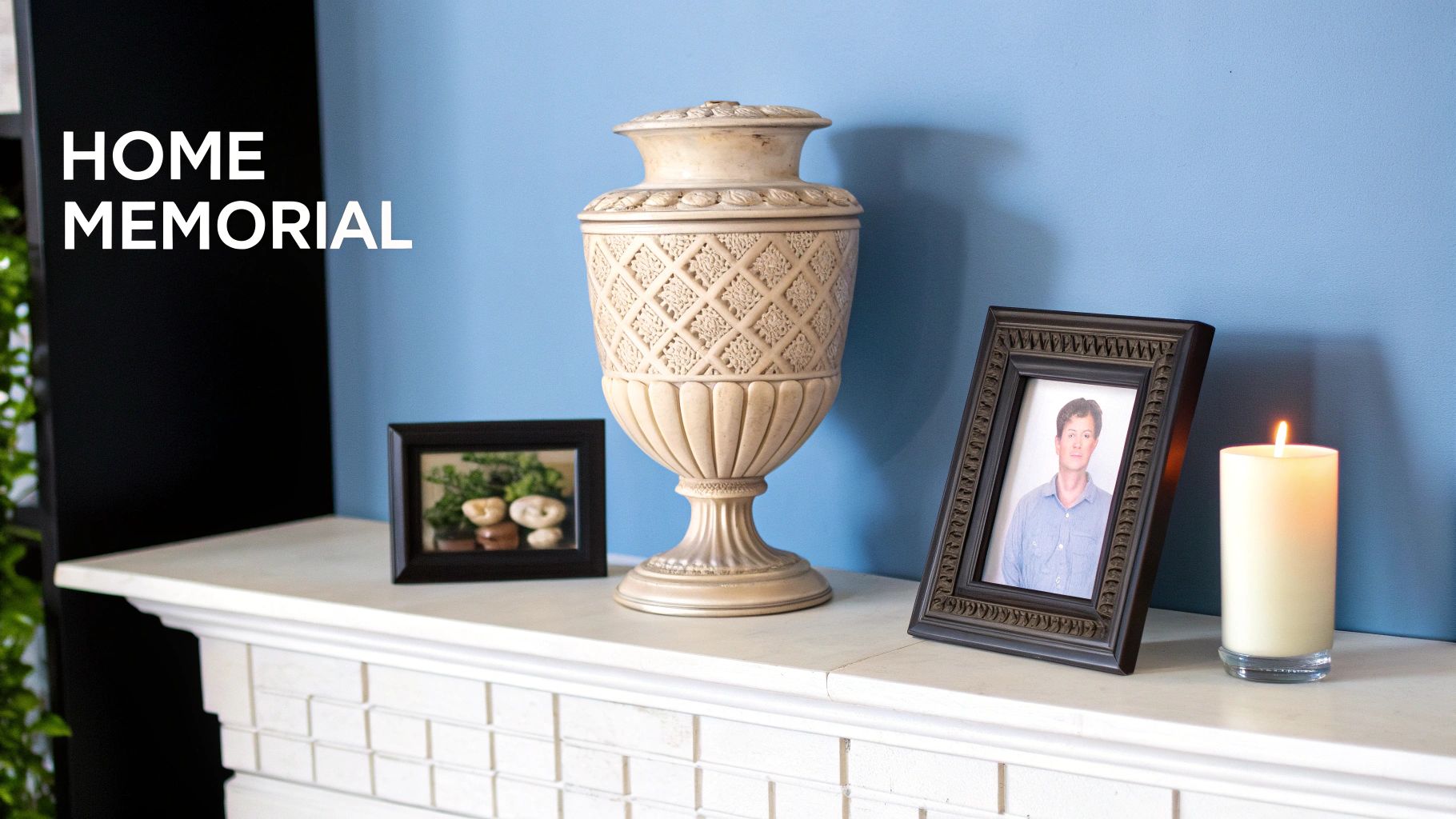
This isn’t about putting grief on hold. It's about weaving their memory into the fabric of your home, creating a space that feels safe, warm, and full of love. It could be a beautiful urn on the mantelpiece or a quiet corner with their photo and a candle. The goal is to create a tribute that feels right for you and truly honors the person you miss.
Choosing the Right Urn for Your Home
The urn you choose is so much more than a simple container. It becomes a piece of art, a symbol of your loved one's life. Thankfully, the options available today go far beyond the classic designs, so you can find something that either blends into your decor or stands out as a stunning memorial.
Here are a few styles to consider:
- Traditional Urns: Think timeless and dignified. These are often crafted from materials like marble, bronze, or classic hardwoods.
- Modern and Artistic Urns: Many contemporary urns look like sculptures or decorative vases. They offer a subtle way to keep ashes nearby without being immediately obvious.
- Biodegradable Urns: If you plan to keep the ashes at home for now but might bury or scatter them later, an eco-friendly urn made of paper or sand can be a great choice.
- Companion Urns: Designed to hold the remains of two people, these larger urns are a lovely option for couples who wished to remain together.
The perfect urn will capture the spirit of your loved one and feel like a natural part of your home.
Your home is a sacred place. Creating a memorial within it is a valid and deeply meaningful way to honor someone you love. The most important thing is that the choice brings you peace.
Creating a Dedicated Memorial Space
Once you have the urn, think about where it will live. Setting up a dedicated spot can give you a focal point for your memories and a quiet place to connect. It doesn't have to be grand—even a small shelf can become a powerful space for reflection.
Consider adding a few personal touches to make it special:
- A favorite framed photograph
- A candle to light on birthdays or anniversaries
- A small vase for their favorite flowers
- An object that was uniquely "them," like a book, their reading glasses, or something from a beloved hobby
This little altar becomes a place where you can talk to them, remember them, and feel their presence in a real, tangible way. It’s a quiet tribute to a life lived and a love that never ends.
Navigating Family Dynamics and Future Plans
Bringing ashes home is a deeply personal decision, but it often affects other family members, too. It’s so important to talk openly about it. Share why this feels right for you, and be sure to listen to how they feel. Sometimes, the best solution is to divide the ashes, which allows several people to create their own small memorials or keepsakes.
It's also wise to think about the long-term. What happens to the ashes when you're no longer here to care for them? Make sure you include clear instructions in your will or final arrangement documents. This simple step ensures the ashes are handled with respect and saves your loved ones from facing another difficult decision down the road. Thoughtful planning today can make this act of love a source of comfort for generations.
For more inspiration on how to honor a life, you can find some wonderful ideas for remembering deceased loved ones.
Creating Lasting Tributes with Memorial Keepsakes
While scattering ashes or creating a home memorial at home brings comfort to many, some of us yearn for something more tangible. We want a personal way to keep a loved one’s memory alive—something we can hold, touch, and carry with us. This is where memorial keepsakes come in, offering a truly beautiful and intimate solution.
Instead of keeping ashes in a traditional urn, a small portion can be transformed into a unique piece of art or jewelry. These aren't just objects; they become a physical embodiment of a cherished bond. For anyone wondering what to do with loved ones ashes that feels both personal and permanent, this offers a profound sense of closeness. It’s a way to weave their memory into the fabric of your daily life.
Transforming Ashes into Art and Jewelry
It’s incredible what modern artisans can do. They've developed amazing techniques for respectfully incorporating cremated remains into lasting works of art. These aren't just keepsakes; they are masterpieces infused with memory, providing a constant and comforting presence.
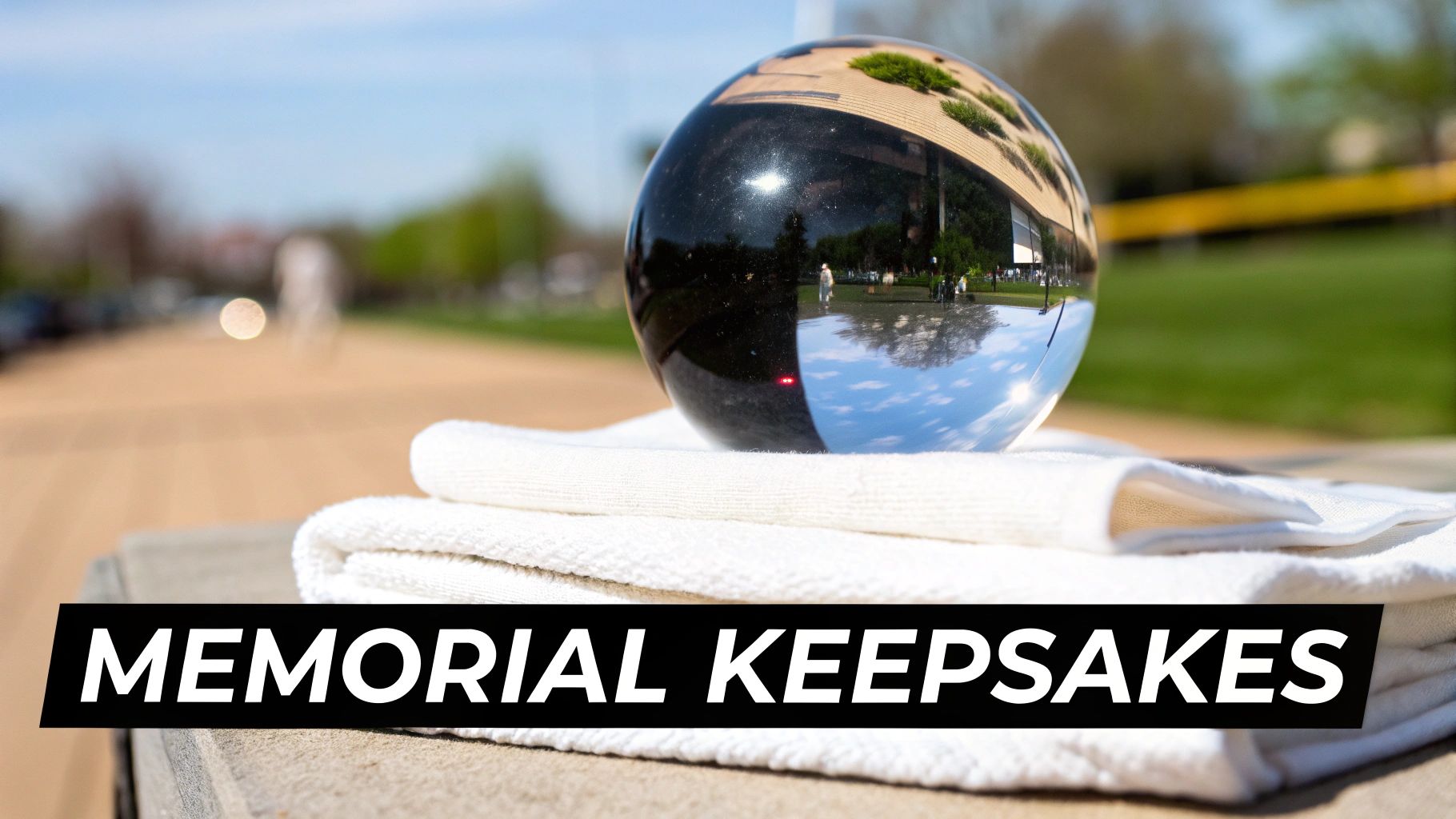
- Glass Art Creations: One of the most popular methods is to infuse a small amount of ash into molten glass. This process can create stunning orbs, hearts, sculptures, or even a paperweight for your desk. As light passes through the glass, it illuminates the delicate swirls of ash suspended inside, creating a mesmerizing and beautiful tribute.
- Memorial Diamonds: This is truly remarkable. A specialized process can take the carbon from cremated remains and turn it into a certified, high-quality diamond. These lab-grown gems are physically identical to natural diamonds and can be set in a ring, pendant, or earrings. It's a way to turn the very essence of a loved one into an eternal symbol of their light.
The most powerful keepsakes are those that tell a story. Whether it’s a swirling glass orb that reminds you of their favorite color or a diamond that sparkles with their memory, the goal is to create something that feels deeply personal and true to them.
Wearable Memories That Stay Close
For many people, the most comforting option is a piece of memorial jewelry. It allows you to physically carry a piece of your loved one with you, offering a private connection wherever you go. The designs available today are so discreet and elegant that no one would ever know its true meaning unless you told them.
This approach combines the beauty of fine jewelry with the profound comfort of keeping a loved one near. It's an intimate way to honor their memory in a form that is both personal and portable.
Choosing Your Perfect Piece
There are several beautiful styles of memorial jewelry to consider, and each one offers a unique way to hold a memory.
- Cremation Jewelry: These pieces—like pendants, bracelets, or rings—have a tiny, hidden compartment designed to hold a small portion of ashes. They are sealed securely, letting you keep your loved one physically close to your heart.
- Fingerprint Engravings: Some jewelers can take an actual fingerprint and engrave it onto a piece of jewelry. This creates a deeply personal connection, capturing a unique part of them that you can actually touch and feel.
- Photo Projection Jewelry: An especially touching option is jewelry that secretly holds a favorite photograph inside. For example, a personalized memorial necklace might look like a simple, elegant pendant. But when you shine a light through its central stone, it projects a cherished picture onto a nearby surface. It’s a private, beautiful surprise that keeps their image close.
Of course, beyond tangible keepsakes, writing a memoir about your loved one can also be a profound way to create a lasting tribute and share their unique story.
Finding a Reputable Creator
When you decide to create a memorial keepsake, you're entrusting someone with something incredibly precious. It’s absolutely essential to choose an artisan or company that is reputable, transparent, and compassionate.
Take your time researching to find the right fit. Read reviews, look at examples of their work, and make sure they have a clear and respectful process for handling the ashes. A trustworthy creator will understand the emotional weight of their work and will treat your loved one's remains with the utmost care and dignity. The final piece shouldn't just be beautiful—it should bring you a deep and lasting sense of peace.
Navigating the Rules with Confidence
Figuring out the rules for handling a loved one's ashes can feel a bit overwhelming, but I promise it's more straightforward than it seems. These guidelines aren't there to make things difficult; they exist to ensure every memorial is handled with respect for the person, the public, and the environment. My goal here is to walk you through it, so you can feel confident and at peace with your decisions.
Cremation has become incredibly common. In fact, over 60% of people now choose cremation over a traditional burial. This shift has opened up so many personal and flexible ways for families to create tributes, moving beyond the cemetery gates. Ashes have become a symbol of memory that can be kept close, scattered in a meaningful place, or transformed into something new. For a deeper dive into these trends, the NFDA website is a great resource.
Understanding Local Scattering Regulations
When it comes to scattering ashes, the biggest factor is where you plan to do it. The rules are mostly common sense, boiling down to respecting public spaces and private property. It's less of a strict legal maze and more about being a good neighbor to both people and nature.
Your best first step is always a quick call to the local city or county clerk's office. They'll give you the final word on any local rules you need to be aware of.
Common Scattering Locations and Their Rules
Let's look at the general guidelines for the most common places people choose for scattering. Remember, these are typical practices, so it's always smart to double-check the specifics for your exact location.
- On Private Land: This is usually the easiest path. If you own the property, you're typically free to scatter ashes there. If the land belongs to someone else, you absolutely need to get their permission first. A simple conversation is all it takes.
- In National Parks: Most national parks are open to scattering, but they almost always require a permit. They also have guidelines to protect the park's ecosystem, such as scattering well away from trails, roads, and water sources.
- Over Public Waters: If you're planning a scattering at sea, federal law is pretty clear: you must be at least three nautical miles from the shore. You're also required to notify the Environmental Protection Agency (EPA) within 30 days of the scattering.
The guiding principle behind all these regulations is simple: leave no trace. The idea is to honor your loved one in a way that keeps the location beautiful and serene for everyone else.
Eco-Conscious Alternatives to Scattering
If you're looking for something that gives back to the earth, there are some truly beautiful and environmentally friendly options that create a living tribute.
One of the most popular is a biodegradable urn that grows a memorial tree. You plant the urn, which contains the ashes and a tree seed. As the urn breaks down, it nourishes the seed, and a new tree begins to grow. It becomes a living, breathing monument you can visit for years.
Another incredible option is to become part of a living ocean reef. Specialized companies can mix ashes into a pH-neutral concrete to create a "reef ball." This ball is then placed on the ocean floor, where it provides a new home for coral and fish, actively helping to restore marine habitats.
These alternatives beautifully transform a final goodbye into a new beginning, honoring a life while also nurturing the planet.
Common Questions About a Loved One's Ashes
Figuring out the final arrangements for a loved one’s ashes can bring up a lot of questions you never thought you'd have to ask. It’s completely normal to feel overwhelmed by the practical details on top of everything else you're feeling. We've gathered some of the most common concerns right here to give you clear, straightforward answers.
Walking through these final steps is a deeply personal journey. Having good information can lift a heavy weight, bringing a little more peace and clarity to your decisions. Our hope is to help you feel confident in making a choice that truly honors your loved one and feels right for your family.
Can We Divide Ashes Among Family Members?
Absolutely. Dividing ashes is a very common and meaningful way to share a loved one's memory. It’s a wonderful solution when family members live in different cities or simply have different ideas about how they want to remember the person they lost.
For instance, one person might feel a strong pull to scatter their portion in the ocean, while another finds comfort in keeping a small amount in a piece of keepsake jewelry. Funeral homes handle these requests all the time and will respectfully separate the remains into smaller urns or containers with the utmost care. This approach is a beautiful way to acknowledge that everyone grieves in their own way.
Don't feel pressured to make one decision that has to work for everyone. Letting each person have a small portion can be a loving compromise that honors each individual's need to remember.
Are There Rules for Traveling with an Urn?
Yes, traveling with an urn, especially on an airplane, requires a bit of prep work. The Transportation Security Administration (TSA) allows you to bring an urn as a carry-on, but you need to follow their guidelines to avoid any stress at the airport.
- Scannable Container: The urn has to be made of a material that the x-ray machine can see through. Think wood, plastic, or a non-lead-lined ceramic. TSA agents are not allowed to open the container, so if it can’t be scanned, it won't be permitted through security.
- Bring Documentation: It's always a good idea to have the death certificate and the certificate of cremation with you. While they might not ask for it, having these papers on hand can smooth over any potential hiccups.
- Check with Your Airline: Before you head to the airport, give your airline a call. Every carrier has its own specific rules, and checking with them directly is the best way to know what to expect.
What Happens to Ashes Kept at Home in the Future?
This is such a thoughtful and important question to ask. If you decide to keep an urn at home, it's a good idea to think about what will happen to it down the road. If there's no plan in place, the next generation will be left with the heavy responsibility of deciding on a final resting place.
The best way to prevent this is to include clear instructions in your will or other end-of-life documents. You can specify what you want to happen—perhaps the ashes should be buried with you, scattered at a specific location, or passed on to another family member. Taking this step ensures your wishes are respected and frees your loved ones from a difficult decision later on. Looking into different memorial gifts for loss of a loved one can also spark ideas for creating a lasting tribute that can be passed down.
At Hidden Forever, we understand the deep need to keep cherished memories close. Our handcrafted projection photo jewelry offers an intimate and beautiful way to hold a picture of your loved one right next to your heart. We transform a treasured photo into an elegant keepsake you can carry with you, always. Discover our collection at https://hiddenforever.com.