

The journey of grief is deeply personal, but the need to remember and honor those we've lost is universal. Remembering deceased loved ones isn't about holding onto pain; it's about celebrating their life, cherishing their impact, and finding ways to carry their legacy forward. While memories live in our hearts, creating tangible, heartfelt tributes can provide immense comfort and a lasting connection. This guide moves beyond generic advice to offer specific, actionable ways to honor those who have passed.
We will explore a roundup of eight unique and meaningful approaches, from living memorials that grow with time to intimate keepsakes that keep their memory close. One particularly personal method involves memorial jewelry, such as pieces from Hidden Forever, which cleverly conceal a cherished photo within a beautiful accessory. This allows you to carry a secret, precious memory with you always, a modern and discreet way to feel connected. Whether you're seeking a public tribute or a private ritual, this list provides practical steps and fresh perspectives to help you create a memorial as unique as the person you are remembering. From planting a memorial tree to establishing an annual tradition, each idea is designed to be a constructive and healing act of love.
1. Cultivate a Living Memorial: Planting a Garden or Tree
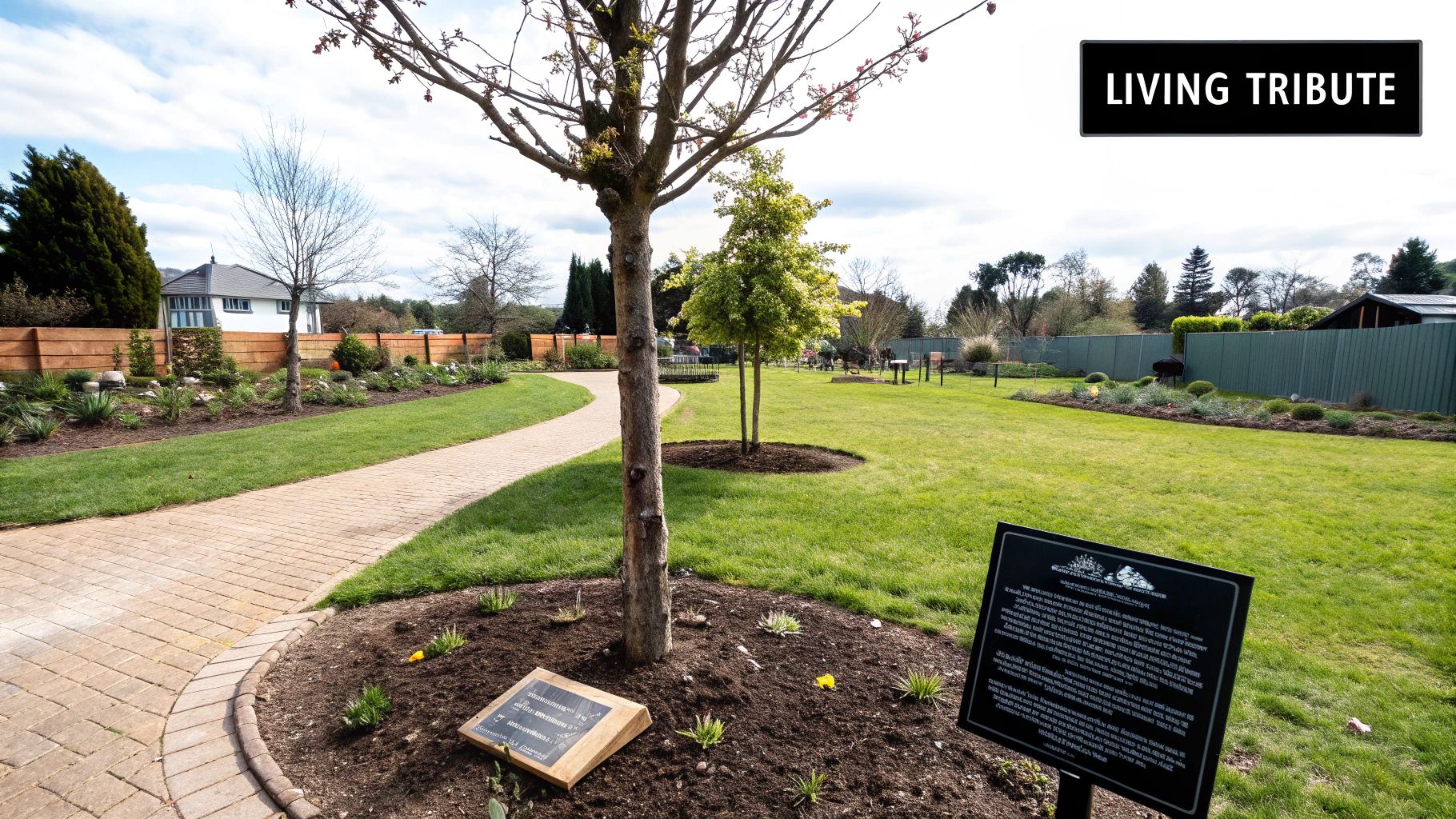
Transforming a piece of earth into a living tribute offers a profound way of remembering deceased loved ones. A memorial garden or a single, dedicated tree becomes a dynamic, evolving space that mirrors the enduring nature of your love and memories. It’s a powerful symbol that life, in new forms, continues to flourish.
This act creates a sanctuary for quiet reflection and connection. Unlike a static monument, a living memorial changes with the seasons, offering new beauty and signs of life throughout the year. It provides a tangible place to visit, tend to, and watch grow, fostering an ongoing bond and a peaceful environment for processing grief.
How to Create Your Living Memorial
Creating a meaningful garden involves thoughtful planning. The process itself can be a healing activity, allowing you to channel your energy into creating something beautiful and lasting.
- Choose Meaningful Plants: Select flowers, shrubs, or a tree that held special significance. This could be their favorite rose variety, the lilac bush that grew in their childhood yard, or a tree corresponding to their birth month.
- Incorporate Personal Touches: Add a small, weather-resistant plaque with their name, important dates, or a cherished quote. You could also include a comfortable bench for sitting or a wind chime that plays a gentle melody.
- Plan for Sustainability: Select plants native to your region. They will be better adapted to the local climate, requiring less water and maintenance, ensuring your memorial thrives for years to come.
- Create a Seasonal Care Plan: Tending to the garden becomes a ritual of remembrance. Schedule time for watering, pruning, and fertilizing as a way to actively honor their memory.
2. Digital Memorial Websites and Online Tributes
In our interconnected world, creating a digital space offers a powerful and accessible method for remembering deceased loved ones. A dedicated website, an online tribute page, or a memorialized social media profile acts as a central, collaborative hub where friends and family from across the globe can gather to share stories, photos, and messages of support.
This approach transforms remembrance into a living, community-driven archive. Unlike a physical memorial, a digital tribute can be updated continuously, preserving an evolving collection of memories for future generations. It provides a permanent and easily shareable space for collective grieving and celebration, ensuring that the legacy and impact of your loved one are never forgotten.
The following infographic highlights the core features that make digital memorials so effective for honoring a life.
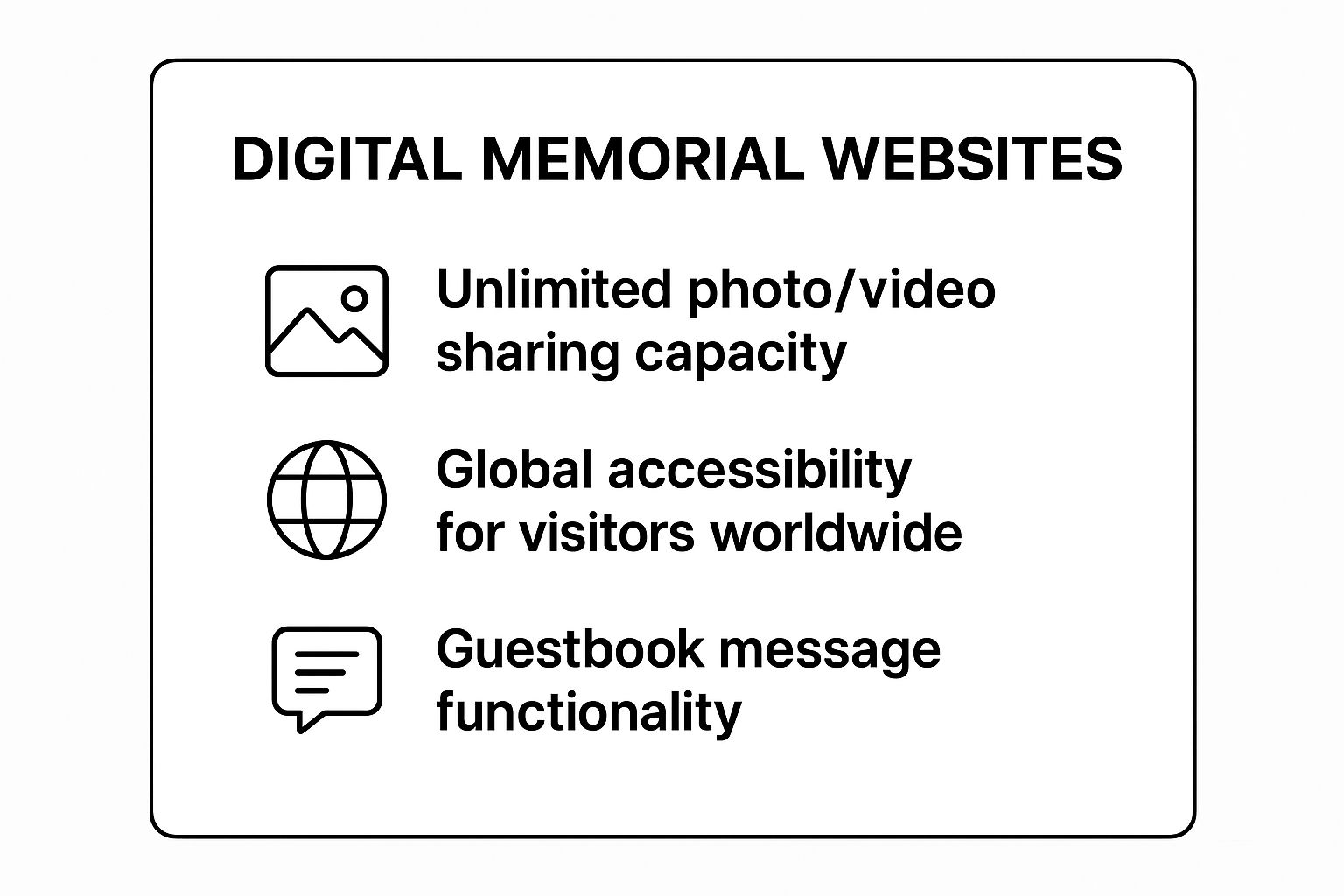
These key features underscore how digital platforms create a boundless and interactive space for remembrance, connecting a community through shared stories.
How to Create Your Digital Tribute
Building an online memorial is a meaningful project that allows you to curate a rich, multimedia narrative of your loved one's life. The process can be a collaborative and healing experience for everyone involved.
- Choose the Right Platform: Select a service that fits your needs. Platforms like Legacy.com or ForeverMissed.com offer dedicated tribute sites with robust features. Alternatively, memorializing a Facebook profile is a simpler, no-cost option for an existing social network.
- Gather and Organize Content: Collect photos, videos, favorite songs, and written stories. Invite close friends and family to contribute their own memories to create a multifaceted and authentic portrayal of their life.
- Ensure Longevity and Security: Regularly back up all content shared on the platform to a personal hard drive or cloud storage. If using a paid service, check its policies on long-term hosting and data preservation.
- Set Engagement Reminders: Use the platform’s features to set up automated reminders for birthdays or anniversaries. This prompts the community to revisit the page and share new thoughts, keeping the memory active and vibrant over time.
3. Memory Jewelry and Keepsakes
Transforming a small element of a loved one, like cremated remains or a lock of hair, into wearable art creates a deeply personal and enduring tribute. Memorial jewelry offers a tangible, intimate way of remembering deceased loved ones, keeping their presence close to you physically and emotionally. This method allows for a constant, discreet connection that you can carry with you through daily life.
These keepsakes serve as a comforting reminder of your bond, turning a symbol of loss into an elegant piece of remembrance. Whether it's a ring infused with ashes, a pendant holding a cherished photo, or a bracelet engraved with their fingerprint, the item becomes a unique focal point for your memories and love.

How to Create Your Memorial Keepsake
Choosing or designing memorial jewelry is a profoundly personal process. It involves selecting a piece that not only represents your loved one but also resonates with your own style and comfort. For more ideas on how to find the perfect piece, explore these personalized memorial jewelry options on hiddenforever.com.
- Work with Reputable Specialists: Select a jeweler or company with proven experience in creating memorial pieces. Look for testimonials and clear processes for handling sensitive materials, such as those offered by companies like Eterneva or LifeGem.
- Choose a Meaningful Element: Decide what you want to incorporate. Options range from cremated ashes and locks of hair to engraved fingerprints, handwriting, or even a cherished photo hidden within a projection pendant.
- Select Durable Materials: Since this is a piece you may wear daily, choose materials that will last. Sterling silver, gold, and stainless steel are excellent choices for their durability and timeless appeal.
- Consider Multiple Pieces: If multiple family members wish to have a keepsake, you can often create several smaller, coordinated pieces from the same source material. This allows everyone to share in the tribute.
4. Establish a Scholarship or Charitable Foundation
Transforming personal loss into a force for public good is one of the most powerful ways of remembering deceased loved ones. Establishing a scholarship fund or a charitable foundation in their name creates a living legacy that channels their passions and values into tangible support for others, ensuring their impact continues to be felt for generations.
This profound act turns grief into positive, ongoing action. It honors the person not just for who they were, but for the ideals they championed. Whether supporting students in a field they loved or advancing a cause they cared about, a foundation provides a structured and enduring way to keep their spirit alive and make a meaningful difference in the world.
How to Build a Lasting Legacy
Creating a foundation or scholarship requires careful planning, but the result is a perpetual tribute that actively helps others. The process can provide a sense of purpose and direction during a difficult time.
- Define a Clear Mission: Determine the core purpose. Was your loved one a passionate artist, a dedicated nurse, or an animal advocate? A scholarship could support aspiring artists, while a foundation might fund local animal shelters. The mission should directly reflect their life and values.
- Partner with Existing Organizations: You don’t have to start from scratch. Partnering with a local community foundation or their alma mater can simplify the process. These institutions already have the legal and administrative framework to manage and distribute funds, reducing overhead and complexity.
- Set Realistic Financial Goals: Start with a manageable goal. A one-time high school memorial scholarship is a great starting point. You can build momentum through fundraising events, online campaigns, and annual appeals to grow the fund over time.
- Create Annual Recognition: Host a small annual ceremony or event to award the scholarship or announce the foundation's latest contributions. This maintains visibility, honors the recipients, and provides a beautiful, recurring occasion for friends and family to gather in remembrance.
5. Memorial Quilts and Fabric Keepsakes
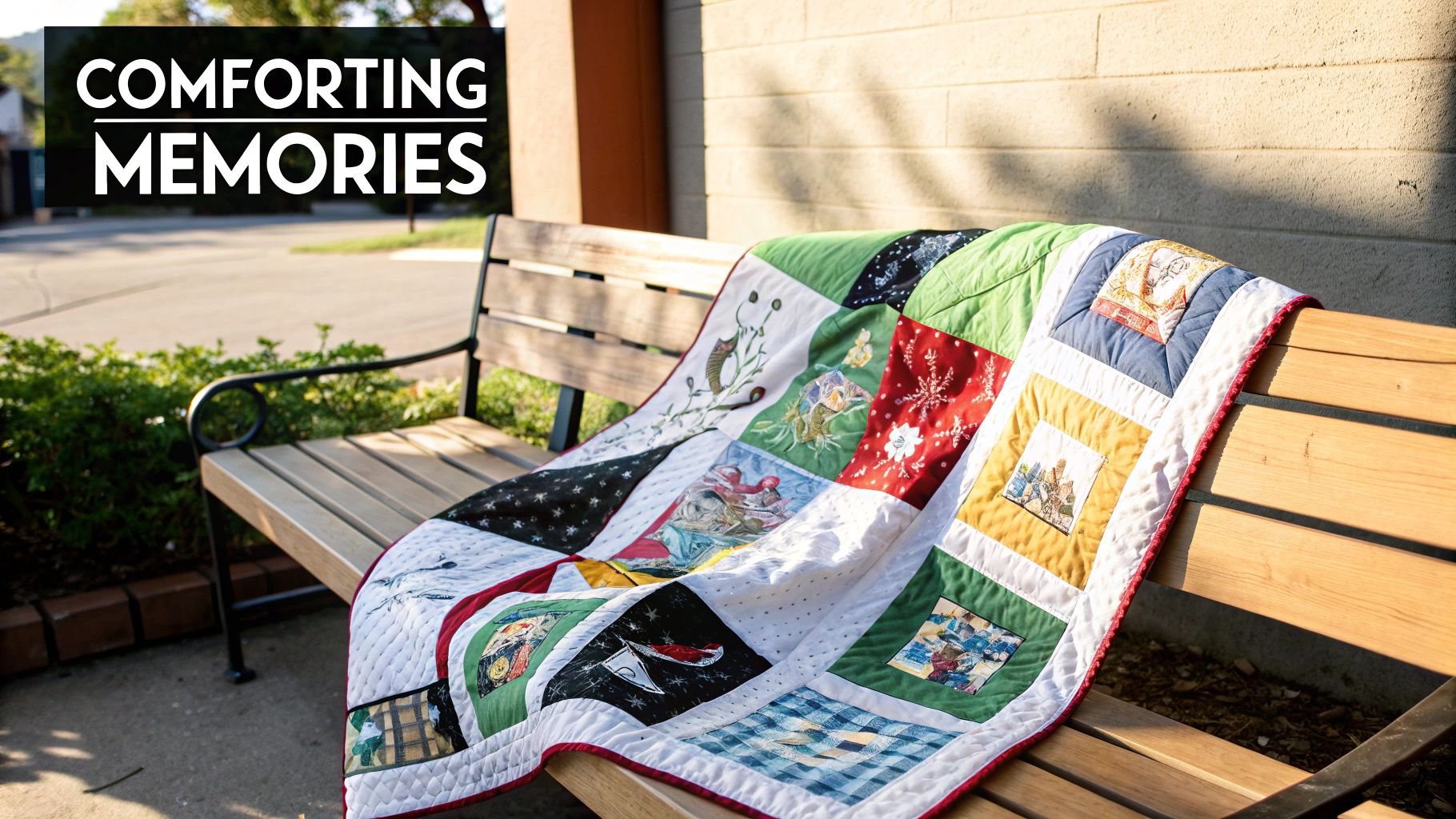
Crafting a quilt, pillow, or another fabric keepsake from a loved one’s clothing offers a uniquely tactile and comforting way of remembering deceased loved ones. These items transform meaningful textiles, like a favorite flannel shirt or a collection of t-shirts, into a functional and beautiful tribute. This process weaves tangible memories into a new form, providing physical comfort during moments of grief.
This approach creates a deeply personal heirloom that can be held, wrapped around you, or displayed in your home. Unlike a photograph, a memory quilt provides warmth and a physical connection, invoking the feeling of a hug. Projects like the renowned AIDS Memorial Quilt demonstrate the profound collective power of this practice, while services like Project Repat make it accessible for anyone to turn cherished clothing into a lasting comfort item.
How to Create Your Fabric Keepsake
The process of creating a memorial quilt or pillow can be a therapeutic journey, allowing you to handle and reminisce over each piece of fabric you choose.
- Select Meaningful Garments: Gather clothing that strongly represents your loved one. Consider a variety of items like work uniforms, concert t-shirts, cozy sweaters, or patterned dresses to create a rich tapestry of their life.
- Assess Fabric Quality: Choose fabrics that are durable and in good condition. Sturdy materials like cotton, denim, and flannel work best. Delicate or heavily worn fabrics may need a stabilizer backing to be used effectively.
- Plan the Design and Size: Decide if you want a large quilt for a bed, a smaller lap blanket, or a collection of pillows. The amount of available clothing will help determine the final size. Arranging the squares before sewing allows you to create a balanced design.
- Consider Professional Help: If you aren't an experienced sewer, professional quilters and services can assemble your keepsake with expert care. They can handle complex designs and ensure the final product is a high-quality, durable heirloom.
6. Memorial Benches and Dedicated Spaces
Creating a permanent, public space for remembrance through a dedicated memorial bench offers a lasting legacy for a loved one. Installing a bench in a park, garden, or another cherished location establishes a physical point of connection for anyone who wishes to sit, reflect, and remember. It serves as both a private tribute and a gift to the community.
This act of remembrance provides a tangible destination for family and friends to gather on anniversaries, birthdays, or any day they feel the need to be close. Unlike more private memorials, a bench integrates the memory of your loved one into the fabric of a public space, allowing their presence to be felt by many while offering a quiet place for rest and contemplation.
How to Create Your Dedicated Space
Establishing a memorial bench involves coordinating with local organizations and requires careful planning. The process ensures the tribute is both beautiful and enduring, honoring your loved one for years to come.
- Research Local Programs: Start by contacting local parks departments, conservancies, or community foundations. Many, like the Central Park Conservancy's Adopt-a-Bench program, have established processes for these tributes. Also, consider university campuses or hospital gardens that were meaningful.
- Select a Meaningful Location: Choose a spot that holds special significance. It could be a park where they loved to walk, a scenic overlook they enjoyed, or a quiet trail they frequented. This personal connection makes the space even more powerful.
- Craft a Thoughtful Inscription: The plaque is a key element. Keep it simple and heartfelt, including their name, dates, and a short phrase or quote that captures their spirit. This message will be a central part of the memorial experience.
- Understand Material and Maintenance: Discuss material options like wood, metal, or recycled plastic with the program coordinator to ensure durability in your local climate. Clarify any ongoing maintenance responsibilities or costs to guarantee the bench remains a fitting tribute.
7. Create a Memory Book or Scrapbook
Crafting a memory book or scrapbook is a deeply personal way of remembering deceased loved ones by weaving together the threads of their life into a single, tangible narrative. This collection becomes more than just a photo album; it’s a comprehensive storybook of their journey, impact, and the relationships they cherished, ensuring their legacy can be held, shared, and passed down.
The process of gathering photos, letters, and mementos provides a structured way for family and friends to connect, reminisce, and contribute to a collective tribute. The resulting book serves as a timeless keepsake that can be revisited during anniversaries, family gatherings, or moments of quiet reflection, keeping their presence vivid for future generations.
How to Compile Your Memory Book
Building a meaningful scrapbook is a collaborative and healing project. It transforms memories from abstract thoughts into a physical object that tells a rich and detailed story.
- Gather Materials Collectively: Reach out to various family members and friends to source photos, ticket stubs, handwritten notes, and other small mementos. This collaborative effort makes the final product more complete and inclusive.
- Organize by Theme or Timeline: Structure the book chronologically to show their life's progression, or organize it thematically with sections for family, career, hobbies, and friendships. For those looking to document their loved one's life comprehensively, a detailed outline for autobiography can provide a clear roadmap.
- Include Written Stories and Anecdotes: Don't let photos stand alone. Ask contributors to write down short stories, captions, or favorite memories associated with the pictures. These personal accounts add irreplaceable emotional depth.
- Consider Digital and Physical Copies: Use services like Shutterfly or Mixbook to design a professional-looking book. You can easily order multiple copies, ensuring key family members each have their own treasured version of this important family document.
8. Memorial Rituals and Annual Traditions
Establishing rituals and annual traditions offers a structured, communal way of remembering deceased loved ones. These dedicated moments create a recurring space in the calendar for collective remembrance, ensuring their memory is actively honored and celebrated by family and friends year after year. It transforms grief into an ongoing, positive connection.
This practice provides a predictable outlet for shared emotions and storytelling, strengthening family bonds. Whether it's a solemn candle-lighting or a joyful gathering, these traditions become a cherished part of your family’s culture. They create a legacy of remembrance that can be passed down through generations, keeping the spirit of your loved one alive.
How to Establish Your Memorial Tradition
Creating a meaningful tradition is a collaborative and personal process. The most powerful rituals are those that genuinely reflect the person you are honoring and feel authentic to those who participate.
- Integrate Their Favorite Activities: Host an annual gathering on their birthday or anniversary and include things they loved. This could be a movie marathon of their favorite films, a potluck featuring their signature recipes, or a game night with their preferred board games.
- Create a Day of Service: Honor their compassionate spirit by organizing an annual volunteer day or participating in a charity walk for a cause they supported. This channels grief into positive action that reflects their values.
- Mark Cultural or Religious Occasions: Embrace traditions like the Jewish practice of lighting a yahrzeit candle on the anniversary of a death or creating an ofrenda for Día de los Muertos. You can learn more about how different cultures approach memorial traditions and spirituality.
- Start Small and Be Flexible: Your tradition doesn’t need to be elaborate. It could be as simple as visiting their favorite spot and sharing a memory. Allow the tradition to evolve over time as your family’s needs and feelings change.
8 Methods for Remembering Loved Ones Compared
| Memorial Type | Implementation Complexity 🔄 | Resource Requirements ⚡ | Expected Outcomes 📊 | Ideal Use Cases 💡 | Key Advantages ⭐ |
|---|---|---|---|---|---|
| Memorial Garden or Tree Planting | Moderate - requires space and setup | High - ongoing maintenance and initial costs | Long-term, living tribute that evolves with time | For those seeking a natural, growing memorial | Environmentally friendly, peaceful space, symbolic growth |
| Digital Memorial Websites and Online Tributes | Low to Moderate - depends on platform | Low - mostly digital upkeep | Broad reach with continuous engagement | Families spread across locations wanting digital sharing | Accessible worldwide, unlimited content, low cost |
| Memory Jewelry and Keepsakes | Moderate - custom crafting needed | Moderate to High - depending on materials | Intimate, physical connection | Individuals wanting constant personal reminder | Highly personal, wearable, customizable |
| Scholarship or Charitable Foundation | High - legal, financial, administrative | High - ongoing financial support and management | Lasting positive community impact | Families aiming to honor values with active legacy | Creates positive impact, honors values, tax benefits |
| Memorial Quilts and Fabric Keepsakes | Moderate to High - skilled crafting | Moderate - time, fabric, professional services | Functional, comforting heirloom | Those wanting to preserve clothing as comforting memorial | Provides warmth, preserves fabric, functional keepsake |
| Memorial Benches and Dedicated Spaces | Moderate - requires approvals, installation | Moderate to High - material and installation | Permanent public memorial location | Those wanting a lasting, public community memorial | Permanent, accessible, dual function as community amenity |
| Memory Books and Scrapbooks | High - time-intensive organization | Moderate - materials and printing costs | Tangible, comprehensive life documentation | Families who want detailed life story preservation | Therapeutic, sharable, historical document |
| Memorial Rituals and Annual Traditions | Low to Moderate - coordination needed | Low - mostly time and planning | Ongoing remembrance through structured events | Families seeking recurring, active ways to honor loved one | Regular connection, adaptable, inclusive |
Crafting a Personal Path to Remembrance
As we journey through grief, the desire to honor those we've lost becomes a powerful and healing force. The methods we've explored, from planting a living memorial tree to creating a digital tribute, all share a common purpose: to transform loss into a lasting legacy. Remembering deceased loved ones is not about clinging to the past; it is about weaving their memory into the fabric of our present and future in a way that brings comfort, meaning, and continued connection.
The path you choose is deeply personal. There is no hierarchy of remembrance; a quiet moment with a memory book can be just as profound as establishing a public scholarship. The true value lies in the intention behind the act. The most meaningful tributes are those that reflect the unique spirit of the person you are honoring and the special relationship you shared.
Finding Your Authentic Tribute
Consider the essence of your loved one. Were they a passionate gardener? A dedicated community volunteer? A storyteller who loved sharing family history? Answering these questions can guide you toward the most fitting memorial.
- For the nature lover, a memorial garden or a dedicated park bench creates a peaceful space for reflection.
- For the philanthropist, a charitable foundation or annual donation drive continues their legacy of giving.
- For the family historian, a meticulously crafted scrapbook or a memory quilt preserves their stories for future generations.
- For those who cherished intimate connection, a personal keepsake like a piece of memorial jewelry offers a tangible, daily reminder of their presence.
The goal is not to perform a grand gesture but to find an authentic expression of love. This act of intentional remembrance is a testament to the enduring bond that death cannot erase. It is a powerful statement that the love you shared continues to exist and make an impact on the world.
The Enduring Power of Remembrance
Ultimately, these rituals and memorials serve a vital role in our own healing. They provide a focal point for our grief, a constructive outlet for our love, and a bridge connecting us to the person who is no longer physically here. By creating these tributes, we ensure that the memory of our deceased loved ones becomes a source of strength, not just sorrow. We give their life story a new chapter, one that continues to inspire, teach, and comfort us. This is the profound and beautiful power of remembering.
For a deeply personal and tangible way to keep your loved one's memory close, explore the unique memorial jewelry from Hidden Forever. Our projection necklaces allow you to carry a cherished photo hidden within a beautiful piece, offering a private, comforting reminder you can hold near your heart. Discover how you can create your own lasting tribute at Hidden Forever.


