

If you have sensitive skin, you know the drill. You find a stunning piece of jewelry, wear it for a few hours, and then the telltale itchiness and redness begin. It’s a frustrating cycle that can make you want to give up on accessories altogether.
But what if you didn't have to? The solution isn't about avoiding jewelry; it's about choosing the right jewelry. The best options are made from biocompatible, nickel-free metals that won’t set off your body's alarm bells. Think materials like titanium, platinum, niobium, and high-karat gold (18K or higher). These are known for being exceptionally pure and non-reactive, making them your skin's best friends.
Finding Jewelry That Actually Feels Good to Wear

That search for style without the sacrifice of comfort is a familiar one for many. The good news is that the fix is simpler than you might think. It really just comes down to understanding which materials work with your body instead of against it.
This guide is here to walk you through everything you need to know. We’ll start with the root cause of your skin's reactions and get you to a place where you can confidently choose pieces that look and feel incredible.
Making Sense of Skin-Friendly Jewelry
Building an irritation-free collection starts with a little bit of knowledge. We're going to demystify all those confusing industry terms and give you practical tools to see past the marketing hype. You’ll learn how to spot truly hypoallergenic metals and avoid the common culprits that are often hidden in plain sight.
You’re definitely not alone in this. The growing demand for skin-safe accessories is clear, with searches for terms like "hypoallergenic jewelry" seeing a major uptick. This reflects a global shift in awareness around skin allergies and a desire for reliable, nickel-free options.
Our goal is to give you the information you need to build a jewelry box you absolutely love. This doesn’t just apply to necklaces and earrings, but rings as well. A ring that fits perfectly is far less likely to trap moisture and cause a reaction, which is why getting the size right is such a crucial first step. If you're not sure, our guide on how to measure for a ring size can help you out.
Your jewelry should bring you joy, not discomfort. By focusing on high-quality, biocompatible materials, you can finally accessorize with confidence and say goodbye to skin irritation for good.
By the time you're done here, you’ll be ready to pick out beautiful, comfortable pieces from brands like Hidden Forever, knowing they’ll be kind to your skin.
Why Some Jewelry Causes Skin Irritation
Have you ever put on a new pair of earrings, only to be left with an itchy, red rash just a few hours later? It’s a frustratingly common experience. But it's usually not because your skin is just "too sensitive"—the real problem is how your immune system reacts to certain metals.
The main offender, almost every time, is nickel. It's a cheap and strong metal often mixed into alloys to make jewelry more durable and less expensive. Your immune system acts like your body's personal security guard. When tiny nickel particles from your jewelry transfer to your skin (which happens faster when you sweat), that security guard can mistake them for a threat.
This false alarm triggers an all-out immune response to fight off the "invader." The result? That tell-tale red, itchy, and sometimes bumpy rash known as allergic contact dermatitis. Getting a better understanding of dermatitis can help you see exactly what's happening to your skin.
The Most Common Metal Allergens
While nickel is definitely the star of the show when it comes to skin irritation, it’s not the only metal that can cause trouble. Some people also react to other metals, like cobalt and even copper.
But as the data below shows, nickel allergies are overwhelmingly more common than any other metal allergy.
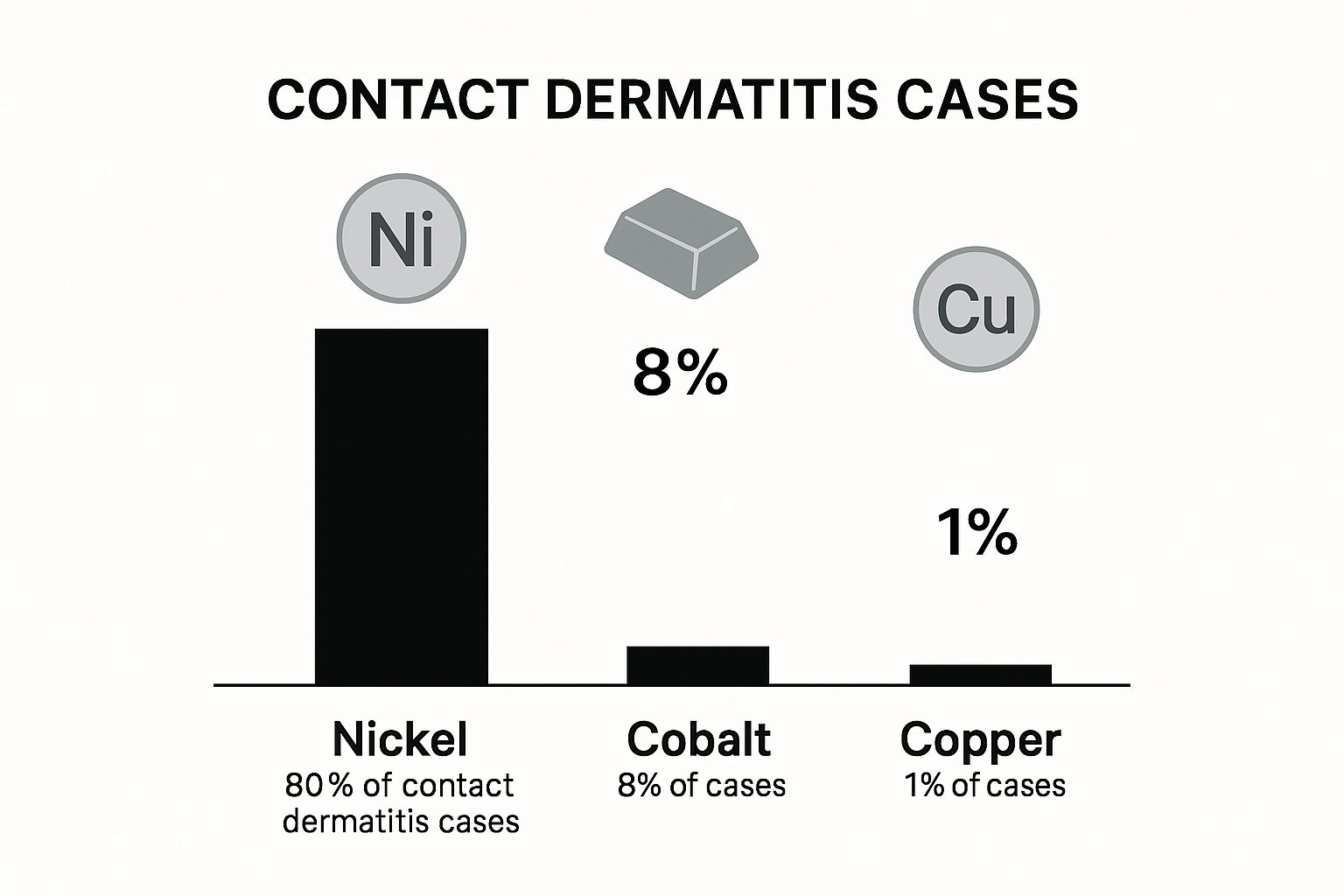
It’s clear that nickel causes the vast majority of skin reactions from jewelry. That makes it the number one thing to watch out for when you're on the hunt for pieces that won't irritate your skin.
Decoding the Term Hypoallergenic
You’ve probably seen the word "hypoallergenic" on jewelry packaging everywhere. But what does it actually mean? It's important to know that this label isn't a 100% guarantee that you won't have a reaction.
Hypoallergenic simply means the jewelry has a reduced likelihood of causing an allergic reaction. It is not a regulated term, so its meaning can vary.
Basically, hypoallergenic jewelry is made from metals that are less likely to contain a high amount of common irritants, especially nickel. But you still need to be careful, particularly with plated jewelry. These pieces have a thin layer of a safe metal covering a core that might contain nickel. Over time, that plating can wear off, exposing your skin to the reactive metal underneath.
Knowing the differences between solid gold, gold-filled, and gold-plated jewelry is a game-changer. This knowledge helps you see past the marketing buzzwords and choose jewelry that is truly safe for you.
Exploring the Safest Metals for Your Skin
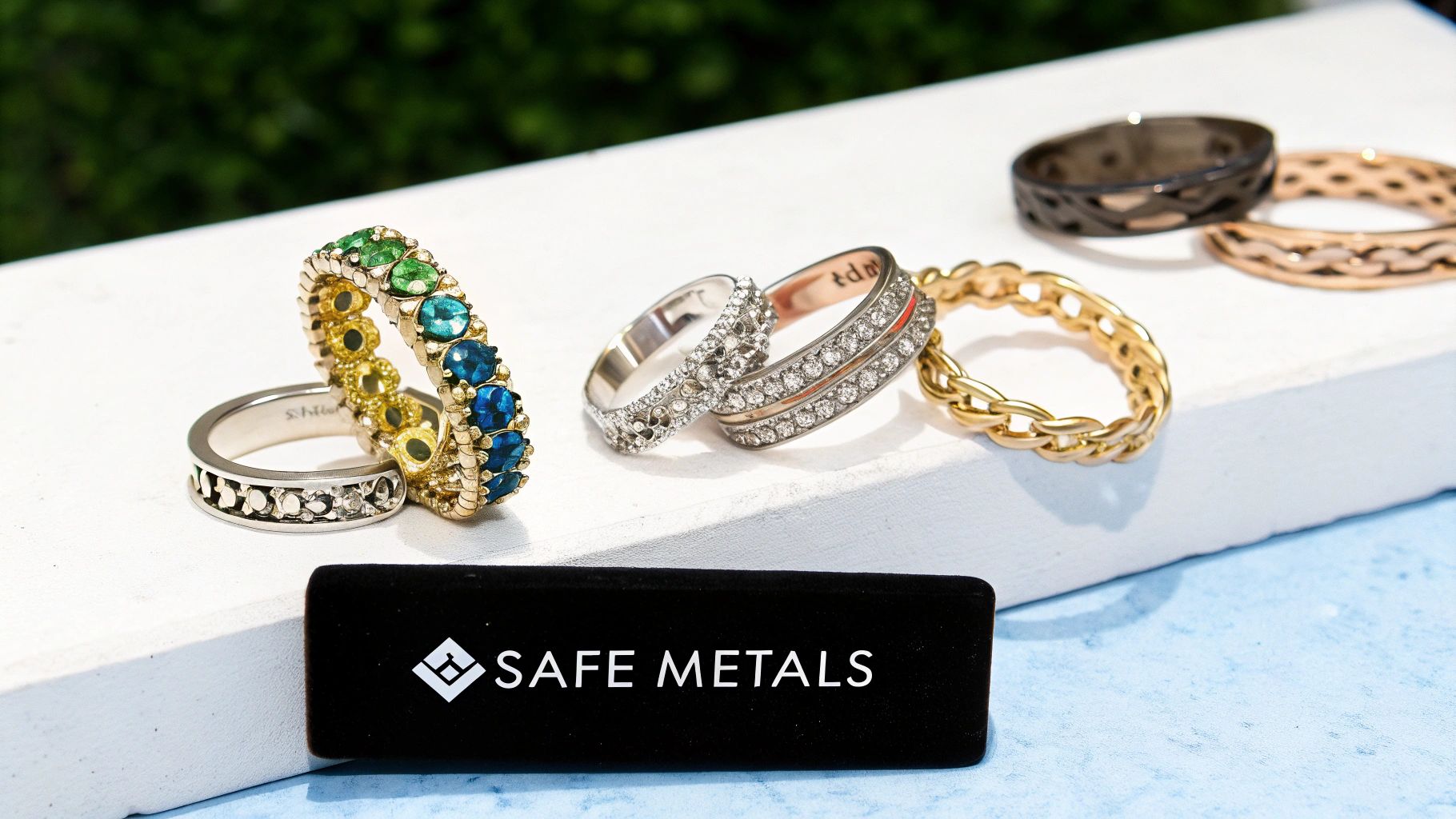
If you have sensitive skin, shopping for jewelry can feel like navigating a minefield. One wrong choice, and you're left with an itchy, uncomfortable reaction. But the good news is you don't have to give up on wearing beautiful pieces. The secret is knowing which metals are your allies.
Think of certain metals as the VIPs of the jewelry world—they’re pure, stable, and incredibly unlikely to cause a fuss. Let's break down the best options, from the top-shelf choices to more accessible alternatives that still keep your skin happy.
The Premium Tier of Hypoallergenic Metals
At the absolute top of the list are metals known for their purity and biocompatibility. These are the materials you can trust completely, making them the gold standard for anyone with severe skin sensitivities.
-
Platinum: Often hailed as the king of hypoallergenic metals, platinum is naturally nickel-free and exceptionally pure—usually 95% pure platinum. Its density and durability mean it won't tarnish, corrode, or react with your skin. It’s a true lifetime investment for worry-free wear.
-
Titanium: This metal is so body-friendly that it’s a go-to in the medical field for surgical implants. On top of being 100% nickel-free, it's feather-light yet incredibly strong, offering total peace of mind for even the most reactive skin.
-
Niobium: While lesser-known, niobium is just as impressive. It's another highly inert, medical-grade metal. One of its coolest features is that it can be anodized to create a rainbow of vibrant colors without any plating, giving you a fun and completely safe way to express your style.
These options are the safest you can find, ensuring your jewelry looks great and feels comfortable day in and day out.
High-Karat Gold: A Luxurious and Safe Choice
Pure gold itself is hypoallergenic. The catch? In its 24-karat form, it’s far too soft for everyday jewelry. To make it stronger, jewelers mix it with other metals, called alloys—and that's where sensitivity issues can crop up.
The secret is to go for a higher karat. The higher the number, the more pure gold is in the piece, which dramatically lowers the risk of it containing irritating alloys like nickel. An 18-karat piece is 75% pure gold, leaving only 25% for other metals.
For sensitive skin, 18K gold or higher is always the best bet. This minimizes the amount of potentially reactive metals, giving you a beautiful and safe option. Lower-karat golds, like 10K or 14K, have a higher percentage of alloys and are much more likely to cause a reaction.
Accessible and Reliable Metal Options
You don't have to break the bank to find skin-friendly jewelry. Several affordable metals are fantastic choices, as long as you know what to look for.
For instance, sterling silver can be a great option. By definition, it's 92.5% pure silver, and the remaining 7.5% is usually copper—which most people tolerate just fine. The key is to make sure that the alloy doesn't contain any nickel. To get a better handle on its composition, you can learn more in our guide that helps define 925 sterling silver. Just be sure to look for pieces explicitly marked as "nickel-free" for total confidence.
To make things even clearer, let's look at a side-by-side comparison of the top choices.
Comparing Hypoallergenic Jewelry Metals
This table breaks down the best metals for sensitive skin, evaluating them on key factors like their hypoallergenic rating, durability, cost, and overall appearance.
| Metal Type | Hypoallergenic Rating | Durability | Average Cost | Best For |
|---|---|---|---|---|
| Platinum | Excellent (Naturally Nickel-Free) | Very High | High | Engagement rings and lifetime pieces |
| Titanium | Excellent (100% Biocompatible) | Extremely High | Moderate | Everyday wear, active lifestyles |
| Niobium | Excellent (Medical Grade) | High | Low to Moderate | Colorful and unique fashion jewelry |
| 18K+ Gold | Very Good | Good to High | High | Fine jewelry and classic styles |
| Sterling Silver | Good (If Nickel-Free) | Moderate | Low | Fashion jewelry and versatile pieces |
| Surgical Steel | Good (Specific Grades) | Very High | Low | Body jewelry and durable designs |
Ultimately, the best metal for you comes down to balancing your skin's sensitivity with your budget and personal style. Whether you go for the unmatched purity of platinum or a carefully selected piece of sterling silver, you have plenty of great options to choose from.
Metals and Coatings to Be Cautious Of
https://www.youtube.com/embed/9YrEa5u0J4M
Knowing which metals are safe is only half the battle. To really protect your skin, you also need to know which materials to avoid. Some metals and coatings are notorious for causing irritation, and they’re often lurking in the most unexpected places—especially in affordable or trendy costume jewelry.
The Usual Suspects: Problem Metals
If you’ve ever had a bad reaction to jewelry, there's a very good chance nickel was the culprit. It's the number one offender by a long shot. Jewelers often mix it into other metals as an alloy to make them stronger and shinier, so you’ll find it in everything from low-karat gold to some types of stainless steel and plated pieces. For anyone with a nickel allergy, even a little bit of contact can lead to an itchy, red rash.
While nickel gets most of the blame, a few other metals can cause trouble for highly sensitive skin. Allergies to cobalt and copper are less common, but they definitely exist. Copper is the reason some jewelry leaves that harmless (but annoying) green stain on your skin. It’s just the metal oxidizing when it comes into contact with your body’s natural oils and sweat.
A Closer Look at Platings and Coatings
That beautiful, shiny finish might be hiding something your skin won’t like. It’s important to remember that many jewelry pieces aren’t made of solid precious metal. Instead, they have a thin decorative layer coated over a less expensive—and often reactive—base metal.
Understanding the lingo is your best defense. Here’s what you need to know:
- Gold-Plated: This means a super-thin layer of gold has been bonded to a base metal, which is typically brass or nickel. The gold layer is microscopic and can rub off pretty easily with regular wear, exposing your skin to whatever is underneath.
- Gold-Filled: This is a much better choice. Gold-filled jewelry has a thick layer of gold that’s been heat and pressure-bonded to a core metal. By law, that gold layer has to make up at least 5% of the item's total weight, creating a durable barrier that’s highly unlikely to wear away.
- PVD Coating: Short for Physical Vapor Deposition, this is a modern technique that fuses a thin but incredibly tough film of metal (like titanium nitride) onto a base. It’s extremely resistant to scratches and corrosion, making it a much safer bet than traditional plating.
When it comes to coated jewelry, think durability. A thicker, stronger coating is your best friend because it keeps the reactive base metal safely away from your skin.
This distinction is more important than ever. The market for body piercing and hypoallergenic jewelry was valued at around USD 8.64 billion and is expected to keep growing, which shows just how many people are demanding safer, higher-quality materials.
Silver plating is another area where things can get confusing. To get a better handle on how it stacks up, check out our guide on what is silver-plated jewelry. The more you know, the easier it is to choose jewelry you can wear comfortably and confidently.
Your Checklist for Buying and Caring for Jewelry
Okay, now you've got the scoop on what makes some metals safe and others a recipe for a rash. The next step? Putting that knowledge into practice.
A little bit of savvy shopping and a good care routine can make all the difference. It's how you build a collection of beautiful jewelry that you can actually wear for years without a second thought. This quick checklist is your guide to keeping your skin happy and your pieces sparkling.
Before You Buy Jewelry
The best way to avoid a skin reaction is to make a smart choice from the very beginning. It pays to look beyond the pretty picture and do a little detective work.
Here’s what to check before you hit "add to cart":
- Read the Fine Print: Scan product descriptions for specific keywords. Phrases like "nickel-free," "surgical grade," or "18K gold-filled" are your green lights. If you see vague terms like "hypoallergenic" or "metal alloy," it's time to ask more questions.
- Don't Be Shy—Ask! If the details aren't crystal clear, reach out to the seller. Ask them straight up: "Is this piece 100% nickel-free?" or "What's the base metal under the plating?" Any brand worth your money will be happy to tell you.
- Look for a Good Return Policy: Think of this as your safety net. Make sure the store has a fair and easy return policy, just in case a piece doesn't agree with your skin. A brand that's confident in its materials will always stand behind them.
Caring for Your Hypoallergenic Pieces
Even the highest-quality, skin-friendly metals need a little TLC to stay at their best. Over time, everyday grime, oils, and moisture can accumulate on your jewelry, potentially trapping irritants right against your skin.
Keeping your jewelry clean and dry isn't just about the sparkle—it's a critical step in preventing the buildup of things that could irritate your skin.
Proper maintenance not only keeps your pieces comfortable but also protects your investment. This is especially true for metals like sterling silver, which can tarnish without regular attention. We've put together a full guide on how to care for sterling silver jewelry with all the details you'll need.
Lastly, how you store your jewelry matters. Keep your pieces in a cool, dry place and try to store them separately in a lined jewelry box or a soft pouch. This simple step prevents scratching and slows down any tarnishing by limiting exposure to air and moisture.
Common Questions About Hypoallergenic Jewelry
Even after getting the hang of skin-friendly metals, a few questions might still be nagging at you. That's totally normal. Finding the right hypoallergenic jewelry can feel like navigating a maze, so let’s clear up some of the most common uncertainties. Think of this as your quick-reference guide to help you shop with confidence.
We'll dive into specific materials and tricky situations, building on what we've already covered so you have all the answers you need, right at your fingertips.
Is Sterling Silver Good for Sensitive Skin?
This is a great question, and the answer is a solid "mostly, yes." The good news is that true sterling silver is 92.5% pure silver, and pure silver is naturally hypoallergenic. The other 7.5% is a mix of other metals—usually copper—added to make the jewelry strong enough for everyday wear. For most people, copper is completely fine.
The trouble starts when nickel sneaks into that alloy mix. To be safe, always look for jewelry that’s clearly marked as "nickel-free 925 sterling silver." This little phrase is your guarantee that the other metals are just as skin-friendly as the silver. Also, remember that silver tarnishes. While the tarnish itself is harmless, the buildup can sometimes irritate super-sensitive skin, so a regular, gentle cleaning will keep your pieces looking great and feeling comfortable.
Can I Suddenly Become Allergic to My Jewelry?
Absolutely, and it can be incredibly frustrating when it happens. You can wear a piece of jewelry for years with no issues, and then one day, boom—a rash appears. This is a real medical condition called acquired allergic contact dermatitis.
Basically, your immune system can get sensitized to an allergen like nickel after being exposed to it over and over again. Imagine a cup filling up with water, drop by drop; eventually, a single extra drop makes it overflow. If a beloved necklace or ring suddenly starts irritating your skin, it’s a strong sign that your body's tolerance has hit its limit. When that happens, it’s time to switch to a truly hypoallergenic metal like titanium or platinum.
What Does "Surgical Grade Stainless Steel" Mean?
When you see the term "surgical grade," it's almost always referring to 316L stainless steel. It's an incredibly durable and corrosion-resistant alloy, which makes it a popular and budget-friendly choice for jewelry.
While 316L stainless steel is considered hypoallergenic and is safe for most people, it's not 100% nickel-free. The key difference is that the small amount of nickel it contains is tightly locked within the steel's molecular structure, so it's extremely unlikely to ever touch your skin.
For the vast majority of people, surgical steel is a perfectly reliable and comfortable option. But if you know you have a severe nickel allergy, you might want to play it extra safe and stick to metals that are guaranteed 100% nickel-free, like titanium, niobium, or platinum.
How Can I Test Jewelry for Nickel at Home?
Got a piece you're unsure about? Maybe it's a vintage find or a gift, and you want to check it before risking a reaction. There's a super simple way to do this at home. Just pick up a nickel spot test kit, which you can find online or at most pharmacies.
These kits are incredibly easy to use:
- They come with a special solution (usually dimethylglyoxime).
- You'll put a drop or two of the solution onto a cotton swab.
- Then, just rub the swab on a hidden part of the jewelry, like the inside of a ring or the back of an earring post.
If the swab turns pink or red, nickel is present. It’s a fast, cheap way to get total peace of mind and avoid a nasty skin reaction.
At Hidden Forever, we believe your most precious memories deserve to be held in jewelry that’s as safe as it is beautiful. That's why our pieces are crafted from high-quality, nickel-free materials like 925 sterling silver and 18k gold plating. Explore our collection of personalized projection jewelry and wear your memories with confidence.