

Losing someone you love is a deeply personal experience. There’s no right way to do it, no timeline to follow, and certainly no checklist to complete. The most important thing is to give yourself the grace to feel whatever comes up, without judging yourself for it. It's a journey of learning to navigate powerful emotions and finding meaningful ways to carry their memory with you.
Your Grief Is A Journey Not A Checklist

When you're in the fog of loss, the world can feel completely upside down. It's critical to remember that every single thing you're feeling is valid, even when your emotions swing wildly from one moment to the next.
This isn’t a process with a neat beginning, middle, and end. It’s time to throw out that old idea of rigid "stages" of grief. Your experience is as unique as your relationship with the person you lost, shaped by your personality, your life, and the specifics of their passing.
Understanding Your Personal Grief Experience
A better way to think about grief is like the ocean. In the beginning, the waves are huge and they come one after another, giving you no time to catch your breath. Over time, those waves might get smaller or the space between them might grow longer, but they never truly go away. A song on the radio, a familiar smell, or a holiday can bring a massive wave crashing down when you least expect it.
You're likely to cycle through a whole mess of emotions, and all of them are a normal part of this. You might feel:
- Deep Sadness: An ache and emptiness that feels bottomless.
- Anger or Frustration: You might be mad at the illness, the situation, or even the person you lost for leaving.
- Guilt and Regret: Playing "what if" or "if only" on a loop, thinking about things you wish you'd said or done differently.
- Confusion and Numbness: A sense of shock or disbelief. This is often the mind's way of protecting itself from the full force of the pain.
- Moments of Peace: You might have a brief window where the pain eases, and then feel guilty for feeling okay.
Give yourself permission to feel it all. Coping with loss isn’t about forgetting. It’s about figuring out how to live with their absence and finding new ways to keep their memory alive. We talk more about navigating these feelings in our guide on how to deal with grief.
Grief is not a problem to be solved; it's a process to be honored. The most compassionate thing you can do is allow yourself the space and time to navigate it, trusting that healing will come in its own time and in its own way.
Sometimes, seeing your feelings laid out can help you feel less alone. Grief shows up in our bodies, our thoughts, and our actions in so many different ways.
Understanding Common Grief Reactions
This table summarizes the diverse ways grief can manifest, helping you normalize your own experiences.
| Type of Reaction | Common Examples | Why It Happens |
|---|---|---|
| Emotional | Sadness, anger, guilt, anxiety, loneliness, numbness, relief, yearning. | These are the direct emotional responses to the pain of loss and the brain's attempt to process it. |
| Physical | Fatigue, nausea, weight changes, aches and pains, insomnia, weakened immunity. | The mind-body connection is strong. Emotional stress directly impacts your physical health. |
| Cognitive | Disbelief, confusion, difficulty concentrating, preoccupation with the deceased. | Your brain is working overtime to make sense of a reality it doesn't want to accept. |
| Behavioral | Crying spells, social withdrawal, loss of interest in activities, restlessness. | Your daily routines and motivations have been disrupted, leading to changes in how you act. |
| Spiritual | Questioning your faith, finding comfort in beliefs, searching for meaning in the loss. | A major loss can shake your core beliefs and force you to re-examine what gives life meaning. |
Recognizing these reactions as part of the grieving process can be a small comfort. It’s a sign that you are human, and you are healing.
Moving Beyond a Prescribed Timeline
Forget the calendar. There is no schedule for grief. For some, the most intense pain lasts for months. For others, it takes years before they find a "new normal." This is your path, and comparing your journey to anyone else's will only make it harder.
Loss is a universal part of being human. Research shows that 86% of people over 16 have experienced the grief of losing someone. This shared experience, while deeply personal, connects us all. It reminds us that while our pain is our own, we are not alone in it.
The goal isn't to "get over" it. That's impossible. The goal is to integrate the loss into your life. It's about building a life around the hole they left, where you can hold both the sorrow of their absence and the love from their memory. Healing starts the moment you give yourself permission to grieve at your own pace, on your own terms.
Gentle Self-Care for Your Hardest Days

When you’re grieving, just getting through the day can feel impossible. The idea of "self-care" might even sound exhausting or out of reach when you're carrying such a heavy emotional load. So let's be clear: this isn't about elaborate routines or pressure to "feel better." It’s about survival and finding the smallest ways to show yourself kindness.
Forget the bubble baths and wellness trends for a moment. This is about acknowledging you have almost no energy and giving yourself grace for it. On the toughest days, self-care is just about making your world a little bit softer.
Lowering the Bar to the Floor
Right now, your only job is to breathe. That’s it. Anything you manage beyond that is a win. The goal is to make comfort as easy to reach as possible, removing any barrier that demands energy you just don’t have.
Think in tiny, manageable steps:
- Keep food simple. Don’t even think about cooking complex meals. Stock up on easy-to-grab snacks like protein bars, yogurt, pre-cut fruit, or cheese sticks. The objective is fuel, not a five-star meal.
- Find warmth. There's something incredibly grounding about holding a warm mug of tea, coffee, or even hot water. That physical warmth offers a small, tangible comfort when everything inside feels cold.
- Step outside for 60 seconds. You don’t need to go on a long walk. Just open the door, step onto the porch, and feel the air on your face. Take three deep breaths. That’s it. Now you can go back inside.
These tiny actions won’t fix your grief. They aren't meant to. They're designed to get you through the next five minutes, and sometimes, that’s a monumental victory. As you move through these emotions, remember to practice self-compassion; it’s the bedrock of this gentle process.
Self-care during grief isn't an indulgence; it's a necessity. It’s about tending to your basic needs when your heart is overwhelmed so you have the strength to keep going.
Creating Islands of Calm
Your days might feel like a turbulent ocean of grief. The idea here is to create tiny "islands of calm" where you can rest, even just for a moment. These are brief, intentional pauses that can break up the intensity and give you a little space to breathe.
An island of calm could be as simple as sitting by a window and watching the clouds without any agenda. It might be listening to a single, soothing song—maybe not one that triggers intense memories just yet. Or it could be spending a few quiet minutes looking through old photos, letting yourself connect with a happy memory. If looking at photos brings you comfort, our guide on how to organize family photos can help you create a special place for them.
Addressing Grief-Related Sleep Issues
Sleep is often one of the first casualties of grief. Your mind races, your body is tense, and rest feels like a distant memory. While serious insomnia might require professional help, you can try a few gentle things to make your space more conducive to rest.
Simple Sleep Hygiene for Grieving Hearts
| Tactic | How It Helps | In Practice |
|---|---|---|
| Create a "Wind Down" | Signals to your body it’s time for rest, even when your mind is busy. | Dim the lights an hour before you want to sleep. Listen to a calming podcast or a soothing audiobook. |
| Write It Down | Helps get racing thoughts out of your head, creating a bit of mental space. | Keep a notebook by your bed. Jot down any worries or memories keeping you awake. No need for full sentences. |
| Focus on Sensation | Gently brings you back into your body and away from overwhelming thoughts. | Pay attention to the feeling of your blankets. Notice their texture and the gentle weight on your body. |
These aren't about forcing sleep, but rather creating the conditions for it to happen. Be patient with yourself. Grieving is a marathon, not a sprint, and your body needs every bit of rest and kindness it can get. Giving yourself these small moments of care is an act of profound strength.
Finding Strength in Connection and Support
Grief can be an incredibly isolating experience, making you feel like you’re adrift on an island all by yourself. But even when it feels like the last thing you want to do, reaching out is one of the most powerful steps toward healing. You don’t have to carry this immense weight alone.
Connecting with others isn’t just about comfort; it’s a crucial part of navigating the loss of a loved one. The simple act of sharing your story can make the burden feel a little lighter. Remember, asking for support isn't a sign of weakness—it’s a testament to your resilience and your will to move forward.
How to Ask for What You Really Need
Your friends and family desperately want to help, but often, they just don't know how. They might offer empty platitudes or, worse, say nothing at all for fear of saying the wrong thing. This is where you can gently guide them. Being specific about what you need helps them help you.
It can feel awkward to bring it up, but simple, direct requests work best. You don't owe anyone a long explanation.
- "Could you just come sit with me for a bit? We don’t even have to talk."
- "I'm really struggling with meals. Would you be willing to drop off something simple for dinner next week?"
- "I’d love to share a happy memory I have of them. Do you have a few minutes to just listen?"
- "Running errands feels impossible right now. Could you grab a few things from the store for me?"
People are usually relieved to be given a concrete task. It takes the guesswork out of it for them and provides a tangible way to show they care. For more ideas on small, supportive gestures, you might find some inspiration in our guide on thoughtful gifts for grieving friends.
Grief is a shared experience, even when it feels intensely personal. Allowing others to step in and share the load not only helps you, but it also allows them to express their love and support in a meaningful way.
This need for connection is more than just emotional. Social isolation can have serious health consequences, especially when you're grieving. The World Health Organization has linked loneliness to over 871,000 deaths annually worldwide—that’s an average of about 100 deaths every hour. This sobering statistic shows just how vital it is to fight the urge to withdraw.
Finding Your People in Support Groups
Sometimes, the people closest to you, with the best intentions, just can't fully grasp what you're going through. That’s when connecting with others who have faced a similar loss can be incredibly validating. Support groups offer a safe harbor where you don’t have to pretend you’re okay.
Whether they meet online or in person, these groups provide a unique kind of understanding. You're surrounded by people who just get it. They know the messy, non-linear reality of grief and won’t judge you for it.
Types of Support Groups to Consider
| Group Type | What to Expect | Best For You If... |
|---|---|---|
| Local Groups | Face-to-face meetings, often led by a professional. Great for building community ties. | You thrive on in-person interaction and want to build local connections. |
| Online Forums | 24/7 access to message boards and chats. Offers flexibility and anonymity. | You have a hectic schedule or feel more comfortable sharing from behind a screen. |
| Peer-Led Groups | Run by others who have also experienced loss. The focus is on shared experience. | You're looking for a less formal setting built on mutual empathy and understanding. |
If you're looking for that sense of community, exploring resources like local and online grief support groups can be a game-changer. The goal is simply to find a place where you feel seen and heard. Building these bridges, whether with friends or in a group setting, is a powerful reminder that you are not walking this path alone.
Honoring Their Memory Your Own Way
Keeping the memory of someone you’ve lost alive is a deeply personal journey. There’s no right or wrong way to do it. What matters is finding rituals and keepsakes that feel true to you and the special relationship you shared.
This isn't about grand gestures. It's about creating quiet, lasting connections that bring you comfort and help you carry their story forward in a way that feels right. For some, that might mean cooking their favorite meal on their birthday or starting a small project they were passionate about.
Creating Personal Rituals of Remembrance
A personal ritual can be any simple, intentional act that helps you feel connected to their memory. These small but consistent actions can become anchors, offering you moments of peace and reflection when you need them most.
Think about what really defined them and the time you had together.
- Plant a tree or create a garden space. A living tribute is a beautiful thing. Tending to it can feel like a meditative practice, a physical way to nurture their memory as it grows.
- Create a playlist of their favorite music. Music has a way of instantly bringing back memories and feelings. Listening to their songs can make you feel close, whether it brings a smile to your face or a comforting wave of sadness.
- Write them a letter. You can say all the things you wish you’d had the chance to. Tell them about your day, share a memory, or just let your feelings out. You don't have to send it anywhere; the act of writing itself can be a powerful release.
The best rituals are often woven right into your daily life. It could be as simple as sipping coffee from their favorite mug each morning or taking a walk along a path you both loved.
Honoring a loved one isn't a one-time event. It's an ongoing conversation of the heart, a series of small, loving acts that keep their spirit woven into the tapestry of your life.
Grief can be incredibly isolating. This decision tree can be a helpful guide when you’re feeling alone and aren't sure where to turn for connection.
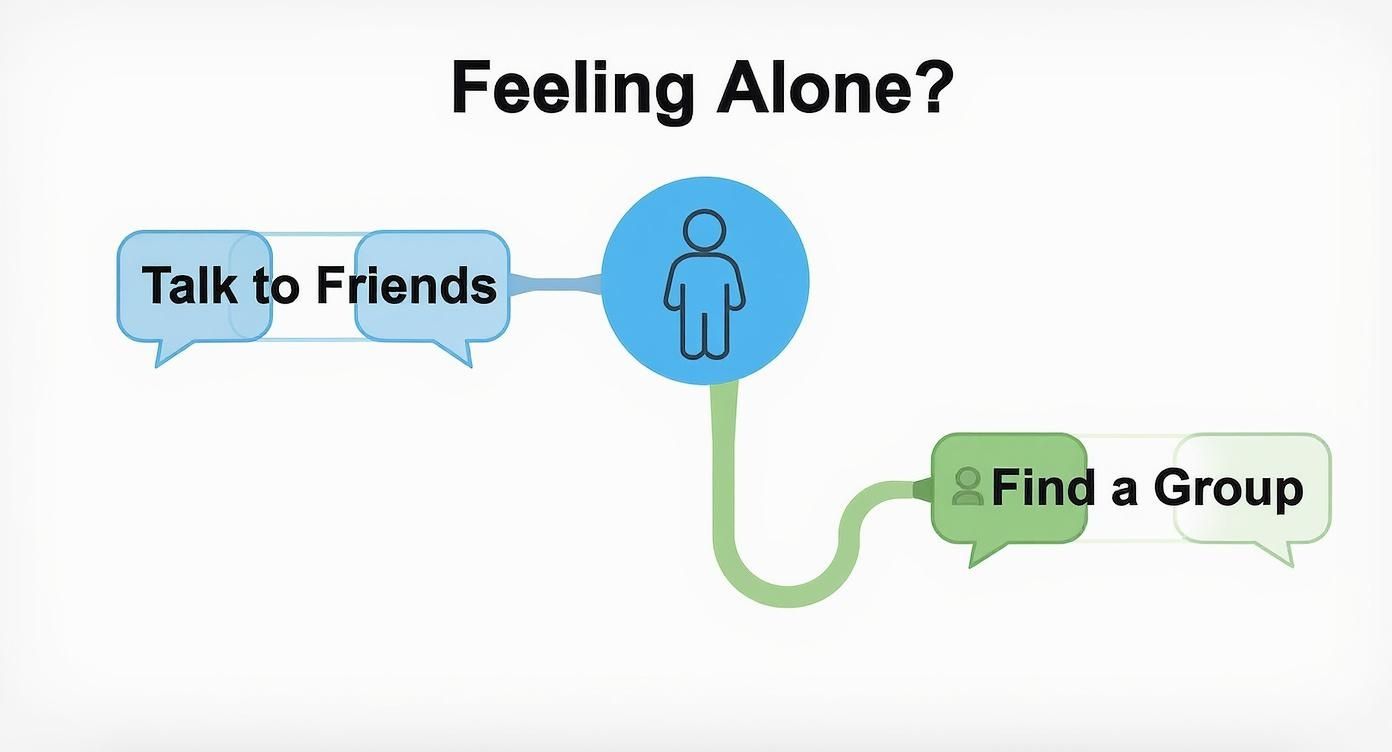
Whether you reach out to friends you already have or find a new community, the most important step is simply making that connection.
Tangible Keepsakes for Lasting Comfort
While rituals create moments of connection, sometimes you need something you can actually hold. Something tangible can provide a profound sense of closeness and comfort, and memorial jewelry offers a quiet, private way to keep your loved one’s presence with you always.
These pieces are far more than just accessories. They become deeply personal symbols of an unbreakable bond, and many people find they’re a real source of strength on difficult days.
Just the simple act of touching a necklace or glancing at a ring can bring a rush of love and a sense of peace. For more ideas, you can explore our guide on different ways of remembering deceased loved ones.
Choosing Your Memorial Jewelry
Finding the right piece of memorial jewelry is a very personal choice. This table breaks down a few options to help you find a meaningful way to honor your loved one.
| Jewelry Type | What It Is | Best For | Considerations |
|---|---|---|---|
| Cremation Jewelry | A piece with a small, hidden compartment to hold a tiny amount of cremation ashes. | Those who want to keep a physical part of their loved one with them in a discreet, beautiful way. | Make sure the piece is securely sealed. Filling it can be an emotional process, so be gentle with yourself. |
| Fingerprint Jewelry | Jewelry engraved with the actual fingerprint of your loved one, creating a truly one-of-a-kind pattern. | Someone looking for a highly personal and intimate tribute that captures their loved one’s unique touch. | You'll need a clear fingerprint sample. Funeral homes can often help with this. |
| Photo Projection | A piece with a special stone inside that projects a favorite photo when you shine a light through it. | People who find comfort in seeing a cherished photo and want a modern, surprising way to keep it close. | Use a high-quality photo for the best clarity. It’s a wonderfully private way to view your memory. |
Ultimately, only you can decide how to best honor their memory. Whether it's through a living tribute like a tree or a personal keepsake like a piece of jewelry, the goal is the same: to find something that brings you solace. It’s about creating a lasting connection that allows you to carry their love forward, not as a source of pain, but as a source of strength.
Navigating Holidays and Painful Anniversaries
https://www.youtube.com/embed/947J635ru9M
When you’re grieving, the calendar can feel like a minefield. Birthdays, holidays, and the anniversary of a loved one’s passing often bring a fresh, intense wave of sorrow that can catch you completely off guard, even years down the road.
These milestone days have a way of magnifying the emptiness. The world is celebrating, but for you, their absence is just louder and more profound. It's a tough spot to be in, especially with all the pressure to feel festive or participate in traditions.
Here’s the most important thing to remember: you have permission to navigate these days however you need to. There is no right or wrong way to do this.
Giving Yourself Permission to Choose
Facing a special occasion without your loved one puts you in the driver's seat. You get to decide how that day will look and feel, and it's all about honoring your own needs—not anyone else’s expectations.
You might feel a jumble of emotions, from deep sadness to moments of happy remembrance. That’s perfectly normal.
You have a few paths you can take, and it's okay to choose any of them:
- Uphold a Tradition: Sometimes, continuing a cherished tradition can be a beautiful way to feel close to them. Maybe you still bake their favorite holiday cookies or drive to that spot you both loved. This can bring a real sense of comfort and continuity.
- Create a New Ritual: If old traditions are just too painful right now, creating something new can be a gentle way forward. You could light a special candle in their memory, write them a letter, or spend the day volunteering for a cause they cared about.
- Skip It Altogether: It is 100% okay to just opt out. If the thought of a big family dinner feels unbearable, give yourself permission to spend the day quietly at home. Your emotional well-being has to come first.
Telling people what you need can feel hard, especially when family has their own ideas. A simple, honest phrase like, "This year, I need to handle the holiday a bit differently. I hope you can understand," is more than enough. You don't owe anyone a lengthy explanation.
Your grief is your own, and how you manage these milestone days is a deeply personal choice. Empower yourself to do what feels most compassionate and supportive for your own heart.
Preparing for the Day
Sometimes, the dread leading up to a difficult day is just as hard as the day itself. A little bit of planning can give you a sense of control and help you feel more prepared for whatever emotions show up. This isn't about avoiding sadness, but about creating a soft place for it to land.
You could create a "care package" for yourself filled with things that bring you comfort—a soft blanket, a favorite movie, a soothing playlist. It also helps to let a trusted friend know the day is approaching. Ask if you can call them, or even just get a text letting you know they're thinking of you.
Keeping a small, tangible reminder of your loved one nearby, like a piece of personalized memorial jewelry with thoughtful keepsakes to honor them, can also be a quiet source of strength and connection throughout the day.
Turning Triggers into Remembrance
While these days are definite triggers for pain, they can also become gentle opportunities for remembrance. The goal isn’t to erase the sadness, but to make space for the love you still carry.
Actionable Ways to Reframe a Difficult Day
| Approach | Actionable Example | How It Helps |
|---|---|---|
| Share a Memory | Call a friend or family member and tell them a funny or sweet story about your loved one. | It shifts the focus from their absence to the joy they brought into your life. |
| Do Something They Loved | Spend the afternoon gardening, hiking, or visiting a museum—whatever they enjoyed doing. | This creates a feeling of connection by stepping back into a little piece of their world. |
| Give Back in Their Honor | Make a donation to their favorite charity or volunteer your time for a cause they believed in. | It transforms grief into a positive action that continues their legacy of kindness. |
Ultimately, getting through these significant days is about finding a balance between acknowledging your pain and honoring their memory. Be patient with yourself. Be kind to yourself. You're navigating an incredibly difficult path, and every step you take is a testament to your love and resilience.
Got Questions About Grief? You're Not Alone.
When you're dealing with the loss of someone you love, your mind can feel like a storm of questions and what-ifs. It's easy to feel lost and wonder if what you're going through is "normal." It is. Let's walk through some of the most common worries that come up and offer some gentle, honest answers.
"How Long Is This Going to Hurt? Will I Ever Feel Normal Again?"
This is the big one, isn't it? The honest answer is that grief doesn't follow a schedule. That raw, all-consuming pain you feel right now will soften with time, but the loss itself becomes a part of who you are.
The goal isn't to get back to the "old you." That person's world hasn't been turned upside down. Healing is about building a new normal, one where you learn to carry their memory with you. Some days will feel like a huge step backward, and that’s perfectly okay. Think of it less like a straight line and more like a spiral—you might circle back to certain feelings, but each time you do, you're a little stronger and a little more able to hold their memory with love instead of just pain.
"Is It Wrong to Feel Angry or Even Relieved?"
Absolutely not. Grief isn't just about being sad. It's a whole mess of tangled, confusing, and often contradictory emotions. None of them are wrong.
Feeling angry is incredibly common. You might be furious at the illness, at the unfairness of it all, or even at the person you lost for leaving. This is a natural reaction to feeling so powerless.
Relief is also a very real part of grief, especially if your loved one was sick for a long time. Feeling relieved that their suffering is over doesn't mean you loved them any less. It's a testament to your compassion.
Give yourself permission to feel whatever comes up, without judgment. Your feelings are valid, even the ones that feel uncomfortable.
"When Should I Think About Getting Professional Help?"
Grieving is a deeply human process, but sometimes the weight of it is just too much to bear on your own. It might be time to reach out to a therapist or a grief counselor if, months down the road, your grief still feels completely overwhelming.
Keep an eye out for a few signs:
- You're finding it impossible to handle daily life—work, self-care, or just getting out of bed.
- You've cut yourself off from everyone and feel like you can't reconnect.
- You're turning to things like alcohol or drugs to numb the pain.
- You feel completely stuck in that initial, intense wave of grief, and it isn't shifting at all.
A professional can offer a safe harbor and practical tools to help you navigate these rough waters. There is no shame in asking for a map when you're lost.
"How Can I Help My Kids When I'm Grieving, Too?"
Trying to be strong for your children while your own heart is breaking is one of the toughest things a parent will ever do. The most important things you can give them are honesty and reassurance.
Explain what happened in simple, age-appropriate terms. It's also okay for them to see you cry; it shows them that feeling sad is a normal, healthy response to loss. A 2021 study found that 2.9 million children in the U.S. had lost a parent or primary caregiver, which shows just how many families are navigating this same difficult path.
Try to keep some simple routines going to give them a sense of stability. Let them draw, play, or talk about how they're feeling. Above all, tell them over and over again that they are safe, they are loved, and they will be taken care of. Sometimes, getting help from a family therapist or a kids' bereavement group can make a world of difference for everyone.
At Hidden Forever, we know that holding onto a physical reminder of a loved one can bring incredible comfort. Our handcrafted projection jewelry is a quiet, beautiful way to keep their image close, right over your heart. Explore our collection and create a personal keepsake that honors the unique bond you shared.


