

So, you’re wondering what a gold chain really costs. Let's get right to it. A simple, lightweight 10K gold chain might set you back around $150. On the other end of the spectrum, a heavy, intricate 18K Cuban link could easily soar past $5,000. That’s a huge gap, and this guide is here to show you exactly why it exists.
Your Quick Answer to Gold Chain Prices
Jumping into the world of gold chains can feel overwhelming with all the talk of karats, weights, and styles. The final price you see is a blend of many factors, but the biggest one is always the gold itself. To give you a solid starting point, we put together a simple table with some ballpark figures for popular chains.
Think of this table as your cheat sheet. It gives you a quick idea of what to expect before we break down the "why" behind these prices. It’s a way to get your immediate questions answered before we get into the details that truly shape the final cost.
Estimated Gold Chain Cost at a Glance
This table gives you estimated retail prices for common gold chains based on their purity (karat) and weight. It's designed to help you quickly find a price range for the kind of chain you have in mind.
| Gold Purity | Approximate Weight | Common Styles | Estimated Price Range (USD) |
|---|---|---|---|
| 10k Gold | 5 - 10 grams | Cable, Figaro, Rope | $150 - $400 |
| 14k Gold | 10 - 20 grams | Cuban, Box, Franco | $600 - $1,500 |
| 18k Gold | 15 - 30 grams | Cuban, Rope, Byzantine | $1,200 - $3,500+ |
| 22k Gold | 20 - 40 grams | Rope, Traditional | $2,000 - $6,000+ |
Keep in mind, these are just estimates to get you started. The final price tag can shift based on craftsmanship, brand, and the daily price of gold.
Understanding Market Influences
The price of gold isn't set in stone. It goes up and down with the global economy, making it a moving target. In just the last few years, we've seen some major swings in the market.
The cost of a gold chain depends heavily on its weight and the current market, but recent trends show a clear spike. Gold's significant yearly gains have pushed even simple chains into the luxury category. For perspective, a 50-gram 14k chain contains about 29 grams of pure gold, giving it a raw metal value of over $4,500. In the US, that same chain often retails for $6,000-$10,000 after typical jeweler markups. To see this in action, you can explore gold price trends on Trading Economics.
This is why paying attention to the market is just as crucial as knowing the chain's weight or style. Our goal is to give you the full picture of what you’re paying for—from the raw gold value to the final price in the store.
Decoding the Price Tag: The 7 Key Cost Factors
Ever wondered why two gold chains that look almost identical can have wildly different price tags, sometimes by thousands of dollars? It’s not just random pricing. A few key factors all come together to build the final cost of a piece. Getting a handle on these elements is your first step to becoming a smart buyer who knows exactly what you're paying for.
Think of a gold chain's price like a recipe. The core ingredients—the gold's market price and the chain's actual weight—set the baseline cost. But just like a gourmet meal, other things like the intricacy of the craftsmanship, the complexity of the design, and even the brand name add layers of value that create the final sticker price.
The Core Value: Gold Purity and Weight
At the heart of any gold chain's price are two non-negotiable factors: its purity (the karat) and its total weight in grams. These two things establish the raw value of the gold in the chain before any other costs, like labor or design, are even considered.
First up is weight. This one’s pretty simple—a heavier chain has more gold, so it costs more. A chunky 30-gram chain is always going to have a higher price than a delicate 10-gram chain of the same karat and style.
Next is purity, which we measure in karats (k). This little number tells you how much pure gold is actually in the alloy. Pure 24k gold is beautiful but too soft for everyday wear, so it’s mixed with other metals to make it stronger and more durable.
- 18k Gold: This is 75% pure gold. It has that rich, deep yellow glow and is considered a top-tier choice for fine jewelry.
- 14k Gold: Made of 58.3% pure gold, this is the most popular option in the U.S. for a good reason. It hits the sweet spot between beautiful color, solid durability, and a more accessible price point.
- 10k Gold: Containing 41.7% pure gold, this is the most durable and budget-friendly of the solid gold options, though its color is a bit paler.
Understanding the difference between 14k, 18k, and 24k gold is crucial because those percentages directly impact both the price and how the chain will hold up over time. For a deeper dive, check out our guide on https://hiddenforever.com/blogs/projection-jewelry/karat-gold-understanding-gold-purity.
Design and Craftsmanship
Beyond the raw gold value, the complexity of the chain's design—the "how it's made" part—plays a massive role in the final cost. It's like the difference between a simple machine-made print and an intricate, hand-painted piece of art. The more skill and labor that go into it, the higher the price.
A straightforward Cable or Figaro link chain can often be produced by machines, which keeps the labor costs down. But a more complex style, like a woven Byzantine or a hand-assembled Rope chain, demands serious time and skill from an artisan, and that expertise is reflected in the price.
The Craftsmanship Markup: This is the value a jeweler adds for their skill, time, and overhead. It can be anywhere from 50% to over 300% of the raw gold's value, depending on how complex the design is and the reputation of the maker.
This markup isn't just for linking the chain together. It also covers all the finishing touches—the meticulous polishing, the secure soldering, and the creation of a sturdy, high-quality clasp. A flawless finish and a reliable clasp are the signs of great craftsmanship and absolutely justify a higher price.
Brand Reputation and Market Price
Finally, a couple of outside forces have a big say in the cost: the brand name and the daily market price of gold itself. A chain from a world-famous luxury brand will naturally come with a premium. You're paying for the name, the prestige of the design, and the brand's reputation for quality, much like a designer handbag costs more than a generic one.
The spot price of gold is the most unpredictable factor of all. It can change daily based on global markets, supply, and demand. Jewelers base their pricing on the current market rate, so the exact same chain might cost you a different amount today than it would six months from now. It's why a little bit of good timing can sometimes help you snag a better deal.
Solid Gold vs. Gold-Plated: A Smart Buyer's Comparison
When you start shopping for a gold chain, you'll run into a big question right away: should you go for solid gold or gold-plated? This one choice dramatically impacts the price, so knowing the difference is your first step to making a smart purchase that fits your wallet and your life.
Let's use an analogy. A solid gold chain is like a solid oak dining table. It's pure, valuable material all the way through. It's built to last for generations and holds its value over time. It’s a true investment.
On the flip side, a gold-plated chain is more like a beautiful table with a rich oak veneer. It gives you that same stunning, high-end look, but it’s made by bonding a very thin layer of real gold over a strong, affordable base metal like sterling silver. You get the look without the hefty price tag.
Key Differences at a Glance
So, which one is right for you? It really boils down to balancing cost, durability, and long-term value. Neither one is "better" than the other—they just serve different needs for different people.
To make it crystal clear, here’s a straightforward comparison.
Solid Gold vs. Gold-Plated Chains: Key Differences
This table breaks down the main distinctions to help you see exactly what you’re getting with each option.
| Feature | Solid Gold Chain | Gold-Plated Chain (e.g., Hidden Forever) |
|---|---|---|
| Material Composition | Made entirely of a gold alloy (e.g., 14k or 18k). | A base metal (like sterling silver) coated with a thin layer of gold. |
| Upfront Cost | Significantly higher due to the large amount of pure gold. | Much more affordable, offering the gold look for a fraction of the price. |
| Durability & Longevity | Extremely durable; can last a lifetime with proper care. Color will not fade or tarnish. | The gold layer can wear away over time with frequent use, exposing the base metal. |
| Long-Term Value | Retains value as a precious metal and can be considered a financial investment. | Has minimal resale value, as its worth is tied to its aesthetic and design. |
| Maintenance Needs | Requires occasional cleaning to maintain its shine but is very low-maintenance. | Needs gentle care to preserve the plated layer; avoid harsh chemicals and abrasion. |
Looking at them side-by-side, it's easy to see how each type of chain fits a different purpose and budget.
Making the Right Choice for You
Your final decision really comes down to what you value most. Are you looking for a timeless heirloom piece? Something you can pass down one day? If so, a solid gold chain is the undeniable choice. It’s built for forever and holds its worth.
But what if you just love the rich look of gold and want to build a versatile jewelry collection without breaking the bank? That’s where gold-plated jewelry shines. It’s a fantastic, practical way to enjoy beautiful designs and current trends affordably.
If you’re ready to dive deeper into the nitty-gritty, our article on the differences between solid gold, gold-filled, and gold-plated jewelry is the perfect next step. Understanding these details is key to knowing exactly what you're paying for and choosing a piece that perfectly matches your style and budget.
How to Calculate a Gold Chain's Approximate Value
Ever wonder how jewelers land on a price for a gold chain? You can actually run the numbers yourself to get a pretty good estimate of its value. It's a simple, three-step formula that puts you in the driver's seat, helping you know a fair deal when you see one.
At its core, the calculation boils down to the chain's weight and purity (its karat). These two factors tell you how much actual gold you're holding. From there, you just need the daily market price of gold and an understanding of the jeweler's markup, which covers everything from their craftsmanship to their profit margin.
Step 1: Find the Current Price of Gold
First things first, you need the "spot price" of gold. This is the live market price, and it changes daily. A quick search for "gold price per gram" will give you the baseline number for your calculation.
Gold chains have always been a staple of luxury, but their price is directly tied to this fluctuating market value. For example, on February 5, 2026, the spot price of gold was $4,834.71 per troy ounce. A simple 10-gram 14k gold chain (which is about 58.3% pure gold) would have a raw gold value of roughly $1,800 on that day. And that’s before adding costs for craftsmanship, design, and markup, which can easily tack on another 50-200%.
Step 2: Calculate the Pure Gold Content
Next up, figure out how much pure gold is actually in the chain. You’ll never find a chain made of 100% pure (24k) gold—it would be way too soft to wear. Jewelers mix gold with other metals to make it strong enough for daily life.
To get the pure gold content, just multiply the chain's total weight in grams by its purity percentage. Here’s a quick cheat sheet:
- 18k Gold: 75% pure (Weight in grams x 0.75)
- 14k Gold: 58.3% pure (Weight in grams x 0.585)
- 10k Gold: 41.7% pure (Weight in grams x 0.417)
So, if you have a 20-gram 14k gold chain, it contains 11.7 grams of pure gold (20g x 0.585). Getting the right weight and length is just as important, and you can get more tips from our guide on choosing the ideal chain length for necklaces.
Step 3: Factor in the Jeweler's Markup
Finally, it’s time to account for the markup. This is the amount the jeweler adds on top of the raw gold value to cover their labor, the complexity of the design, their brand's reputation, and of course, their profit. This is where you'll see the biggest price differences between chains.
The Markup Formula: (Pure Gold Weight in Grams x Current Gold Price Per Gram) + Markup = Estimated Retail Price
For a simple, machine-made chain, the markup might be around 50-100% over the gold's value. But for an intricate, handmade piece from a high-end luxury brand? That markup could easily be 200-300% or even higher.
This is a great way to see how raw material gets transformed into a final piece of jewelry, each with its own cost breakdown.
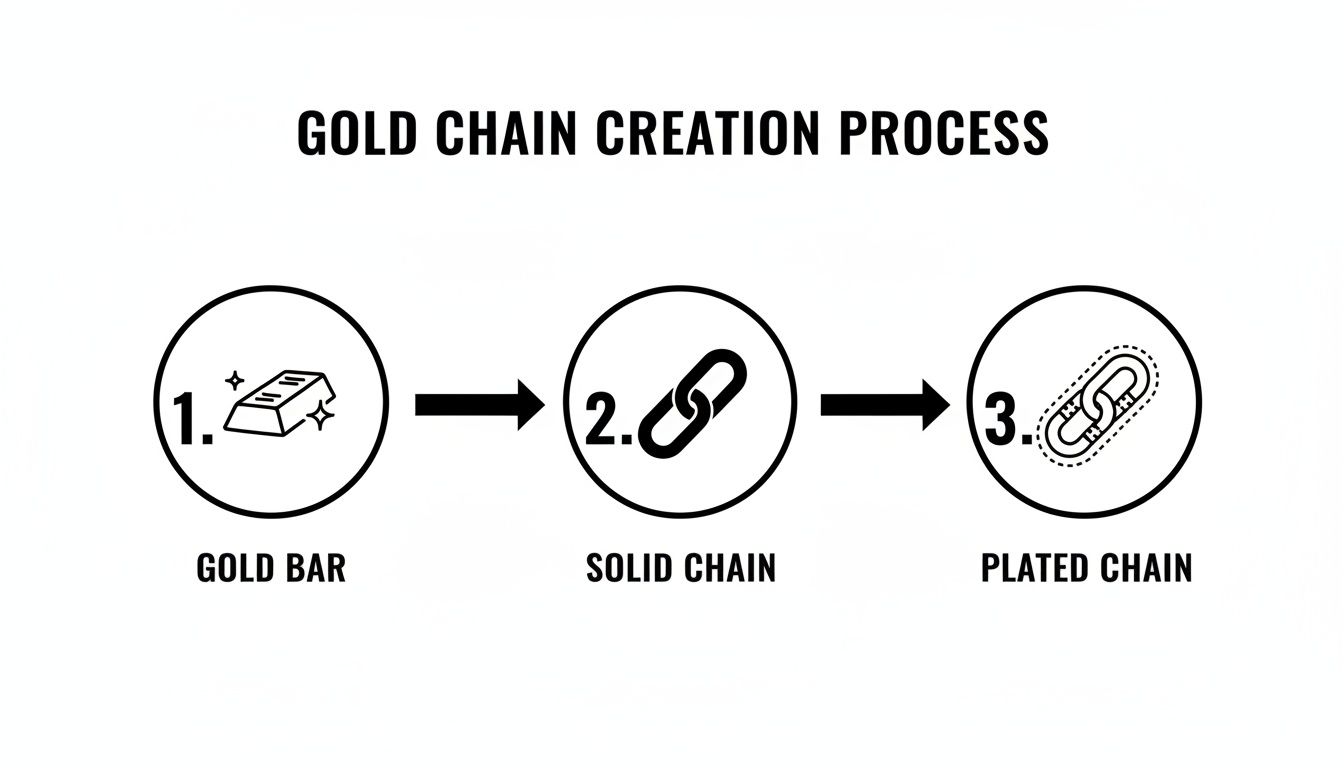
As you can see, the value of a solid gold piece is mostly in the metal itself, while a plated chain’s value comes from its accessible style and the craftsmanship involved.
The Hidden Forever Difference: Emotional Value Meets Affordability
Solid gold chains are a serious financial investment. Their price tag is directly tied to the weight of the gold and the day-to-day fluctuations of the market. But what if a piece of jewelry’s real worth isn’t measured in grams or karats, but in the memories it protects? That's where a different kind of value comes into play—one that prioritizes personal connection over the raw cost of materials.

This is the space where Hidden Forever shines. We wanted to build a bridge between the classic, luxurious look of gold and the priceless feeling of a treasured memory. Every piece we create starts with a durable sterling silver core and is finished with a radiant layer of 18k gold plating. This approach gives you the beauty and elegance of a gold chain without the hefty price tag.
More Than Metal: A Hidden Memory
The real magic of a Hidden Forever piece isn't just what you see on the outside; it's the secret held within. Tucked inside the central gemstone is a high-definition micro-photograph that you choose.
When you shine a light through it, the stone projects that image onto a nearby wall, revealing a hidden moment—a snapshot from your wedding day, a picture of a beloved pet, or an old family portrait that makes you smile. It's an experience that turns a beautiful accessory into a deeply personal keepsake. A solid gold chain, no matter how expensive, simply can't offer that intimate connection. The value shifts from the metal itself to the story it secretly tells.
A standard gold chain is a statement of style, but a projection necklace is a conversation with the heart. It delivers an emotional return on investment that far outweighs its accessible price, making it a powerful gift for anniversaries, birthdays, or Mother's Day.
The Perfect Blend of Beauty and Meaning
With a Hidden Forever piece, you don't have to choose between affordability and sentiment. You get both. It’s the perfect answer for anyone who wants to give a gift that looks and feels substantial but carries a personal touch that is truly priceless.
Think about what this offers:
- Accessible Luxury: You get the rich, warm look of 18k gold without the steep cost of a solid gold chain.
- Deep Personalization: Embedding a meaningful photo creates a one-of-a-kind gift that tells a story only you can share.
- The Element of Surprise: The hidden projection offers a delightful "wow" moment, making the gift—and the moment you give it—unforgettable.
Ultimately, figuring out what a gold chain "costs" means looking beyond the price of the metal. While a solid gold chain is an investment in a commodity, a Hidden Forever projection necklace is an investment in a memory. It’s a modern heirloom that proves the most valuable treasures are the ones that remind us of the people and moments we love.
Practical Tips for Your Next Gold Chain Purchase
Alright, you've got the inside scoop on what really drives the price of a gold chain. Now, let's turn that knowledge into a smart purchase. Think of this as your final checklist before you pull the trigger.
The Little Details That Matter Most
First thing's first: check for authenticity. Every genuine gold chain has a tiny stamp near the clasp called a hallmark. It'll say something like "14k," "18k," or you might see a number like "585" (for 14k) or "750" (for 18k). This little mark is your proof that you're getting the real deal.
Next, give the clasp a good look. It’s easy to overlook, but a weak clasp is the number one reason chains get lost. A secure lobster clasp or a solid box clasp shows the maker didn't cut corners. It's what keeps your investment safely where it belongs—around your neck.
Smart Shopping and Long-Term Care
Before you buy, always ask about the return policy. Any trustworthy jeweler will have a straightforward policy, which gives you an out if you get home and it’s just not you. It’s a simple step that can save you a lot of regret.
It also pays to think about the bigger picture. Gold prices have been on a steady climb. Just look at the last decade: a basic 20-gram, 18k chain that cost around $1,200 in early 2025 (when gold was about $2,500/oz) would run you over $3,500 today.
This is especially true for gift-givers. If you’re shopping for a special occasion like an anniversary or Mother’s Day, a solid gold chain's price tag can be daunting. This is where options like Hidden Forever's 18k gold-plated silver projection jewelry really shine. For $200-$500, you get that luxurious gold look and meaningful personalization—like a hidden photo inside a gemstone—without the hefty cost of solid gold. You can see how gold prices have changed over the years at GoldPrice.org.
Remember: Whether you choose solid gold or gold-plated, proper care is essential. Avoid harsh chemicals and store your chain separately to prevent scratches. This simple habit preserves its luster for years.
Taking good care of your jewelry makes all the difference. If you're going with a plated piece, we have a whole guide on that. Be sure to check out our guide on how to care for gold-plated jewelry. Following these simple checks and care routines will ensure your new chain remains a beautiful and lasting part of your collection.
Answering Your Final Questions About Gold Chains
As you get closer to making a choice, a few last-minute questions usually pop up. Getting these details straight can be the difference between a good purchase and a great one. Let's walk through some of the most common queries so you can buy with total confidence.
Is It Cheaper To Buy Gold Chains Online or in a Store?
It's a classic trade-off. Online jewelers typically have lower overhead costs, and those savings can often be passed on to you. You might find a better price tag online.
But there's nothing quite like visiting a brick-and-mortar store. You can feel the real weight of the chain in your hands, see how the light hits it, and inspect the craftsmanship up close. My advice? Do a little of both. Browse online, then visit a store, and always compare prices based on gram weight and karat to make sure it's an apples-to-apples comparison.
What Is the Best Karat for a Daily Wear Gold Chain?
For a chain you’ll wear day in and day out, 14k gold is the sweet spot. It offers that beautiful, rich gold color we all love, but it's blended with stronger alloys that give it the durability needed for everyday life.
Think of it this way: higher-karat gold like 18k or 22k is softer and more prone to scratching and denting. A 14k chain is tough enough to handle the occasional bump, making it both practical and beautiful.
A key part of buying jewelry is verifying its authenticity. When looking for the best deal, you need to learn how to identify truly authentic items, even when seeking discounts, much like in an article about finding discount name brand items that are absolutely authentic.
How Can I Tell if a Gold Chain Is Real?
Spotting a genuine gold chain is crucial. Luckily, there are a few simple checks you can do yourself.
- Check for the Karat Stamp: Look closely at the clasp for a tiny hallmark. You should see a stamp like "14k," "18k," "585" (for 14k), or "750" (for 18k). We dive deeper into these markings in our guide on what 925 means on jewelry.
- Do the Magnet Test: This one's easy. Solid gold isn't magnetic. If a magnet pulls on your chain, it's a dead giveaway that it's not the real deal.
- Ask a Professional: When in doubt, take it to a jeweler. They can perform a quick, definitive acid test to verify the exact gold content and give you complete peace of mind.
While a solid gold chain is a beautiful investment, some of the most meaningful gifts are the ones that hold a personal story. At Hidden Forever, we specialize in 18k gold-plated projection jewelry that turns a cherished photo into a beautiful, wearable secret. It’s a priceless connection at an accessible price.
Feel free to explore our unique collection at https://hiddenforever.com.


