

There's no denying the appeal of gold plated jewelry. It offers the luxurious look of solid gold but at a much more approachable price point. The secret to keeping it looking fabulous lies in understanding what it actually is: a delicate layer of real gold bonded to a different base metal, like brass or copper.
This construction means you have to handle it with a bit more care than you would a solid gold piece. Think of it as protecting a beautiful, but thin, finish.
Why Your Gold Plated Pieces Need a Little Extra TLC
That gorgeous golden shine is everything, right? But it's also vulnerable. Over time, friction, chemicals, and even the natural oils on your skin can wear away that thin gold layer.
Once the plating thins or gets scratched, the base metal underneath is exposed. This is when you might start to see tarnish or discoloration, as metals like brass or copper react with the elements. The good news is that with a few simple habits, you can dramatically slow down this process and keep your jewelry looking brilliant for years.
A Modern Jewelry Staple
Gold plated jewelry has absolutely exploded in popularity, making proper care knowledge more essential than ever. We're not just talking about a small trend here. The global precious metal plating industry was valued at over $193 million back in 2020 and has only grown since, largely thanks to younger shoppers and the ease of online buying. It's made beautiful, on-trend jewelry accessible to everyone.
The core principle is simple: mindful maintenance preserves the things you love. This applies whether it's your favorite necklace or another cherished item in your collection.
Taking the time to care for your valuables properly is always a smart investment. For instance, the same attention to detail that keeps your jewelry pristine can also be applied to your wardrobe. You can explore some fantastic suit care and longevity tips to ensure your formalwear stays in impeccable condition, too.
Everyday Habits That Preserve Your Jewelry's Shine
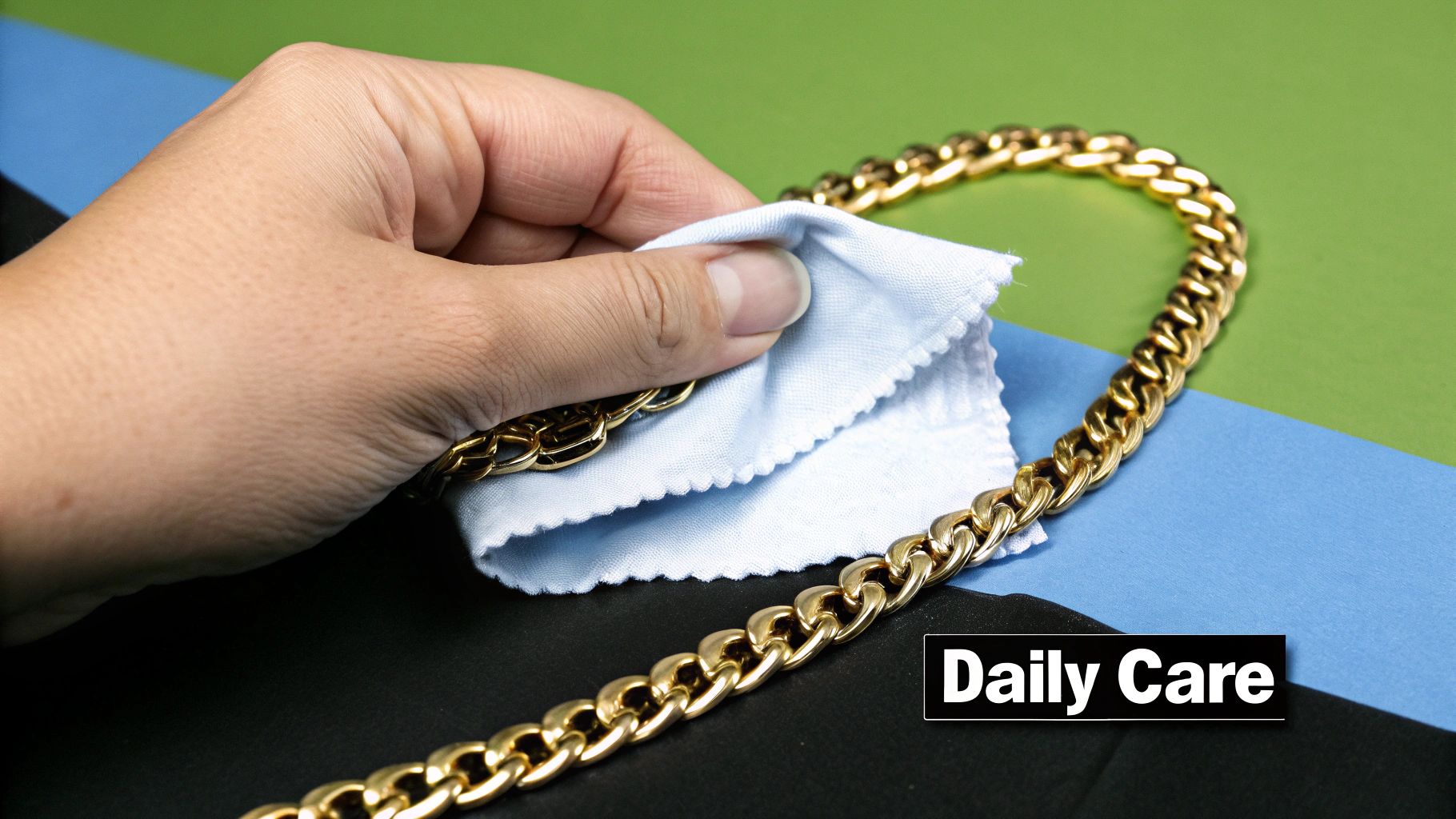
The real secret to keeping your gold-plated jewelry looking brilliant isn't some intense, once-a-year cleaning marathon. It’s all about the small, mindful habits you build into your daily routine.
There’s a simple philosophy that seasoned jewelry lovers live by: "last on, first off."
This means your jewelry is the absolute last thing you put on after your makeup, perfume, and hairspray are all set. At the end of the day, it's the very first thing you take off. Think about it—lotions, sunscreens, and perfumes contain chemicals that are kryptonite for that delicate gold layer, causing it to tarnish or fade over time.
By letting those products fully dry before putting on your favorite necklace or rings, you're creating a crucial barrier. This simple tweak in your getting-ready process makes a world of difference.
Protecting Your Jewelry During Daily Activities
Let's be real, life happens. But everyday activities are often the biggest culprits when it comes to damaging plated pieces. Sweat, chlorine, and salt water are not friends to that beautiful gold finish.
Here's where being proactive pays off:
- Headed to the gym? Take off your rings and necklaces first. Acidic sweat can accelerate the wear on the plating.
- Going for a swim? Chlorine is incredibly harsh and will strip the gold layer faster than you'd think. Always remove your jewelry before jumping in the pool or hot tub.
- Beach day? Saltwater and sand are a recipe for scratches and corrosion. It's best to leave your plated pieces safely at home.
The goal is simple: minimize exposure to moisture and chemicals. Making it a habit to remove your jewelry before these activities is the single most effective way to keep that gold layer from wearing away prematurely.
This kind of daily care is more important than ever. After all, gold-plated pieces are a huge part of the modern jewelry market, which was valued at a staggering $192.5 billion in 2024. As more of us embrace this affordable luxury, knowing how to properly care for it is key.
While these daily habits are your first line of defense, there will be times when your pieces need a proper cleaning. When that day comes, you'll want to do it right. For those moments, check out our guide on the best way to clean gold jewelry that really works.
When your favorite gold-plated accessories start losing their luster from daily wear, the first instinct might be to grab a powerful cleaner. But hold on—that's often where things go wrong. From my experience, I can tell you that harsh chemicals and abrasive cloths are the quickest way to wear down that delicate gold layer, exposing the metal underneath and ruining your piece for good.
The golden rule? Always start with the gentlest method possible. A safe and effective clean doesn't require anything fancy, just a few household items and a little bit of care. It’s all about removing the grime without removing the gold.
Mixing the Perfect, Gentle Cleaning Bath
First things first, forget about reaching for baking soda, vinegar, or those aggressive jewelry cleaners you see at the store. While great for solid gold, they're far too harsh for plated items.
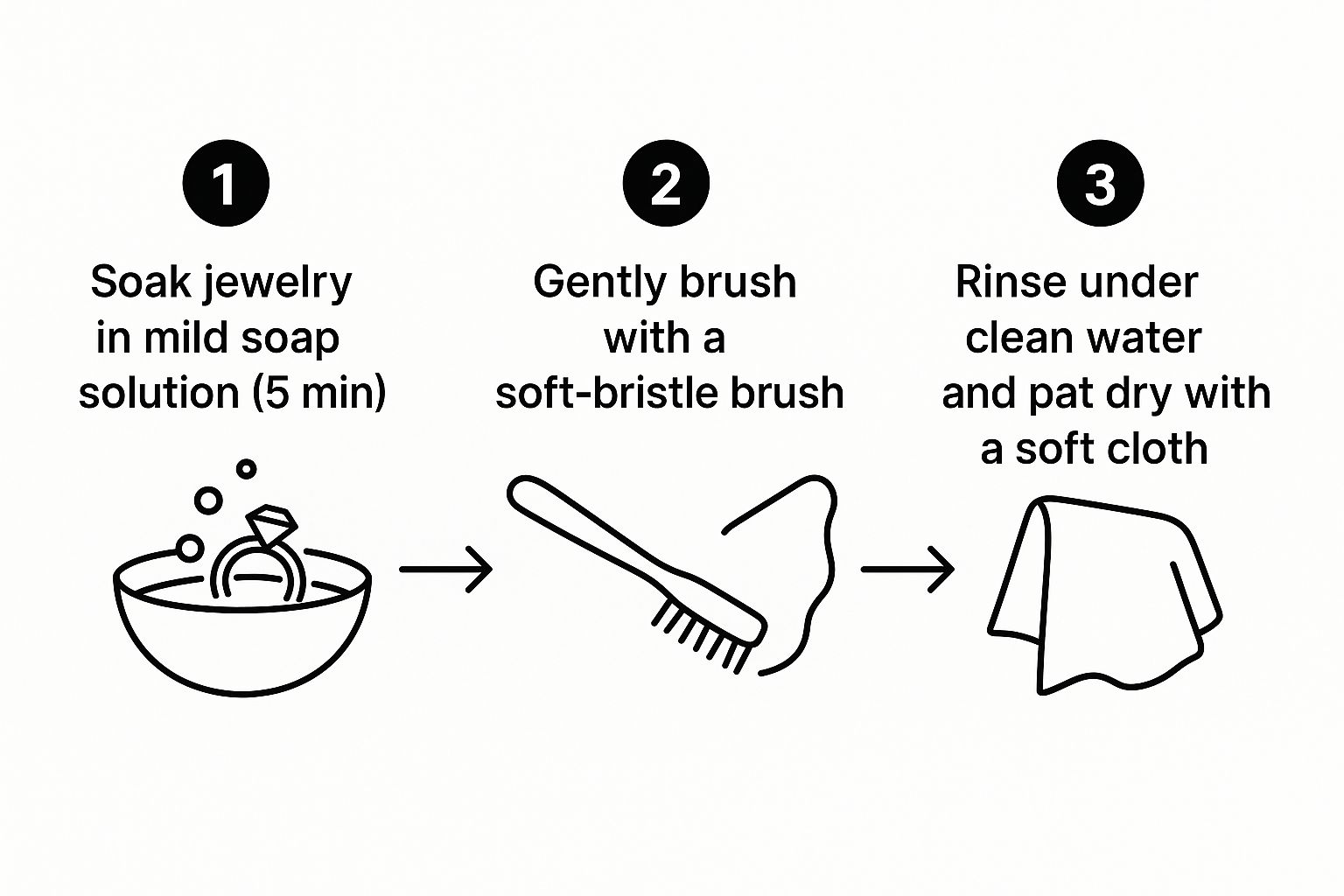
Instead, let's mix up a simple, mild cleaning solution. Just fill a small bowl with warm water—hot water can sometimes affect the adhesive on certain settings—and add two or three drops of a gentle, phosphate-free dish soap. Give it a little swirl to create a soft, sudsy bath. That’s genuinely all you need to cut through the daily build-up of oils, lotions, and dust.
The Soaking and Drying Ritual
Gently place your jewelry into the soapy water and let it soak for about five to ten minutes. This quick dip is usually enough to loosen everyday dirt without letting the piece sit in moisture for too long.
If you’re dealing with a more detailed piece with lots of nooks and crannies, a super-soft baby toothbrush can be your best friend. Use it to gently scrub away any stubborn grime that the soak didn't dislodge.
A Quick Tip from Experience: After the soak, rinsing is non-negotiable. Hold each piece under clean, lukewarm running water. If you skip this or do a poor job, a soapy film will be left behind, making your jewelry look duller than when you started.
Now for the final, crucial step: drying. Pat each item completely dry with a soft, lint-free microfiber cloth. Never rub your jewelry, as the friction can wear away the plating over time. Ensuring every last drop of moisture is gone prevents water spots and helps keep tarnish at bay, leaving you with that brilliant, just-bought shine.
This gentle cleaning philosophy is vital for all plated items, but especially for more unique pieces. You can find more expert tips for cleaning projection jewelry in our specialized guide.
Safe vs Unsafe Cleaning Methods for Gold Plated Jewelry
Navigating what you can and can't use on gold-plated jewelry can be confusing. I've put together this quick-reference table to make it crystal clear. Think of it as your cheat sheet for protecting your pieces.
| Method/Tool | Is It Safe? | Why or Why Not? |
|---|---|---|
| Mild, Phosphate-Free Soap | Yes | Gentle enough to lift dirt and oil without stripping the thin layer of gold. |
| Microfiber Cloth | Yes | Soft and non-abrasive, perfect for drying and light polishing without scratching. |
| Baking Soda | No | Too abrasive. It will act like sandpaper on the delicate plating and wear it away. |
| Toothpaste | No | Contains abrasive particles designed to scrub enamel, which will damage gold plating. |
| Vinegar or Lemon Juice | No | The acid is corrosive and can eat away at the thin gold layer over time. |
| Commercial Jewelry Dips | No | These are formulated for solid metals and are far too harsh for plated surfaces. |
| Baby Toothbrush (Soft) | Yes | Ideal for getting into crevices, but only with very gentle pressure. |
Sticking to the "safe" column is the best way to ensure your gold-plated jewelry stays looking beautiful for as long as possible. When in doubt, always choose the gentlest option.
Smart Storage: The Secret to Preventing Scratches and Tarnish
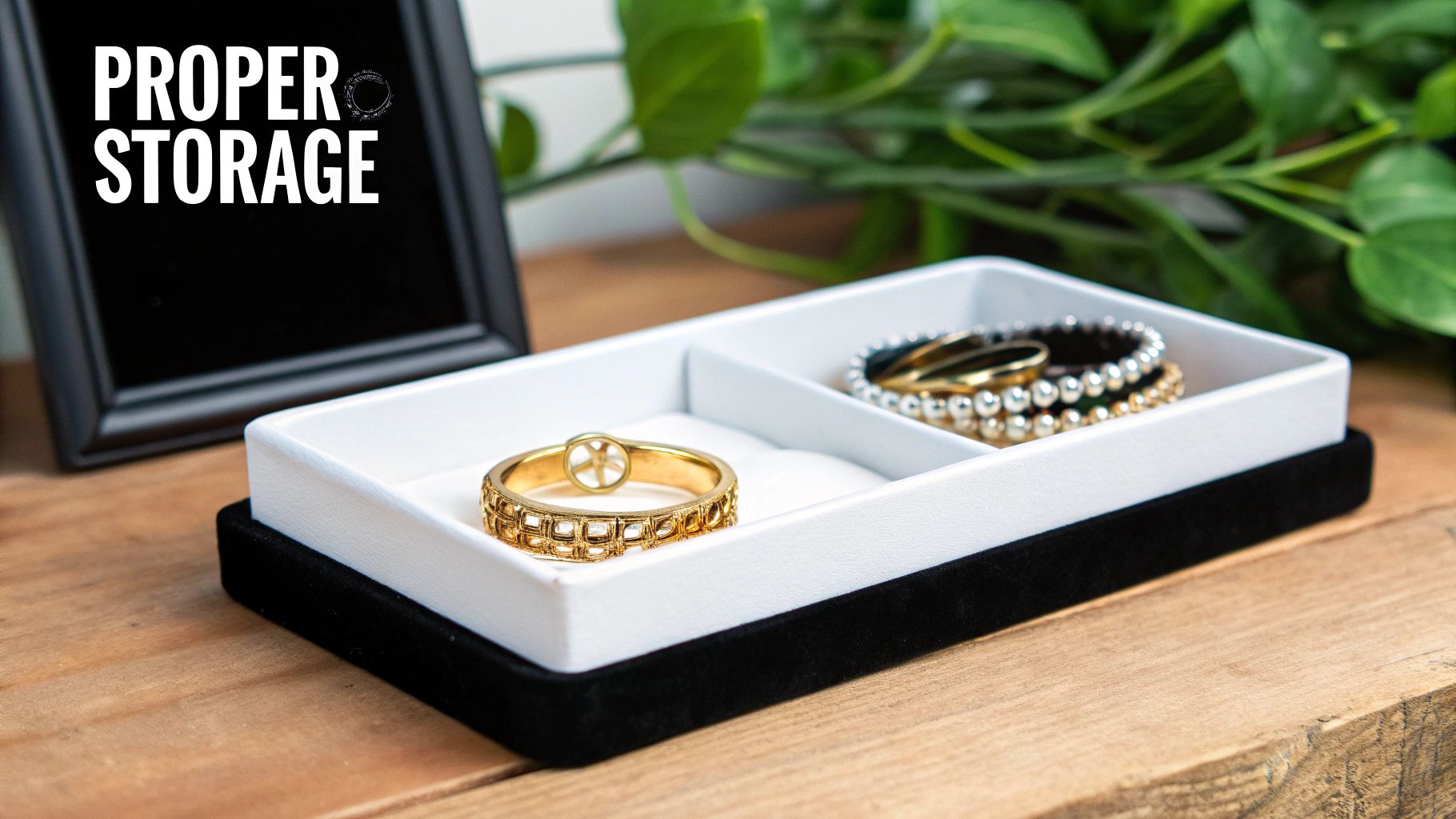
Let’s be honest—after a long day, it's tempting to just toss your jewelry onto the nightstand. But how you store your pieces is just as important as how you clean them. Leaving them out in the open or jumbled together in a drawer is a fast track to tangled chains, scratches, and tarnish from air exposure.
Proper storage is your first line of defense. The whole idea is to keep each piece separate, dry, and away from direct sunlight. It’s a simple habit that makes a world of difference in preserving that delicate gold layer and keeping your favorite necklace from becoming a knotted mess.
Give Your Jewelry a Proper Home
Investing in a decent storage solution is one of the best things you can do when caring for gold plated jewelry. A jewelry box with soft, fabric-lined compartments is a fantastic choice because it creates a physical barrier between items, preventing them from scraping against each other.
If you want to take protection up a notch, especially for pieces you don't wear all the time, here are a couple of great options:
- Anti-Tarnish Pouches: These little bags are a godsend. They're treated with special compounds that literally absorb the airborne pollutants responsible for tarnish. Popping each item into its own pouch is one of the most effective strategies out there.
- Individual Plastic Bags: Looking for a budget-friendly fix? A small, sealable plastic bag works wonders. Just be sure to squeeze out as much air as possible before you seal it to slow down oxidation.
My personal travel hack? A seven-day pill organizer. It's perfect for keeping delicate chains and earrings separate and safe. Each compartment holds one piece, so you'll never have to face that tangled nightmare in your suitcase again. It's a total lifesaver.
Whatever method you choose, always remember to store your jewelry in a cool, dry place. Bathrooms are a definite no-go—the humidity will speed up the tarnishing process on the base metal under the gold. A little bit of organization not only protects your pieces but also makes getting ready in the morning a whole lot smoother.
How To Handle Tarnish And Signs Of Wear
Even if you follow every care tip perfectly, it's inevitable that your gold-plated pieces will eventually show some signs of a life well-lived. You might notice a bit of dullness or even some discoloration. The first thing you need to do is figure out exactly what you're dealing with.
So, is it just surface tarnish, or has the plating actually worn away? Tarnish happens when the base metal underneath reacts to the elements and that reaction peeks through the gold layer. Real wear, on the other hand, is when the gold has physically rubbed off, exposing the copper or brass core.
If your skin turns green after wearing a piece, that’s a dead giveaway. It’s not harmful, but it’s a clear sign the base metal (usually copper) is reacting with your skin’s oils because the protective gold layer is gone.
For very light surface tarnish, you can sometimes buff it away with a soft, dedicated jewelry cloth. But be careful. If you get too aggressive with the polishing, you’ll just end up stripping more of that precious gold layer away. Gentle is the name of the game.
When To Consider Re-Plating
If the gold is visibly worn down, or if the piece just means a lot to you, professional re-plating is a fantastic option. A jeweler can essentially give your accessory a factory reset. They'll strip off what’s left of the old gold, polish up the base metal, and apply a brand-new layer using an electroplating process. It’s a remarkable way to bring a piece back to its original shine.
This isn't just some simple dip; it's a precise technical process. In fact, the global market for gold plating chemicals was valued at USD 522.91 million in 2024, largely because of its importance in electronics for preventing corrosion. That industrial-level quality is why professional restoration works so well.
If you want to get into the nitty-gritty of the materials, understanding the differences between solid gold, gold-filled, and gold-plated jewelry is a great read. Ultimately, re-plating can be the perfect way to give a beloved accessory a second chance to shine.
Your Gold Plated Jewelry Questions, Answered
Even with the best care routine, you're bound to have questions. After all, gold plated jewelry has its own set of rules. I've been working with these pieces for years, and a few questions pop up time and time again. Let's tackle them so you can feel completely confident taking care of your collection.
Can I Wear My Gold Plated Ring Every Day?
You can, but you have to be realistic about what that means for the jewelry. Daily wear is tough on any piece, but it's especially hard on gold plating. Think about it—a ring is constantly rubbing against your skin, your desk, a steering wheel, everything you touch. That constant friction will wear away the thin gold layer much faster than it would on, say, a pair of earrings.
If you have a plated ring you absolutely adore and want to wear daily, just be extra mindful. Make it a habit to slip it off before washing your hands, slathering on lotion, or doing any chores. This little bit of diligence can make a huge difference in how long its beautiful finish lasts.
What’s The Real Difference Between Gold Plated And Gold Filled Care?
This is a big one, and the answer is all in how they're made. The care is worlds apart because the construction is completely different.
Gold-filled jewelry has a substantial layer of solid gold that's heat- and pressure-bonded to a core of base metal. It’s a much more robust and permanent bond. Gold plated, on the other hand, has an incredibly thin layer of gold applied through electroplating.
Here's the practical breakdown:
- Gold-Filled: This stuff is built to last. It can handle daily wear and even exposure to water without much fuss. Think of it as the closest you can get to solid gold in terms of resilience.
- Gold Plated: This is your delicate, fashion-focused friend. It offers the look of gold at an accessible price point but requires a gentle touch to keep its coating intact.
So, when you're cleaning, you can be a bit more thorough with gold-filled pieces, while gold plated items demand a much softer approach to avoid scrubbing off the finish.
Why Is My Gold Plated Necklace Turning My Skin Green?
Ah, the dreaded green tint. It's a classic chemical reaction, and it’s a clear signal that the plating is wearing thin. The green isn't from the gold—it's from the base metal underneath, which is almost always copper or a copper-rich alloy like brass.
When that protective gold layer gets scratched or wears away, the sweat and oils on your skin come into contact with the exposed copper. This causes the copper to oxidize, and that oxidation is what leaves that harmless (but annoying) green stain on your skin.
Expert Takeaway: A green mark is your jewelry's cry for help. It’s telling you its protective gold shield has been breached. The best way to prevent this is to live by that "last on, first off" rule and always keep your pieces dry.
Is It Possible To Get My Jewelry Re-Plated?
Yes, absolutely! And it's a fantastic way to salvage a piece that has deep sentimental value. If you have an item that's structurally sound but has lost its golden gleam, don't just toss it in a drawer.
Most professional jewelers offer re-plating services. They'll start by chemically stripping off any of the old, worn plating, polishing the base metal underneath until it's perfectly smooth, and then applying a brand-new layer of gold via electroplating. It's often far more affordable than buying a new piece and gives your beloved accessory a second chance to shine.
At Hidden Forever, we believe your most cherished memories deserve to be held in equally beautiful jewelry. Our handcrafted projection pieces, made with 18k gold plating and 925 sterling silver, are designed to last with the right care. Transform your favorite photo into a stunning, personal keepsake that shines a light on what matters most.
Explore our collection of personalized projection jewelry at Hidden Forever today.


