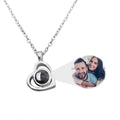

Ever spotted a tiny "925" stamp on a piece of jewelry? That little mark is a promise of quality. It means you're holding 925 sterling silver, a prized metal alloy made of 92.5% pure silver blended with 7.5% other metals. This specific recipe gives the metal its signature blend of brilliant shine and everyday strength, making it a go-to choice for jewelers everywhere.
Decoding the 925 Sterling Silver Standard
It seems logical to want jewelry made from 100% pure silver, right? But there’s a catch. Pure silver, also called fine silver, is surprisingly soft. If you wore a pure silver ring, it would bend, dent, and scratch with just the slightest knock, making it completely impractical for daily life.
To get around this, metalsmiths found the perfect solution. By mixing pure silver with a small amount of a more robust metal, they created an alloy that kept silver’s gorgeous luster but gained the toughness it was missing. That brilliant blend became the international standard we know and love today as sterling silver.
The Perfect Recipe for Durability
The number "925" isn't random—it's the exact measure of silver content. Sterling silver is an alloy made of 92.5% pure silver and 7.5% other metals, usually copper. Adding copper is what gives the metal a serious boost in strength and durability.
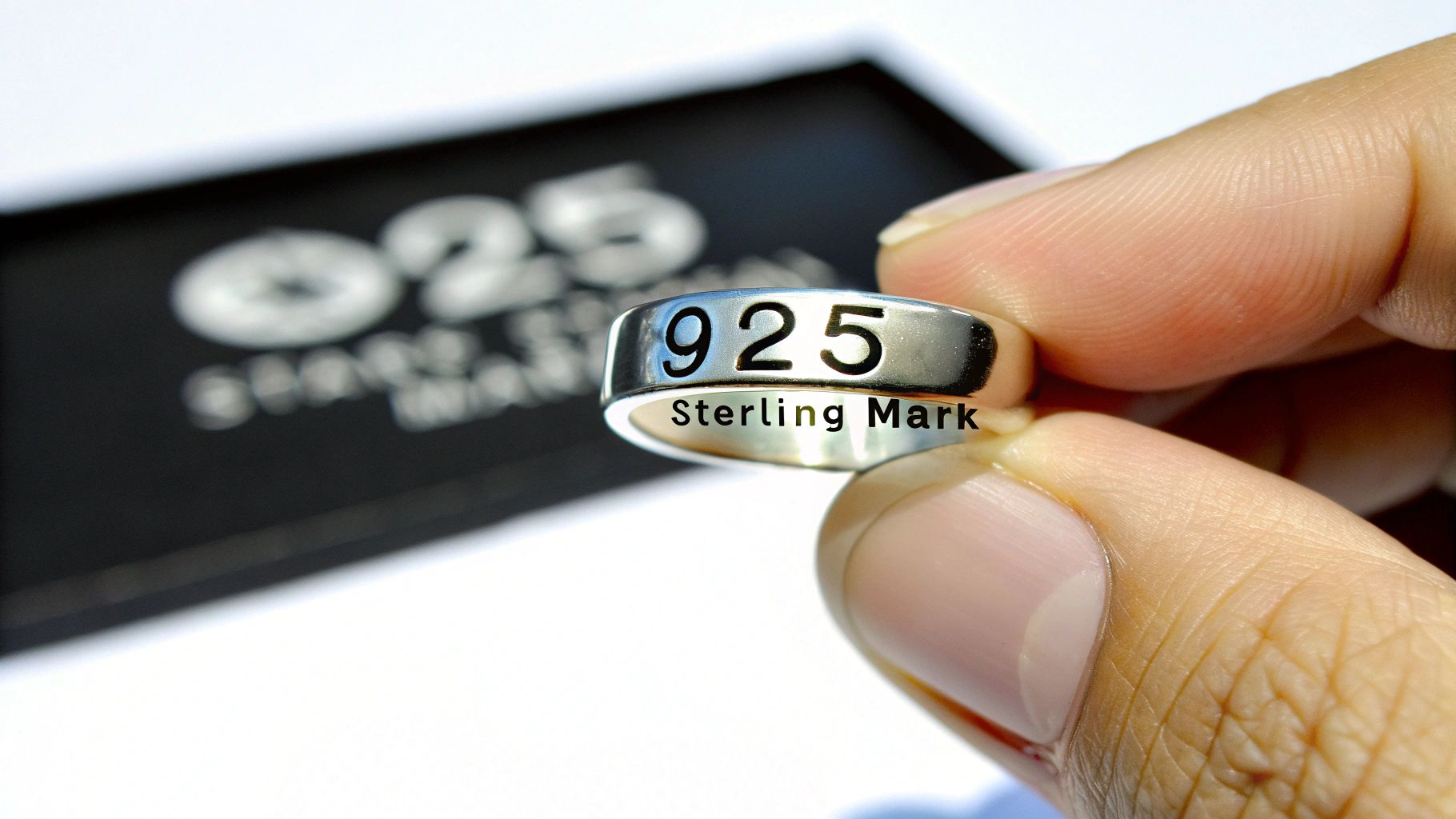
This is why you'll see a hallmark stamped "925" or ".925" on genuine pieces. It certifies that 925 out of every 1,000 parts are pure silver.
Here’s a quick breakdown to put it all in perspective.
925 Sterling Silver at a Glance
| Characteristic | Description |
|---|---|
| Purity | 92.5% pure silver. |
| Alloying Metals | 7.5% other metals, most commonly copper. |
| Common Hallmarks | Stamped with "925", "STERLING", "STER", or ".925". |
| Appearance | Bright, lustrous, with a cool white tone. |
| Durability | Strong enough for daily wear and intricate designs. |
This formula strikes the perfect balance for high-quality jewelry: it has enough pure silver to shine brightly but is strong enough to handle life’s little bumps and knocks.
Think of the hallmark stamp—whether it's "925," "STER," or "Sterling"—as a guarantee. It’s the maker’s promise that you're buying a true piece of precious metal, not a cheap imitation.
Real-World Applications of 925 Silver
The usefulness of 925 sterling silver goes far beyond your jewelry box. Its unique mix of beauty, durability, and natural antimicrobial properties makes it a fantastic material for all sorts of high-quality goods.
A great example of this is its use in practical, everyday products like these Moogco Silver Nursing Cups (925k Silver), where its natural properties are put to good use.
Ultimately, when you choose 925 sterling silver for something special, like a Hidden Forever projection necklace, you're investing in lasting quality. You're ensuring your cherished memories are held in a metal that is not only beautiful but also built to endure.
Sterling Silver vs. Other "Silvers"
When you’re shopping for silver jewelry, you'll see a few different terms pop up: "fine silver," "silver plated," and of course, "925 sterling silver." They might all have that signature silver shine at first, but what they're made of—and how they'll hold up over time—are worlds apart.
Getting a handle on these differences is the best way to know exactly what you're paying for and to make sure you're getting a piece that will last.
Sterling Silver Versus Fine Silver
Fine silver is the purest form you can find, typically marked with "999" to show it’s 99.9% pure silver. Its purity gives it a stunning, brilliant luster that’s a touch brighter and whiter than sterling silver.
But that purity comes with a major downside: fine silver is incredibly soft. Think of it like pure gold—it’s so malleable that a ring made from it would easily bend out of shape or get scratched just from daily wear. Because of this, you’ll usually only find fine silver used for delicate earrings or pendants that don't see much action, or as investment-grade bullion.
The tradeoff is simple: Sterling silver gives up a tiny bit of purity (just 7.5%) to gain a massive amount of strength and durability. This makes it the go-to choice for any piece of jewelry meant to be worn and cherished.
Sterling Silver Versus Silver Plated
This is probably the most critical distinction for any jewelry shopper to understand. A silver-plated piece isn't solid silver at all. It’s actually made from a common base metal, like copper, brass, or nickel, which is then covered with a razor-thin layer of silver.
That silver coating looks great at first, but it’s not built to last. Over time, friction from daily wear, moisture, and even the air will cause that thin silver layer to rub off, chip, and fade away. Once it's gone, the duller, and sometimes allergy-inducing, base metal underneath is revealed for good.
Here’s why that matters for your jewelry:
- 925 Sterling Silver: This is a solid precious metal alloy. While it can tarnish, that’s just a surface-level reaction you can easily polish away to restore its original shine. It holds its value because the silver is there through and through.
- Silver Plated: This is just a temporary costume. Once that thin plating wears away, the piece loses its silver look and its value plummets. It’s a short-term solution, not a lasting treasure.
If you’re looking to invest in quality, knowing this difference is everything. For a deeper dive, check out our guide on the critical differences between silver vs silver plated jewelry.
Comparing the Three Silver Types
To help you see the differences at a glance, here’s a straightforward comparison. This table lays out the most important qualities of each type, from what they’re made of to how they’ll look a year from now.
| Attribute | 925 Sterling Silver | Fine Silver (999) | Silver Plated |
|---|---|---|---|
| Silver Content | 92.5% pure silver | 99.9% pure silver | A thin surface layer (variable) |
| Composition | Alloy with copper | Almost pure silver | Base metal core (copper, brass, etc.) |
| Durability | High, suitable for daily wear | Low, very soft and prone to damage | Low, plating wears off over time |
| Long-Term Value | Retains precious metal value | High intrinsic value, but impractical | Little to no long-term value |
| Appearance | Bright, lustrous white | Very bright, slightly whiter tone | Initially bright, but fades as it wears |
At the end of the day, when you choose 925 sterling silver, you're choosing a material that was specifically engineered to be both beautiful and tough enough for real life.
What It's Really Like to Own Sterling Silver Jewelry
Knowing what 925 sterling silver is made of is one thing, but what does it actually mean for the jewelry you wear every day? The answer is in its unique blend of beauty and practicality. From its surprising strength to its natural tendency to change over time, these are the traits that truly define the experience of owning genuine sterling silver.
Built for Everyday Life
The main reason sterling silver became the gold standard for jewelry is simple: durability. Pure silver is stunning, but it's also incredibly soft. By mixing in 7.5% copper, artisans created a metal that was strong enough for intricate designs yet tough enough to handle daily life.
This clever alloy is a true workhorse. It resists the dents, dings, and scratches that would easily ruin softer metals. This is what allows your most treasured pieces, like a Hidden Forever projection necklace holding a precious memory, to stay beautiful year after year.
Tarnish: A Feature, Not a Flaw
If you've ever owned sterling silver, you’ve probably seen it darken over time. This is called tarnishing, and it's often mistaken for a sign of poor quality. In reality, it’s the exact opposite—tarnishing is proof that your piece is authentic 925 sterling silver.
It's just a harmless chemical reaction. The copper in the alloy reacts with sulfur in the air, creating a dark layer on the surface. This isn't permanent damage at all. Think of it like the beautiful patina that develops on an old bronze statue; it's a surface-level change that confirms the metal is genuine.
Tarnish isn't a defect; it's a sign of authenticity. It proves your jewelry contains copper, a key ingredient in real sterling silver. And the best part? It comes right off with a quick polish.
This handy chart breaks down the differences between sterling silver and other common types.
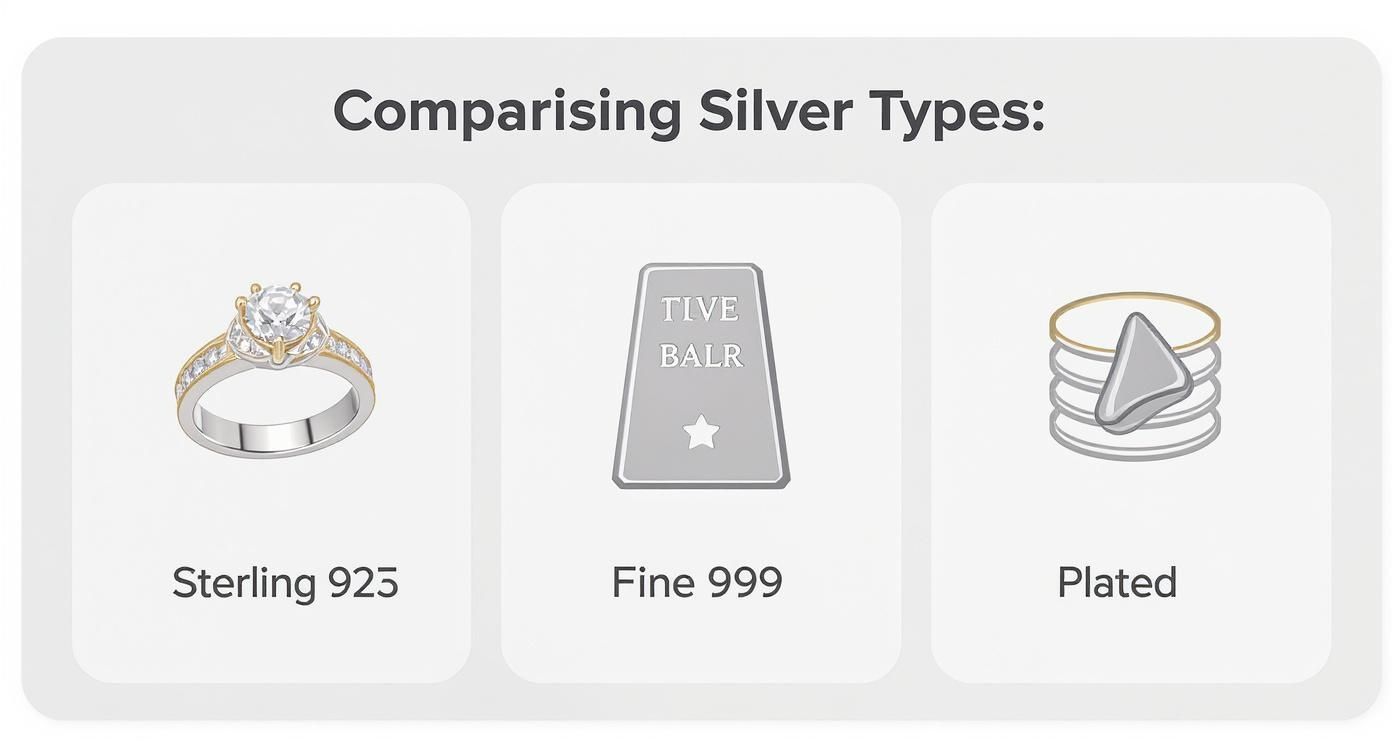
As you can see, while fine silver offers purity, 925 sterling silver gives you the strength needed for jewelry that lasts—unlike plated items that eventually wear away.
So, Is It Truly Hypoallergenic?
You often hear "hypoallergenic" and sterling silver in the same breath, and for the most part, it's true. Pure silver itself is biocompatible and very rarely causes skin issues. For the vast majority of people, 925 sterling silver is a safe and comfortable choice for all-day wear.
The catch, however, lies in the other 7.5%. Since sterling silver contains other metals (usually copper), there's a tiny chance of a reaction for people with an extreme sensitivity to copper. The most common sign is a harmless green or black mark on the skin, which is just a reaction between the metal and your skin's natural oils and acidity—not a true allergic reaction.
- Pure Silver: It’s inherently hypoallergenic and gentle on skin.
- Copper Alloy: This is the component that can, in very rare cases, cause a reaction.
- Nickel-Free: The good news is that genuine 925 sterling silver is almost always nickel-free, and nickel is the real culprit behind most metal allergies.
While over 99% of people can wear sterling silver without a second thought, it's something to keep in mind if you have known metal sensitivities. If you're concerned, you might find our guide on choosing the best jewelry for sensitive skin helpful.
How to Spot Authentic 925 Sterling Silver
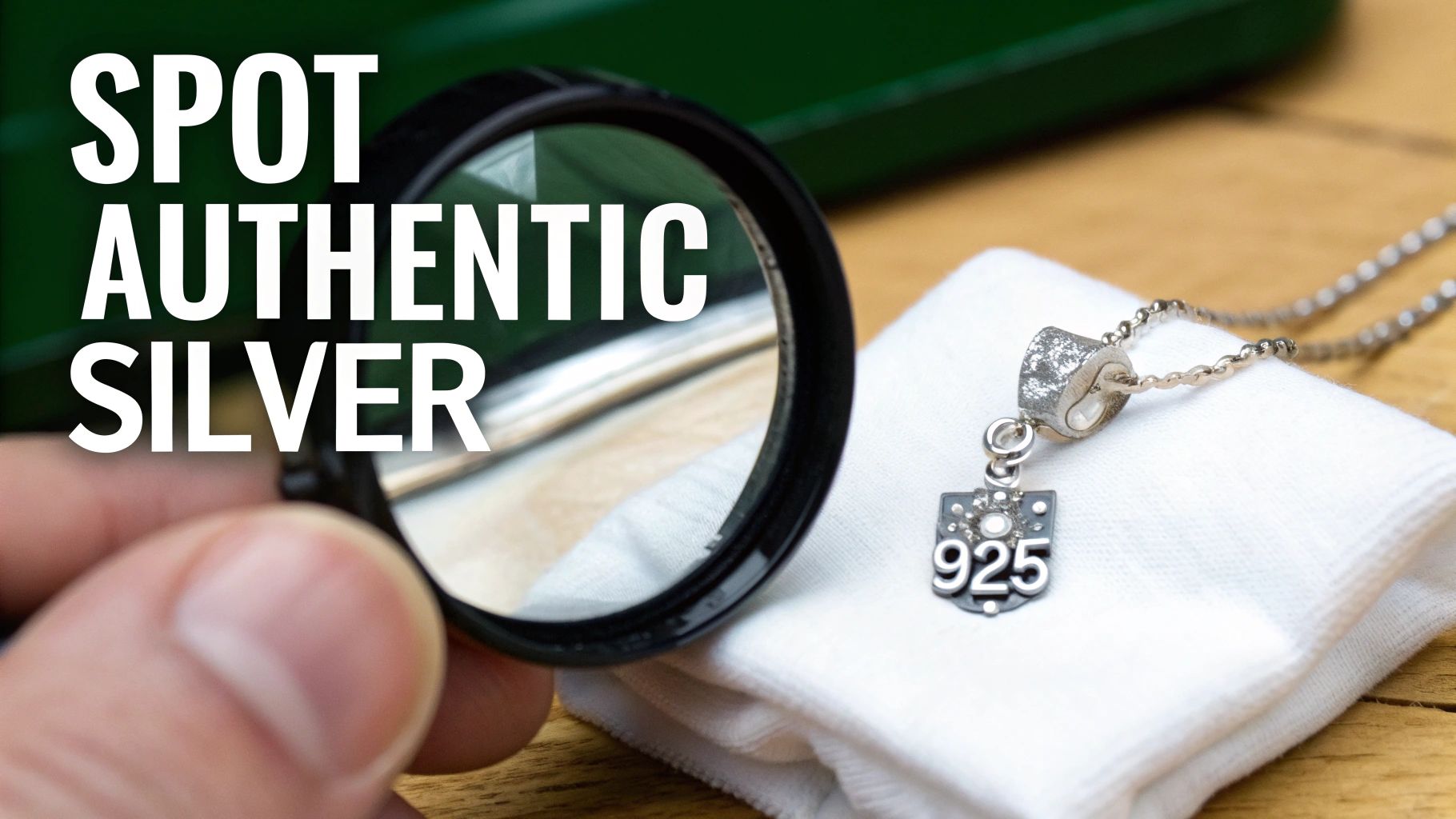
Navigating the world of jewelry can feel a little intimidating, but learning to spot genuine 925 sterling silver is much easier than you might think. With just a few simple checks, you can tell a lasting treasure from a short-lived imitation. Knowing what to look for empowers you to shop smarter and ensures you get the quality you’re paying for.
The most reliable way to verify a piece is to look for its hallmark. Think of this tiny stamp as the maker's promise of quality—it's the universal language of precious metals and your very first clue.
Uncovering the Hallmark Stamp
A hallmark is a tiny inscription stamped or engraved onto jewelry to certify its metal content. For sterling silver, this is your guarantee that the item is made of 92.5% pure silver. These marks are almost always tucked away in discreet spots so they don't spoil the design.
When you're inspecting a piece, check these common locations:
- Rings: Look on the inner surface of the band.
- Necklaces & Bracelets: Check the small tag right next to the clasp, or on the clasp itself.
- Pendants: Flip it over and look on the back, or check the tiny loop (the bail) that connects it to the chain.
- Earrings: You'll usually find the stamp on the posts, hooks, or the earring backs.
You might need a magnifying glass or even the zoom on your phone's camera to read it, but you're looking for some very specific marks. The most common hallmarks for sterling silver are "925", ".925", "STERLING", or sometimes just "STER". If you spot one of these, you can be pretty confident you're holding the real deal.
The 92.5% silver standard is recognized all over the world, from the United States to Europe. While a few countries might have slight variations, "925" is the most prevalent and trusted mark for quality sterling silver you'll find anywhere.
Simple At-Home Verification Tests
What if you can't find a stamp, or it's too worn to read? Don't worry. There are a couple of easy, non-destructive tests you can do right at home to help figure out if your jewelry is genuine.
1. The Magnet Test
This is the quickest and easiest test of all. Sterling silver is not magnetic. Grab a strong magnet—even a decent one from your fridge will do—and hold it right up to your jewelry.
If the piece snaps to the magnet, it's definitely not sterling silver. A strong magnetic pull means it’s made of a base metal like steel or nickel that's just been coated with a thin layer of silver. You can learn more about how that works in our complete expert guide to what silverplate is.
2. The White Cloth Test
Real sterling silver oxidizes when it's exposed to air—that's what causes it to tarnish. You can actually use this to your advantage. Just take a soft, white polishing cloth and gently but firmly rub a small, hidden spot on the jewelry.
If you see blackish marks appearing on the cloth, that's a great sign! That’s the tarnish coming right off, which confirms that real silver is present. If nothing comes off, the piece might just be perfectly clean... or it could be plated.
When to Consult a Professional
While these at-home tests are great for a quick check, they aren't 100% foolproof. If you're dealing with a valuable family heirloom or a pricey antique and need absolute certainty, your best bet is to visit a reputable jeweler.
Jewelers have professional tools, like acid testing kits, that can tell you the exact metal content without harming your piece. Taking this step is especially smart for high-value items, giving you total peace of mind in your investment.
Keeping Your Sterling Silver Jewelry Brilliant
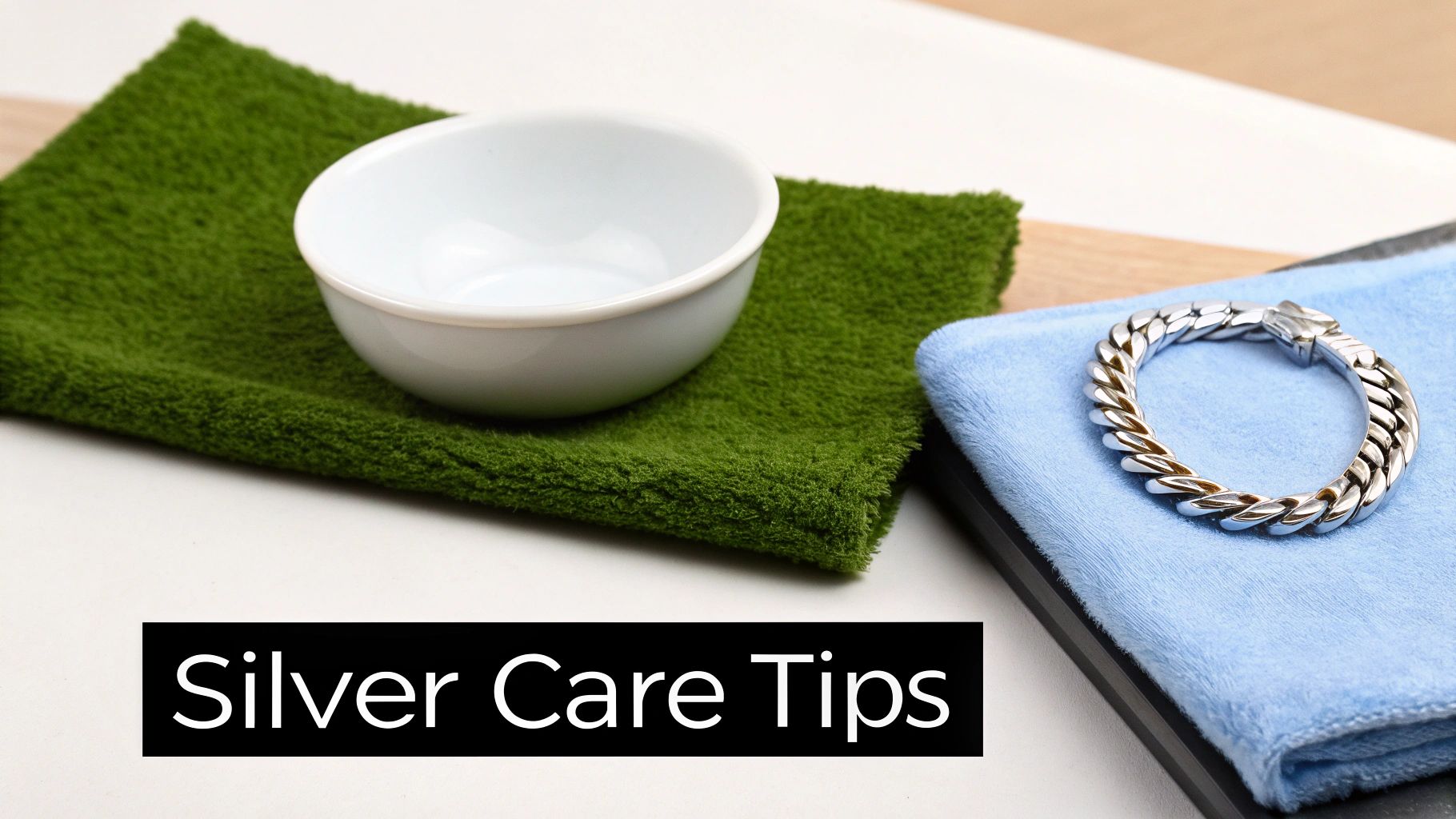
Your 925 sterling silver jewelry is meant to be worn and loved for a lifetime. With just a little bit of care, you can make sure it stays as bright and beautiful as the day you first put it on. The good news? You don't need a professional jeweler or expensive chemicals to do it.
A few simple habits are all it takes. Think of it as a small routine—a little cleaning here, smart storage there—that keeps the dreaded tarnish at bay and your favorite pieces always ready to shine.
Simple and Safe Cleaning at Home
When you notice your silver looking a bit lackluster, a gentle cleaning is usually all that’s needed to revive it. It's crucial to avoid harsh or abrasive cleaners, as they can easily scratch the metal's surface. A mild touch is always the best approach.
Here’s a tried-and-true method using things you likely already have in your kitchen:
- Create a Mild Soak: Grab a small bowl and fill it with warm water. Add just a couple of drops of a gentle, phosphate-free dish soap.
- Give It a Quick Bath: Let your jewelry sit in the soapy water for a few minutes. This will help loosen up any grime, oils, or lotion buildup.
- Gently Scrub: Use an ultra-soft toothbrush (a baby toothbrush works wonders!) or a cotton swab to carefully clean any detailed areas or crevices.
- Rinse and Dry Completely: Rinse the piece thoroughly under cool running water. This next step is critical: pat it completely dry with a soft, lint-free cloth. Any lingering moisture will only invite tarnish back.
Pro Tip: For a quick polish between deep cleans, nothing beats a dedicated silver polishing cloth. These are treated with micro-abrasives that lift tarnish away with a simple rub, restoring that brilliant luster without scratching the surface. It's the fastest way to get that just-bought sparkle back.
Protecting Your Silver from Harmful Substances
While 925 sterling silver is quite durable, it’s not indestructible. A handful of common substances can cause it to tarnish almost instantly or even lead to permanent damage. Knowing what to avoid is half the battle.
Make a habit of taking your silver jewelry off before you come into contact with these culprits:
- Chlorine: This is silver's number one enemy. Never wear your jewelry in swimming pools, hot tubs, or even while cleaning with bleach.
- Harsh Chemicals: Think household cleaners, ammonia, and anything abrasive. They can strip the finish right off your silver.
- Beauty Products: It might seem harmless, but lotions, perfumes, and hairspray can build up a film that dulls your jewelry and accelerates tarnishing.
A great rule of thumb to live by: jewelry should be the last thing you put on before you leave the house and the first thing you take off when you get home.
Smart Storage to Prevent Tarnish
You might be surprised how much of a difference proper storage makes. Tarnish is simply a chemical reaction with sulfur in the air, so the goal is to limit that exposure as much as possible.
Just tossing your pieces into an open jewelry box won't cut it. For a deeper dive into the best practices, our guide on how to care for sterling silver has even more great tips to keep it looking new.
Here are a few easy storage solutions to slow down tarnishing dramatically:
- Anti-Tarnish Pouches: Store each piece of silver in its own small, airtight bag or an anti-tarnish pouch.
- A Lined Jewelry Box: If you use a jewelry box, make sure it has individual compartments lined with soft, treated fabric.
- Keep It Dry: Humidity is a major contributor to tarnish. Always store your jewelry in a dry place—which means the bathroom is one of the worst spots
Why Sterling Silver Is Perfect for Meaningful Jewelry
When you're picking out a piece of jewelry to hold a special memory, the metal itself is a huge part of the story. It’s not just about what it looks like; it’s about choosing a material that feels worthy of the emotion you’re capturing. This is where 925 sterling silver really shines, striking the perfect balance between radiant beauty, lasting strength, and real value.
Unlike plated pieces that can quickly lose their luster and reveal a dull base metal underneath, sterling silver is the real deal through and through. Its signature bright, cool shine provides a timeless backdrop that lets the meaning of your jewelry take center stage. This makes it the ideal canvas for something as personal as a Hidden Forever projection necklace, ensuring the metal is just as precious as the secret photo held inside.
An Investment in Memory
Choosing sterling silver is really an investment in something that lasts. Its durability means a piece you wear every day can handle the gentle realities of life without worry. While it’s more affordable than gold or platinum, it has the substantial feel of a genuine precious metal—it feels significant, never cheap.
When you give a gift made of sterling silver, you’re not just giving a beautiful object. You’re giving a future heirloom, something designed to carry a memory forward for years to come.
The Ideal Choice for Sentimental Gifts
The best qualities of sterling silver—its authenticity, beauty, and resilience—perfectly reflect the nature of our most important relationships. Whether you're marking a special occasion, celebrating a friendship, or keeping the memory of a loved one close, this metal offers a sense of permanence. It's a promise that the feeling behind the gift won't fade.
- Lustrous Beauty: It has a brilliant shine that looks good with everything.
- Everyday Durability: It's tough enough to be worn and loved daily.
- Approachable Value: You get the quality of a precious metal at a price that makes meaningful gifting accessible.
For all these reasons, 925 sterling silver is simply the go-to material for sentimental jewelry. If you’re looking for ideas, our guide to meaningful jewelry for friends has some great inspiration. Ultimately, when you choose sterling silver, you're making sure your most precious keepsakes will stay as beautiful and enduring as the memories they hold.
Common Questions About Sterling Silver
Even after you get the basics down, a few practical questions about 925 sterling silver always seem to pop up. Let's tackle some of the most common ones so you can wear, care for, and buy your jewelry with total confidence.
Does 925 Sterling Silver Turn Your Skin Green?
This is a big one, and the short answer is no—genuine 925 sterling silver itself won't turn your skin green. That harmless discoloration is actually a reaction from the 7.5% copper in the alloy. It's just a simple chemical process where the copper reacts to things like your skin's natural oils, sweat, or even the lotions you wear.
It's definitely not a sign of "fake" silver. If anything, it’s a quirky confirmation that your piece contains copper, which is exactly what makes it authentic sterling silver. The easiest fix? Keep your skin dry and clean your jewelry regularly.
Can I Wear Sterling Silver Jewelry in the Shower?
I'd really advise against it. While a quick rinse in pure water isn't going to ruin it, the soaps, shampoos, and conditioners you use are a different story. They can leave a dull film on the surface, stealing that beautiful shine you love.
Even worse, moisture and humidity are the biggest culprits behind tarnish. Showering with your jewelry every day, especially if you don't dry it completely afterward, is just asking for tarnish to show up faster. It's much better to take it off before you hop in.
Is 925 Sterling Silver a Good Investment?
Yes, but maybe not in the way you're thinking. While it’s a precious metal with real value, you should see it as an investment in quality and style, not as a financial asset like a gold bar. Its real worth comes from that perfect balance of durability, classic beauty, and being much more affordable than gold or platinum.
When you buy a piece of sterling silver jewelry, you're investing in something that can be treasured for generations with the right care. It holds its sentimental and aesthetic value in a way that plated or costume jewelry just can't match.
How Is Rhodium-Plated Sterling Silver Different?
Rhodium plating is like giving your sterling silver a superhero cape. It’s a standard 925 sterling silver piece that’s been coated with a super-thin layer of rhodium, which is a rare, super-bright metal from the same family as platinum. This plating does two brilliant things.
First, it gives the jewelry an incredibly bright, almost mirror-like white finish that’s also extra resistant to scratches. Second, it creates a protective shield that stops the silver from ever touching the air, which means tarnish can't even start to form. The result is a piece that’s tougher and way easier to care for. Just keep in mind that the plating can wear off over time and might need to be reapplied by a jeweler every few years to keep it looking its best.
At Hidden Forever, we choose 925 sterling silver for our projection photo jewelry for a simple reason: your most precious memories deserve to be held in a metal that's both beautiful and made to last. Explore our collection of personalized necklaces, bracelets, and more to create a timeless keepsake that keeps your favorite moments close. Discover your perfect piece at https://hiddenforever.com.


