

Keeping a relationship strong isn’t about luck or just hoping for the best; it's an active, ongoing process built on real, intentional effort. Think of it this way: the strongest partnerships are built around five core areas: communication, trust, conflict resolution, shared experiences, and intimacy. When you consistently nurture these foundations, you create a bond that's resilient, deeply connected, and built to last.
The Blueprint for a Strong and Lasting Relationship

Great relationships don't just happen. They're carefully built, day after day, through conscious choices and meaningful actions. It's helpful to see your partnership as a living thing—it needs regular care and attention to truly thrive. Forgetting this simple truth is often where couples start to drift apart, getting lost in the shuffle of work, kids, and daily responsibilities.
This guide is designed to cut through the vague advice. We're getting into the practical, actionable strategies that real couples use to keep their connection alive and well. Forget abstract theories; this is a clear roadmap to building a stronger, more resilient partnership.
The Five Pillars of a Lasting Connection
So, where do you start? Keeping a relationship strong begins with focusing on the foundational elements that hold it all together. Each of these pillars works with the others to create a stable and loving structure.
Here’s a closer look at what truly matters, and remember, these are ongoing practices, not one-time achievements:
- Mastering Communication: This is so much more than just talking. It’s about listening to understand, not just to reply. It’s expressing your needs clearly without blame and making sure your partner feels heard and validated. This is what builds deep emotional closeness.
- Building Unwavering Trust: Trust is the bedrock of emotional safety in a relationship. You build it slowly through consistency, reliability, and honesty—in both the big promises and the small, everyday moments.
- Navigating Conflict Constructively: Disagreements are going to happen. That's a given. But strong couples learn to use them as opportunities to grow closer. The goal isn't about winning the fight; it's about finding a solution together.
- Cultivating Shared Experiences: Creating new rituals, inside jokes, and lasting memories reinforces your identity as a team. These shared moments become the joyful glue that holds you together through thick and thin. Even small gestures like finding the best personalized gifts for couples can become cherished memories.
- Nurturing Genuine Intimacy: This pillar covers both emotional and physical closeness. Making time for affection, passion, and vulnerability is absolutely essential for maintaining that powerful sense of being partners in everything.
By focusing your energy on these five key areas, you're not just hoping for a strong relationship—you're actively building one. Each small, positive action contributes to a much larger, more stable connection over time.
To help you visualize how these elements work together, here’s a quick summary of the five pillars. Think of this as your cheat sheet for creating a healthier, happier partnership.
The 5 Pillars of a Strong Relationship
| Pillar | Key Action | Primary Benefit |
|---|---|---|
| Communication | Listening actively and expressing needs without blame. | Fosters emotional safety and deep understanding. |
| Trust | Being consistent, reliable, and honest in all actions. | Creates a secure foundation where both partners feel safe. |
| Conflict Resolution | Approaching disagreements as a team to find solutions. | Turns potential damage into an opportunity for growth. |
| Shared Experiences | Creating rituals and making new memories together. | Strengthens your bond and reinforces your identity as a couple. |
| Intimacy | Prioritizing emotional vulnerability and physical affection. | Maintains a powerful sense of connection and partnership. |
These pillars aren't just abstract concepts; they are the daily actions that define the health of your relationship. This guide will walk you through exactly how to strengthen each one with practical steps and real-world examples. You have the power to create the partnership you’ve always wanted, and it starts today.
Mastering Communication to Deepen Your Connection

We all know communication is the bedrock of a good partnership. But it's not just about talking more; it's the quality of that talk that makes all the difference. The real magic happens in the small, day-to-day moments—the way you listen when your partner's had a rough day or how you share a frustration without it blowing up into a fight.
This is where you build the kind of connection that lasts. It's less about grand, dramatic conversations and more about weaving a strong, invisible thread through your everyday lives. When you master this, you move from just living together to truly being on the same team.
Go Beyond Hearing to Truly Listening
It’s easy to think we’re listening when, really, we’re just waiting for our turn to speak. Active listening is a totally different ballgame. It means putting your phone down, muting the TV, and giving your partner your undivided attention. The goal isn't just to hear the words, but to understand the feeling behind them.
Let's say your partner walks in and says, "I'm so over my boss." Your first instinct might be to jump into problem-solving mode: "You should talk to HR!" or "Just ignore them." While your heart's in the right place, that's usually not what they're looking for. They’re looking for a safe harbor, not a project manager.
Try this instead: "Wow, that sounds completely draining. I'm sorry you're dealing with that. I'm here for you." See the difference? That simple shift validates their feelings and shows you're in their corner. It’s a small move that builds a massive amount of trust.
Express Yourself Without Placing Blame
Nothing shuts down a conversation faster than an accusation. Starting a sentence with "You always..." or "You never..." is like waving a red flag—it instantly puts your partner on the defensive. A much more powerful approach is to talk about how you feel.
Using "I feel" statements isn't about being soft; it's about being smart. It shifts the focus from blame to your own emotional experience, turning a potential fight into an invitation to connect.
Here’s how you can reframe some common complaints:
| Instead of This ("You" Statement) | Try This ("I Feel" Statement) |
|---|---|
| "You never help around the house." | "I'm feeling really overwhelmed with chores lately and would love some help." |
| "You're always on your phone when I'm talking." | "I feel a little disconnected when we're together. Could we have some phone-free time?" |
| "Why are you late again? You don't care." | "When I'm left waiting, I start to feel unimportant. Can we figure out a plan for next time?" |
This simple tweak opens the door for your partner to respond to your feelings, not just defend their actions.
Key Takeaway: In a strong relationship, the goal isn't to win an argument. It's to understand each other better so you can solve problems as a team.
The Power of Being Responsive
Responsiveness is the secret sauce. It’s the consistent, everyday practice of noticing and acting on your partner's needs—both the ones they say out loud and the ones they don't. This is what separates a good-enough relationship from a deeply fulfilling one.
Research backs this up, showing that a partner’s ability to reliably perceive and meet the other's needs is a cornerstone of long-term happiness. It’s this consistent validation that builds a stable, deeply satisfying bond.
To take it a step further, understanding different love languages can be a game-changer. It gives you a roadmap for how you and your partner each feel most loved and appreciated, making it easier to be truly responsive to one another.
Practical Communication Habits to Start Today
You don't need a relationship overhaul to see a difference. It's all about building small, positive habits into your daily life.
- Start a Daily Check-In: Carve out 10-15 minutes each day to talk about anything but bills, chores, or logistics. Ask open-ended questions like, "What was the best part of your day?" or "What made you smile today?"
- Voice Your Appreciation: Get specific. Instead of a generic "thanks," try, "Thank you so much for making coffee this morning. It really helped my day get off to a good start." It makes your partner feel seen and valued.
- Assume Good Intent: When a misstep happens, your first thought should be to give your partner the benefit of the doubt. This mindset stops you from jumping to the worst-case scenario and keeps the conversation calm and productive.
For those in a long-distance relationship, communication is even more vital. Small, thoughtful gestures can make a world of difference. Finding a meaningful long distance relationship gift is one way to keep your connection tangible, no matter how many miles are between you. By making these communication strategies a priority, you're not just talking—you're actively building a foundation of understanding that can weather any storm.
Building and Maintaining Unbreakable Trust
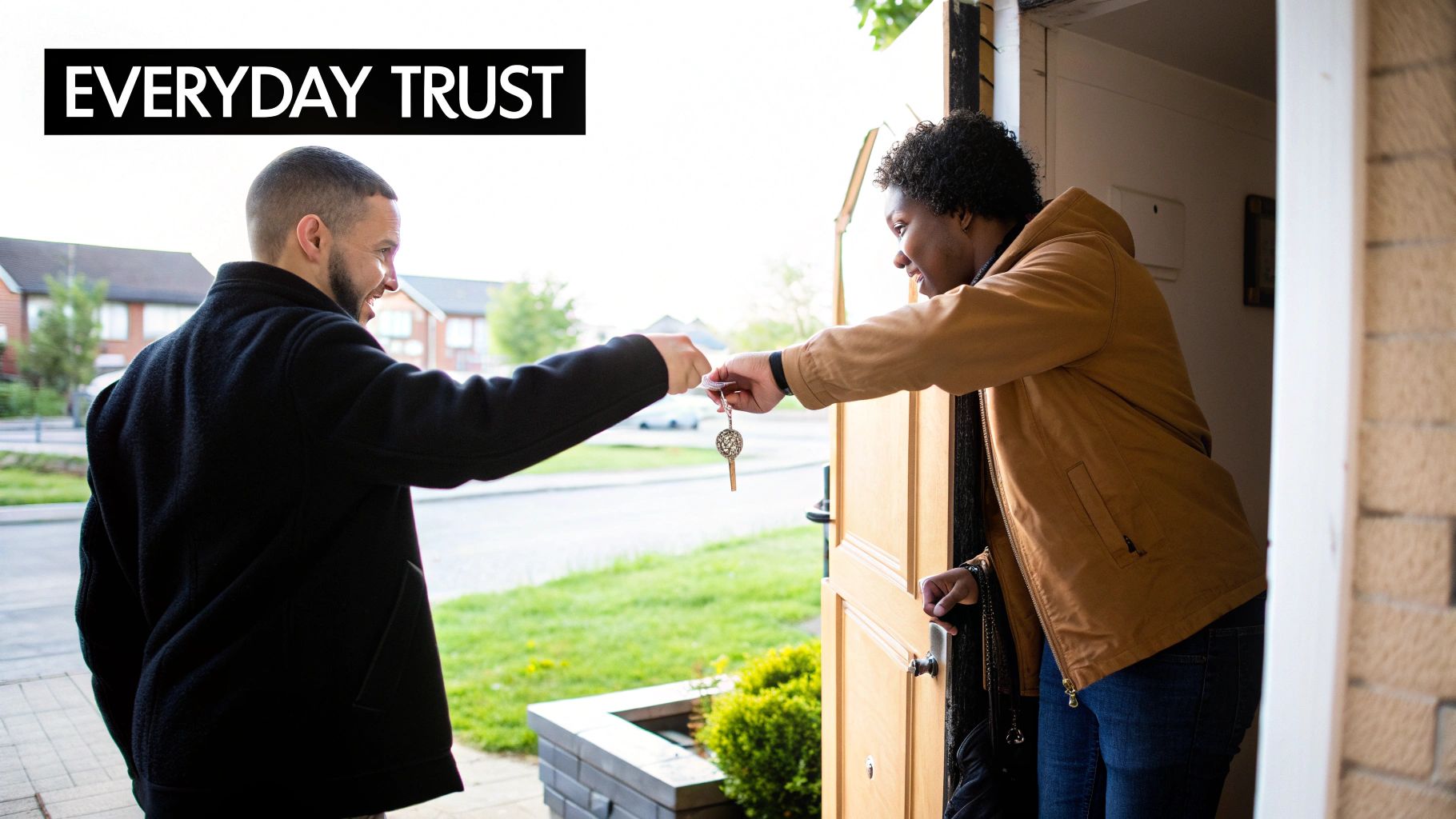
Trust is the emotional glue that holds a relationship together, but it’s easy to misunderstand. We often think about trust in huge, dramatic terms—like major betrayals. But the truth is, unbreakable trust isn't built in a single grand gesture. It’s pieced together from thousands of tiny, everyday moments.
It’s the small promises kept. The vulnerabilities shared without judgment. The consistent reliability that tells your partner, "I've got your back." This is how you build a fortress of emotional security, brick by brick, until you both know you can count on each other, no matter what.
The Foundation of Reliability
At its very core, trust is all about reliability. It's the simple, yet incredibly powerful, act of doing what you say you will. This isn't just about the big stuff; it applies to everything from vowing to be there for a tough family dinner to just promising to pick up milk on the way home.
When your actions consistently line up with your words, you're sending a crystal-clear message: "You can depend on me." This consistency creates a deep-seated feeling of safety. Every time you follow through, you add another layer to that solid foundation.
Think of it this way: one broken promise might feel insignificant, but a pattern of them slowly chips away at the core of your connection. On the other hand, a steady pattern of reliability builds a bond that feels unshakable, even when life gets messy.
Actionable Trust-Building Exercises
Trust is like a muscle—it gets stronger with intentional exercise. Rather than waiting for a problem to pop up, you can proactively strengthen your bond with a few simple practices.
Here are a few ideas to weave into your regular routine:
- The Weekly Appreciation & Vulnerability Check-In: Set aside just 15 minutes a week. Each of you shares one small thing you appreciated about the other person and one small, personal vulnerability. For example: "I loved how you encouraged me before my big presentation," followed by, "Honestly, I've been feeling a little insecure about work lately." This carves out a safe space for both gratitude and realness.
- The "Remember When" Game: Take turns sharing a positive memory where you felt completely supported by your partner. Recalling these moments reinforces the history of trust you've already built and reminds you both of your strength as a team.
- The Follow-Through Challenge: For one week, make a conscious effort to be impeccable with your word on all the small stuff. If you say you'll take out the trash, do it right away. If you promise to call at a certain time, set an alarm. This sharpens your accountability and proves your reliability in a tangible way. To take it a step further, you might even explore what is the purpose of a promise ring as a physical symbol of your dedication.
Trust isn't a passive state; it's an active practice. The more you intentionally choose trustworthy actions, the stronger your connection becomes.
Repairing Minor Breaches of Trust
Look, even in the best relationships, people mess up. You might forget an important date, speak harshly in a moment of stress, or let something slip that was meant to be private. These minor breaches aren't the end of the world, but how you handle them is absolutely critical.
The path to repair isn't about defending yourself or proving you were right. It’s about taking sincere, heartfelt accountability.
The Three Steps to Genuine Repair
When a small breach happens, your first instinct might be to downplay it by saying, "It wasn't a big deal." Resist that urge. Your partner's feelings are valid, and dismissing them just adds insult to injury.
Instead, follow this simple, three-step process for a real repair:
- Acknowledge the Hurt: First, validate their feelings. You could say, "I understand why you're upset that I forgot our anniversary. I know it made you feel unimportant, and I am so sorry for that."
- Offer a Sincere Apology: A real apology has no strings attached. It’s a clean, direct, "I'm sorry." Avoid adding a "but..." that inevitably shifts the blame.
- Discuss a Plan for the Future: This is the most crucial step. It turns an apology into a commitment. Work together to figure out how to avoid a repeat. For instance: "To make sure this doesn't happen again, I'm putting all our important dates into our shared calendar right now with three reminders."
This process shows you not only regret what happened but are also invested in protecting the relationship moving forward. Every successful repair actually strengthens trust, proving you can navigate challenges together and come out even stronger.
Turning Conflict into an Opportunity for Growth
Every couple argues. It's just a fact of life. The real difference between a relationship that thrives and one that falls apart is how you handle those arguments. The strongest couples I've seen don't avoid conflict—they've learned how to see it as a chance to understand each other better, not as a sign that things are falling apart.
Think of a disagreement as a spotlight. It’s not there to signal a problem; it’s there to show you exactly where your needs or expectations aren't quite lining up. When you learn to navigate these moments together, you build a kind of resilience. You prove that your bond can handle the pressure and actually come out stronger on the other side.
Establish Your Rules of Engagement
The goal of a healthy argument is to fight for a solution, not against each other. To get there, you need some ground rules to keep things respectful, especially when emotions are high. This isn't about being rigid; it's about creating a safe space where you can both be honest without saying something you'll regret later.
The trick is to agree on these rules when you're both calm, not in the heat of the moment.
Here are a few non-negotiables to start with:
- No name-calling or insults. This is the fastest way to shut down a real conversation and cause genuine hurt. Stick to the issue at hand, not your partner's character.
- Use "I feel" statements. It’s a simple switch, but it changes everything. "I feel hurt when plans change at the last minute" lands very differently than "You're so unreliable."
- Have a timeout signal. At a certain point, our brains get overwhelmed, and productive conversation becomes impossible. Agree on a simple word like "pause" or "timeout." Take 20 minutes to cool down, then come back to it.
By setting clear boundaries for your disagreements, you ensure that even when you argue, you're still protecting the core of your relationship. It's about maintaining respect, even when you're angry.
Look for the Deeper Meaning
Arguments are almost never about what they seem to be about on the surface. A fight over who forgot to take out the trash isn't really about the trash. It’s usually about one person feeling unsupported, unappreciated, or that their efforts are being ignored.
Learning to see past the surface issue is a game-changer. The next time you feel that same old argument starting up, hit the pause button and ask a different kind of question.
Instead of focusing on the "what," get to the "why." You could try asking:
- "What's the feeling underneath this frustration for you?"
- "When this happens, what does it make you feel about us?"
- "What do you need from me in these moments that you feel you're not getting?"
When you dig a little deeper, you move past the blame game and start talking about the real emotional needs at stake. This turns the fight from a battle into a collaborative search for a solution.
The Art of a Successful Repair
Let's be real—not every disagreement will end with a perfect resolution. Sometimes, we say the wrong thing or accidentally hurt our partner's feelings. What truly matters is how you repair that connection afterward. A genuine apology and a real effort to make things right can transform a negative moment into one of reconnection.
A good repair is more than just a quick "I'm sorry." It's about showing you understand where your partner is coming from and that you're committed to doing better. After things have cooled down, a gesture to reconnect can be incredibly powerful. It could be a warm hug or even a small, thoughtful gift to show you care. If you need some ideas, our guide on how to surprise your girlfriend has some great starting points for reinforcing your bond.
It's encouraging to see that global satisfaction with relationships is generally high, with 82 percent of people reporting they are satisfied with their partner. But this isn't a given. The Ipsos Love Life Satisfaction Index 2025, which surveyed people in 30 countries, found that while nations like Thailand and the Netherlands have satisfaction rates as high as 92 percent, others are much lower. This just goes to show that while happiness is common, maintaining it takes real, conscious effort—especially when it comes to navigating conflict. You can discover more about these global relationship trends.
Cultivating Joy and Intimacy in Your Daily Life

The happiest, most resilient couples I've worked with all have one thing in common: they are masters of shared joy and intentional intimacy. While it's crucial to know how to navigate conflict and build trust, it's the fun, affectionate, and genuinely positive moments that make all the hard work worth it.
Think of these shared experiences as building up a deep reservoir of goodwill. When life inevitably throws challenges your way, you can draw from that reserve.
The best part? This isn't about grand, expensive gestures. It's about weaving small, meaningful moments of connection into the very fabric of your everyday life. This is how you keep the spark alive and build a partnership that feels vibrant and deeply satisfying.
Create Your Own Shared Rituals
Shared rituals are the secret glue of a long-term relationship. They are the consistent, predictable moments of connection you can both count on, creating a powerful sense of stability and "us-ness." And they don't have to be complicated—in fact, the simpler they are, the more likely you are to stick with them.
Over time, these little traditions become the private language of your relationship, reinforcing your bond day after day.
- Daily Rituals: This could be as simple as having coffee together every morning, with a strict "no-phones" rule, before the day officially begins. Or maybe it's the six-second kiss you share the moment you see each other after work. These small touchpoints create comforting consistency.
- Weekly Rituals: A dedicated date night is a classic for a reason. Whether you go out or stay in, the key is fiercely protecting that time for just the two of you. For some fresh inspiration to keep things exciting, you can explore some top ideas for romantic evenings and perfect date ideas.
- Annual Rituals: An annual getaway—even just for a weekend—or a special tradition to mark your anniversary can create incredible milestone memories you'll look back on for years to come.
Interestingly, these shared real-world experiences are vital from the very beginning. One comprehensive study found that couples who meet in person tend to report higher marital satisfaction and experience love more intensely than those who meet online. The research pointed to stronger feelings of intimacy, passion, and commitment among those who met offline, highlighting the unique power of starting a relationship with shared, in-person moments.
Nurture Both Kinds of Intimacy
Emotional and physical intimacy are two sides of the same coin; one almost always fuels the other. When you feel emotionally disconnected, physical closeness can feel awkward or forced. On the flip side, a lack of physical affection can quickly lead to feelings of emotional distance. To keep your connection strong, you have to nurture both.
Emotional intimacy is all about feeling seen, understood, and safe enough to be your most authentic self. It’s built through vulnerability and staying genuinely curious about your partner’s inner world.
One of the most powerful things you can do for your relationship is to never stop being curious about your partner. People evolve, and assuming you know everything there is to know is a silent killer of connection.
Try having a "curiosity conversation" once a month. Put your phones away, pour a drink, and ask each other open-ended questions like you’re on a first date again.
Here are a few questions to get you started:
- "What's something you're really excited about right now?"
- "If you could have any superpower, what would it be and why?"
- "What's a small thing that made you happy this week?"
- "What's a dream you haven't told me about yet?"
Physical intimacy, of course, goes way beyond the bedroom. It’s all the small, affectionate gestures that communicate love and care throughout the day. A hand on their back as you pass by in the kitchen, a spontaneous hug, holding hands while you walk—these are all deposits in your relationship’s intimacy bank. For a tangible reminder of your bond, you could even explore beautiful custom jewelry for couples to keep that feeling of closeness with you.
Champion Each Other’s Passions
A strong relationship isn't about two people becoming one; it's about two strong individuals choosing to be a team. Supporting each other's separate hobbies, goals, and passions is one of the most powerful ways to show your love.
When you become their biggest cheerleader—whether they want to take a pottery class, start a side project, or train for a 5k—you’re not just supporting them. You’re strengthening the partnership as a whole.
It's about celebrating their individual wins as if they were shared victories. This kind of mutual support builds incredible respect and admiration, reinforcing the idea that you are two whole people who are simply even better together.
Still Have Questions? Let's Talk Through Some Common Scenarios
Even with the best intentions, every couple hits a few bumps in the road. Knowing the "rules" is one thing, but applying them when things get complicated is another. Let's tackle some of the most frequent questions I hear from couples trying to navigate the real, messy, beautiful work of staying connected.
How Often Should We Have a "State of the Union"?
Honestly? You shouldn't have to schedule them at all. If you're waiting for a big, heavy, "we need to talk" moment, you've probably waited too long.
The healthiest relationships are built on a foundation of constant, low-stakes communication. Think of it less like a formal meeting and more like a continuous pulse-check. A simple "How are you feeling about us this week?" while you're making dinner or out for a walk can do wonders. This approach keeps small annoyances from snowballing into major resentments, making your connection feel natural and safe, not like a project that needs a quarterly review.
What if My Partner Just Isn't Trying?
This is a tough one, and it can feel incredibly lonely. Before you assume the worst, the first step is to gently open the door for conversation. The key is to speak from your own perspective, focusing on your feelings of disconnection rather than putting them on the defensive.
Try saying something like, "I've been feeling a little disconnected from you lately, and I really miss us. I'd love to figure out a small way we can get back on the same page."
If you’ve tried this and still meet a wall, it might be a good time to bring up the idea of getting help from a neutral third party. Suggesting couples counseling isn't about blaming anyone; it's about saying, "We're a team, and our team could use a coach right now."
Key Insight: You can only control your half of the relationship. Start by showing up as the partner you want to be, communicate your needs with kindness, and then see if professional support can help you both find your way back to each other.
Is It Possible to Heal After Trust Has Been Broken?
Yes, absolutely. But it's a long road, and it demands 100% commitment from both people. There are no shortcuts.
The person who broke the trust has to be willing to be an open book—offering total transparency, expressing sincere remorse, and taking full responsibility for their actions. No excuses. For the partner who was hurt, healing means making the brave, conscious choice to eventually forgive and risk trusting again. This process is built one consistent, trustworthy action at a time. Words aren't enough. I almost always recommend professional therapy here; it’s incredibly difficult to navigate this kind of repair on your own.
We're Both So Busy. How Do We Find the Time?
When life gets crazy, your relationship has to go in the calendar, just like a dentist appointment or an important meeting at work. It's that simple. You have to be intentional.
Forget waiting for a magical, free Saturday for a perfect date night. It’s not coming. Instead, look for small pockets of time you can steal back for just the two of you.
- Share a 15-minute coffee in the morning before the chaos of the day begins.
- Take a 20-minute walk together after dinner, no phones allowed.
- Declare the first hour you're both home a "no-screen zone" and just be present with each other.
It’s not about the amount of time; it’s about the quality of your attention. These small, consistent deposits into your relationship bank account are what keep you close when life is pulling you in a million different directions.
At Hidden Forever, we believe in celebrating the small, everyday moments that build a love story. Our unique projection jewelry is designed to capture those cherished memories and keep them close to your heart. Discover a meaningful way to honor your connection at Hidden Forever.


