

If you've ever looked closely at a piece of silver jewelry, you might have noticed a tiny stamp on it: '925'. This isn't just a random number; it's a universal shorthand for quality, telling you the item is genuine sterling silver. It means the piece is composed of 92.5% pure silver, with the remaining 7.5% made up of other metals, most often copper.
What Defines 925 Sterling Silver
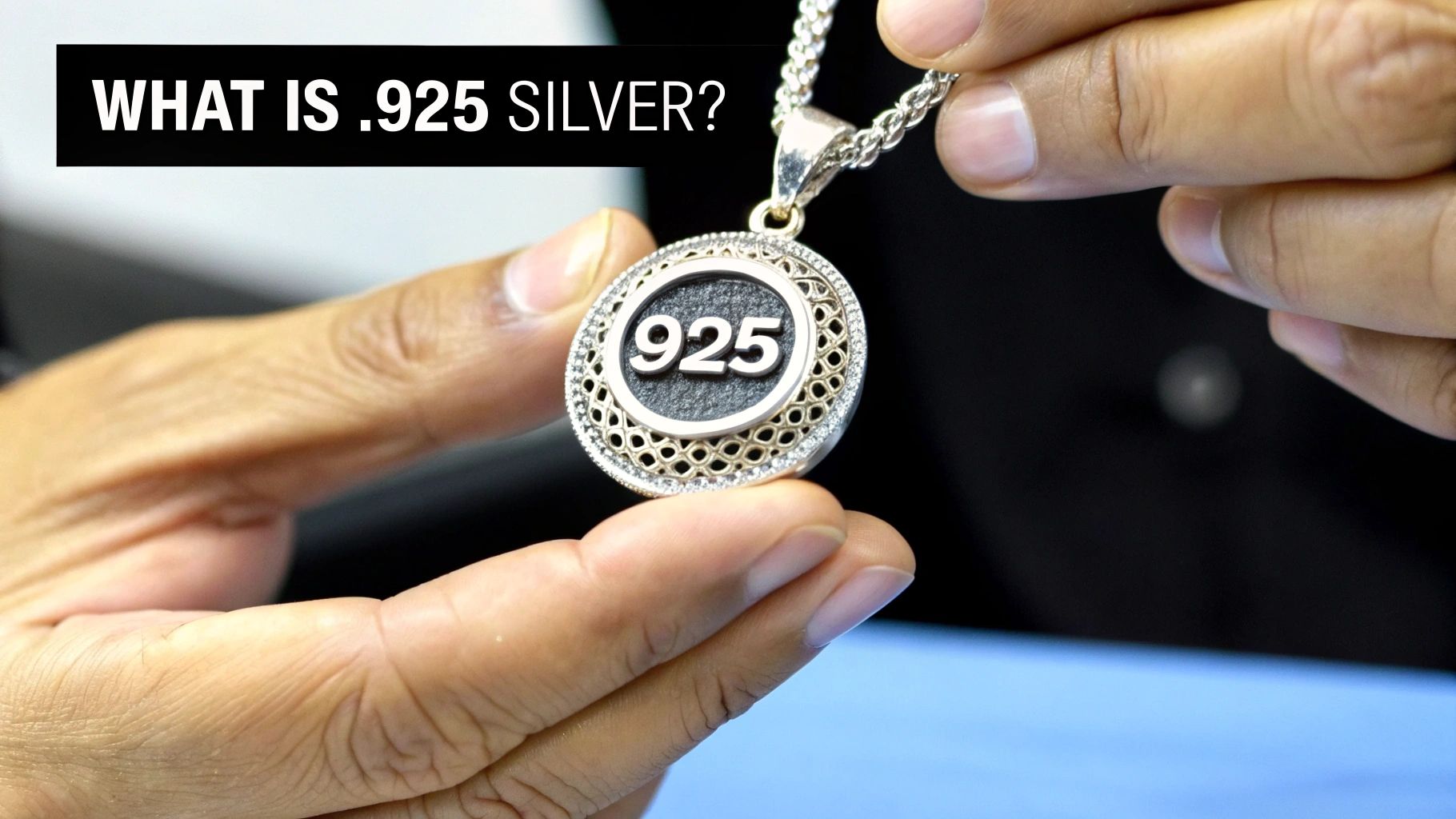
The number ‘925’ is essentially the recipe for beautiful, long-lasting silver. Pure silver, on its own, is surprisingly soft—too soft for everyday wear. Think of it like pure gold; it bends and scratches far too easily to hold up in a ring or bracelet you'd wear daily.
To get around this, jewelers mix pure silver with more robust metals. This blend, known as an alloy, gives the silver the strength it needs. For 925 sterling silver, the internationally accepted formula is:
- 92.5% Pure Silver: This is what gives the metal its signature bright-white luster and inherent value.
- 7.5% Other Metals: Adding a small amount of a stronger metal, like copper, is what provides the necessary hardness and durability.
This precise mixture strikes the perfect balance. You get all the radiant beauty of silver in a material that's tough enough for intricate designs and daily life. The '925' hallmark is your assurance of this standard. So when you understand what does 925 mean on jewelry, you can be confident you're buying a piece built for both beauty and longevity.
Key Takeaway: The 925 stamp is a promise. It confirms your jewelry meets the legal standard for sterling silver, containing at least 92.5% pure silver by weight. This composition makes it durable without sacrificing its precious metal appeal.
The History Behind the 925 Hallmark
That tiny '925' stamp on your favorite silver piece is more than just a number—it’s a mark of trust with roots stretching back nearly a thousand years. Its story begins in 12th-century England, where the word "sterling" first became synonymous with silver coins known for their remarkable purity and reliable weight.
In an age when a coin's value was literally its weight in precious metal, these early coins established a crucial benchmark for quality. As commerce flourished, the need for a formal standard grew. It was all too easy for dishonest merchants to dilute silver with cheaper metals, duping buyers with inferior products.
From Local Coins to a Global Standard
This widespread need for protection is what pushed the sterling standard from an informal measure into actual law. By the 13th century, England had enacted laws requiring a specific fineness for silver goods, laying the groundwork for the hallmarking system we rely on today.
The ‘925’ designation locks in a precise recipe: 92.5% pure silver mixed with 7.5% other metals. This ratio proved to be the sweet spot, striking the perfect balance between the allure of pure silver and the strength needed for everyday items. You can learn more about this historic blend of silver at danslegris.com.
This English stamp of quality was so trusted that it gradually spread throughout Europe. As global trade routes opened up, it journeyed to North America and beyond, transforming a local safeguard into an internationally recognized symbol of authenticity.
Today, seeing '925' on a piece of jewelry means you are holding an item that meets a time-honored global standard. It provides confidence that your piece—whether from a small artisan shop or a major retailer—is genuine sterling silver.
This rich history is exactly why the 925 hallmark carries so much weight. It’s a centuries-old promise from the maker to you, a guarantee of quality and value no matter where in the world your silver jewelry comes from. It’s a small stamp with a very big story.
Here is the rewritten section, crafted to sound human-written and natural.
Why Jewelers Don't Use Pure Silver for Jewelry
You might be wondering, if pure silver is so precious, why not make all jewelry out of it? The answer comes down to a classic trade-off: beauty versus brawn. As gorgeous as it is, pure silver is surprisingly soft.
Think about it this way: on the Mohs scale, which measures mineral hardness, pure silver only scores a 2.5. That’s about as hard as your own fingernail. A ring made from something that soft would be a disaster—it would bend out of shape with a simple handshake and get scratched just by brushing against a countertop. It just wouldn't last.
The Secret Recipe for Strength
This is where a bit of old-school alchemy comes in. Jewelers create an alloy by mixing 92.5% pure silver with 7.5% of a much stronger metal, which is usually copper. This recipe gives us what we all know and love as 925 sterling silver.
The result is a metal that keeps silver’s stunning white shine but is tough enough for everyday life. This isn't just a minor improvement; it's a game-changer. Sterling silver holds onto over 90% of pure silver's intrinsic value while becoming roughly 30-50% stronger. This added resilience is exactly what lets artisans create those intricate, delicate designs that can still stand the test of time. You can learn more about how this alloy balances value and strength on blakebros.com.
New Twists on a Classic Formula
Of course, the classic copper blend isn't the only option anymore. Metallurgy has come a long way, and today's jewelers have access to some innovative new alloys, like Argentium silver.
- What's different? Argentium silver swaps out some of the copper for a metalloid called germanium.
- The big advantage: This simple change makes the silver much more resistant to tarnishing, meaning you won't have to polish it nearly as often.
- The standard: And yes, it still contains the required 92.5% pure silver, so it's officially considered sterling silver.
The Bottom Line: Alloying isn't about watering down the silver; it's about making it better. By blending it with other metals, we get a material that’s perfect for crafting beautiful pieces you can actually wear and enjoy for a lifetime.
How to Identify Authentic Sterling Silver
Becoming a savvy silver shopper is easier than you think. You don't need to be a professional jeweler to spot the real deal. In most countries, there are laws requiring genuine 925 sterling silver to be stamped, so your first step is always to look for a hallmark.
Grab a magnifying glass—your phone's camera zoom works in a pinch—and inspect the piece for tiny inscriptions. You're looking for stamps like “925,” “STER,” “Sterling,” or “STG.” These marks are the industry standard for authenticity. You might also spot a maker's mark, which is like an artist's signature, identifying the person or company behind the jewelry. These are usually tucked away in discreet places, like the inside of a ring band, on a necklace clasp, or the back of a pendant.
Simple Tests You Can Do at Home
What if a piece is unmarked, or you just have a nagging feeling and want to be sure? A few simple, non-damaging tests can give you peace of mind. One of the most reliable is the magnet test.
Pro Tip: Find a strong magnet—even a decent refrigerator magnet will do—and hold it right next to your jewelry. Sterling silver is not magnetic. If the piece jumps to the magnet, it's a dead giveaway that it’s not sterling silver and is likely made of stainless steel or another magnetic base metal.
Another quick check is the smell test. It might sound strange, but it works! Real sterling silver is odorless. If you get a strong, metallic or slightly sulfuric smell, especially after rubbing it between your fingers, you're probably holding a piece of silver-plated copper or brass.
Of course, to keep your silver looking its best, regular cleaning is a must. You can learn about some proven methods to restore its shine to maintain its brilliant quality over the years.
Sterling Silver vs. Other Silver-Colored Metals
It's easy to get confused by shiny, silver-toned metals. This table breaks down the key differences between genuine sterling silver and some common look-alikes, helping you identify what you truly have.
| Metal Type | Composition | Common Hallmarks | Magnetic? | Value |
|---|---|---|---|---|
| 925 Sterling Silver | 92.5% pure silver, 7.5% other metals (usually copper) | 925, Sterling, STER, STG | No | High |
| Stainless Steel | Iron, chromium, nickel | None for jewelry | Yes | Low |
| Silver Plated | Base metal (brass, copper) with a thin silver layer | EP, EPNS, Silver on Copper | Depends on base metal | Low |
| Aluminum | Lightweight, pure aluminum | None for jewelry | No | Very Low |
| White Gold | Gold alloyed with white metals (palladium, nickel) | 10k, 14k, 18k | Typically No | Very High |
| Platinum | 90-95% pure platinum | PLAT, PT, 900, 950 | No | Highest |
As you can see, the hallmark is your most reliable guide, but knowing these other properties—especially magnetism and value—can quickly help you narrow down the possibilities and spot a fake.
Rings are by far the most popular type of sterling silver jewelry, a testament to their timeless appeal and versatility.
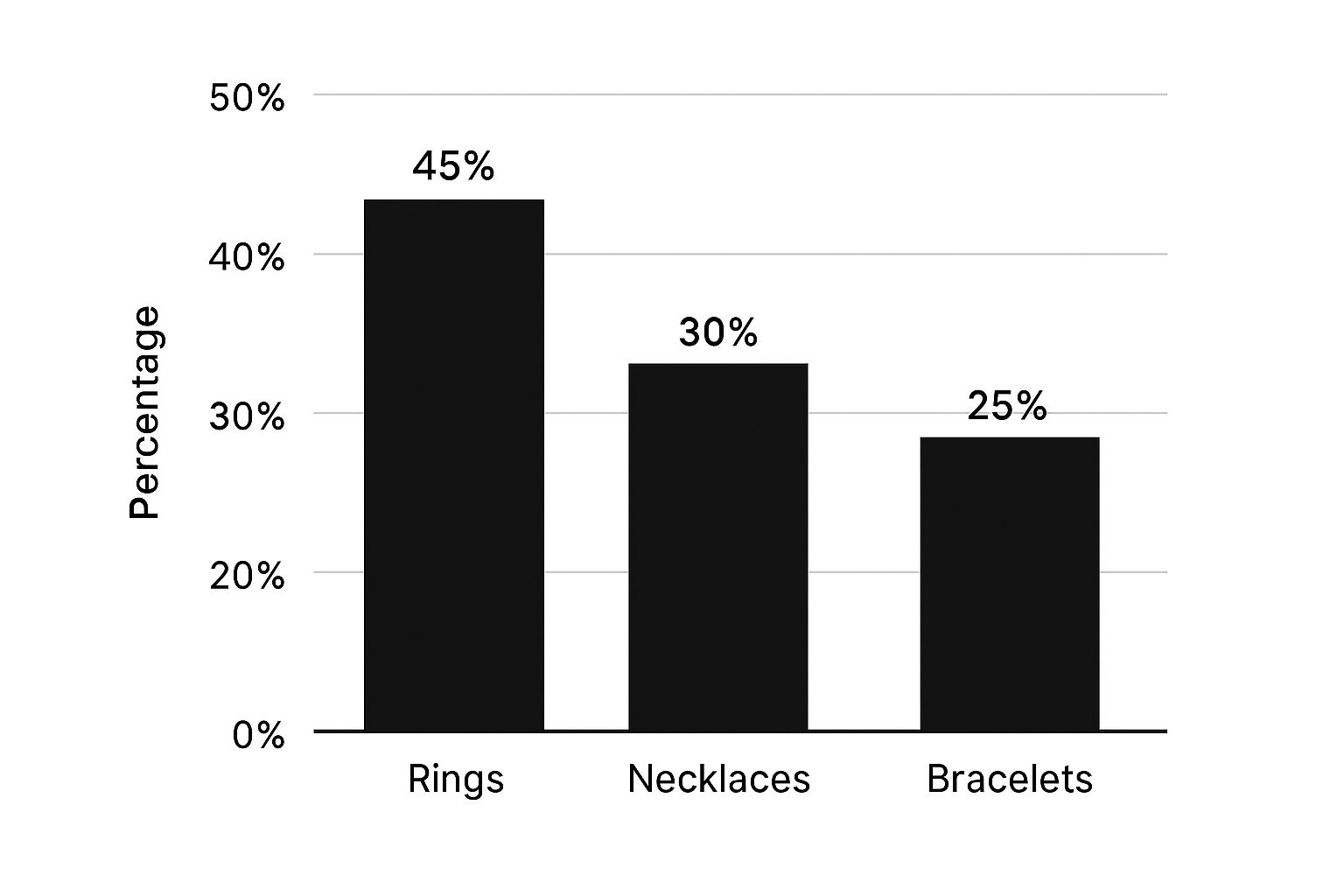
The chart above shows that rings make up nearly half of the entire sterling silver jewelry market. It's clear that from classic bands to intricate statement pieces, people love the enduring beauty of a silver ring.
Why Sterling Silver Is a Global Favorite
It’s no accident that 925 sterling silver has become a staple in jewelry boxes around the world. It’s more than just a shiny material; it has firmly established itself as a cornerstone of the global jewelry market for one simple reason: it’s an “accessible luxury.”
Think about it. Sterling silver gives you that brilliant, cool white luster and satisfying weight you expect from a precious metal, but without the eye-watering price tag of platinum or solid gold. This perfect balance is what puts beautifully crafted, high-quality jewelry within reach for millions of people.
The numbers really speak for themselves. The demand for 925 sterling silver has seen consistent growth, especially in major hubs like the United States, Europe, China, and India. In the U.S. alone, the silver jewelry market was valued at over $5 billion in the early 2020s, which shows just how much we all love it.
A Symbol of Culture and Trust
Sterling silver's appeal goes much deeper than just its price. It holds real cultural significance across the globe, serving as a trusted canvas for artists and a cherished material for everything from traditional wedding jewelry to sacred religious artifacts. That simple "925" stamp has evolved into a universal symbol of quality, giving buyers confidence no matter where they are.
Why It Resonates: Sterling silver strikes a chord with people because it's both personal and practical. It’s durable enough to become a treasured family heirloom, yet affordable enough to let you build a versatile collection for everyday wear.
This blend of trust and appeal has also opened doors for incredible innovation. It’s fascinating to see how this timeless metal is being used in the future of fashion with projection jewelry, where classic materials meet cutting-edge storytelling.
Ultimately, it’s this unique mix of beauty, durability, and value that makes sterling silver a true favorite that transcends borders and generations.
Common Questions About 925 Sterling Silver
Even when you know the basics, a few practical questions always pop up when you're looking at 925 sterling silver. Let's get into the details so you can feel completely confident about your jewelry choices.
Does 925 Sterling Silver Tarnish or Turn Skin Green?
Yes, all genuine sterling silver can tarnish, and that’s actually a good thing. It's proof that you have the real deal! Tarnishing happens when the 7.5% copper in the alloy reacts with sulfur in the air, creating a dark layer on the surface.
Sometimes, this same reaction can leave a harmless green or black mark on your skin. This isn't usually an allergy; it’s just the metal reacting with your unique skin chemistry, lotions, or sweat. The mark washes right off with soap and water.
The Good News: Tarnish and skin discoloration are totally manageable. With a little bit of regular, gentle cleaning, you can keep your sterling silver bright and your skin clear, ensuring your pieces always look brand new.
Is Sterling Silver Hypoallergenic?
For most people, absolutely. Pure silver is hypoallergenic, meaning it doesn't cause skin reactions on its own. The potential issue comes from the other metals mixed in.
While copper allergies are rare, some sterling silver may contain tiny amounts of nickel, which is a more common irritant. If you have sensitive skin, it's a smart move to seek out jewelry specifically labeled as “nickel-free.”
- A Modern Alternative: If you have known metal sensitivities, consider Argentium silver. This modern alloy swaps most of the copper for germanium, making it not only highly tarnish-resistant but also exceptionally hypoallergenic.
How Should I Clean and Care for Sterling Silver?
Keeping your sterling silver beautiful for decades is surprisingly simple. The best defense is a good offense: prevent tarnish by storing your jewelry in a cool, dry place. An anti-tarnish bag or a soft cloth pouch is perfect.
When you see a little dullness creeping in, a soft, dedicated silver-polishing cloth will gently bring back its original shine. For a more thorough clean, you can use a bit of mild soap and warm water with a soft brush. Just be sure to rinse it well and dry it completely to prevent water spots.
The most important rule? Keep your silver away from harsh chemicals. Things like bleach, chlorine in swimming pools, and ammonia-based cleaners can permanently damage the metal's finish. It's always best to take off your jewelry before you go for a swim or do any heavy-duty cleaning.
Your cherished memories deserve a material as timeless as they are. At Hidden Forever, we craft each piece of projection jewelry from high-quality 925 sterling silver, ensuring your special moments are preserved with beauty and durability. Explore our collection and turn your favorite photo into a precious keepsake at hiddenforever.com.


