

Learning how to navigate grief starts with one simple, yet incredibly difficult, act: giving yourself permission to feel whatever comes up, without judging yourself for it.When you first learn of a loss, there's no instruction manual for how to react. The most important thing you can do is be gentle with yourself as you find your footing in this new, unwelcome reality.
Giving Yourself Space in the First Moments of Loss

The moments right after a loss can feel strange and surreal. It’s like being wrapped in a thick fog where everything seems muffled and distant. Life suddenly splits into a "before" and an "after." While the world outside keeps spinning, yours may feel like it has screeched to a halt.
In this disorienting state, your emotions can feel like a tangled mess. You might feel numb one minute, then a surge of anger the next, only to be hit by a wave of deep sadness. This isn't chaos; it's a completely normal response to a life-altering event. Trying to fight these feelings or putting on a brave face often just makes things harder.
The kindest thing you can do right now is to create a safe space for yourself to simply exist. This isn't about trying to "fix" the pain. It’s about surviving the initial shock.
Focus on Small, Manageable Actions
When everything feels monumental, even the idea of "coping" can be exhausting. Instead, shrink your world down. Focus on tiny, concrete actions that can ground you. Think of them as small acts of self-preservation, not a checklist you have to complete.
- Hydrate and Nourish: You probably don't have an appetite, and that's okay. But try to sip some water or a warm cup of tea. A few bites of something simple, like toast or soup, can give your body the fuel it desperately needs to function.
- Accept Help: This is a big one. When a friend you trust offers to handle phone calls, drop off a meal, or run to the store for you, let them. Saying "yes" isn't a sign of weakness; it's a way to conserve your own precious energy.
- Find a Quiet Spot: Carve out a small sanctuary just for you. It could be a specific chair, a corner of the garden, or even just sitting in your parked car for a few minutes. Give yourself moments to just breathe, with no demands or expectations.
The goal isn’t to solve your grief in the first few days. It's to acknowledge its presence and treat yourself with the same kindness and patience you would offer a dear friend going through the same ordeal.
Give Yourself Permission to Just Be
There's often a silent pressure, from others or even from ourselves, to start "processing" grief immediately. But honestly, the first phase is usually just about survival. It's okay if the only thing you accomplish is getting through the next hour.
It is perfectly fine to feel completely lost and disoriented. Your mind and heart are struggling to make sense of a new reality they weren't ready for.
Giving yourself this grace period—without a timeline or expectations for healing—is one of the most important first steps you can take. Being gentle with yourself now builds the strength you'll need for the road ahead. This early phase is simply about being, not doing.
Understanding the Unpredictable Nature of Grief

When you're trying to figure out how to deal with grief, it’s easy to think there’s a roadmap. We’ve all heard about the "stages of grief," which makes it sound like a neat, tidy process you can check off a list. But anyone who has been through it knows the truth: grief isn't a straight line. It’s more like the ocean—sometimes calm and reflective, other times the waves come out of nowhere and knock you off your feet.
This is probably one of the hardest parts to get your head around. You might have a perfectly good day, maybe even catch yourself laughing, only to be hit with a profound wave of sadness an hour later. That back-and-forth isn’t a setback. It’s just the natural, messy rhythm of healing.
The first step, and it’s a big one, is to accept this reality. Let go of the pressure to grieve "the right way." Instead, give yourself permission to simply be with whatever feeling shows up, whenever it shows up.
Recognizing Grief's Many Disguises
Grief is a whole-body experience. We tend to think of it as just sadness and tears, but its effects are so much broader, touching you physically, mentally, and emotionally. Learning to spot these different symptoms can make you feel a little less alone and a lot more normal.
You might experience:
- "Grief Brain": This is that frustrating mental fog. You might feel forgetful, struggle to focus, or lose your train of thought mid-sentence.
- Sudden Anxiety: A wave of panic can wash over you without any obvious trigger. It's often just a small, subconscious reminder of your loss.
- Irritability and Anger: It's completely normal to feel angry—at the world, at the situation, even at the person you lost. It's your mind's way of grappling with the profound unfairness of it all.
- A Need to Withdraw: You might feel a powerful urge to pull away from people and social events. Think of it as a protective instinct to conserve your limited energy.
Your body keeps the score, too. Deep fatigue that no amount of sleep can fix, a tightness in your chest, digestive upset, or new aches and pains are all common physical signs of emotional distress. These aren't just "in your head"; they are very real, physiological responses to the trauma of loss. Being kind to your body is just as important as being kind to your heart.
For more ideas on how to navigate this time, you might find our guide on creative ideas for remembering deceased loved ones helpful.
When Grief Lingers Intensely
For most people, the raw intensity of grief will eventually soften with time. The waves of sadness may still come, but they become less frequent and less overwhelming. But for some, that acute, debilitating phase of grief doesn’t let up. It becomes a persistent state that makes it nearly impossible to function.
This is what’s known as Prolonged Grief Disorder (PGD). It’s more than just deep sadness; it’s a condition where the pain of the loss remains so consuming that it prevents you from re-engaging with your own life.
PGD is marked by a constant, intense yearning for the person who died, a sense of disbelief about the death, and an inability to accept the finality of the loss. These feelings remain severe for an extended period, typically lasting more than a year.
It's vital to know that this is a recognized medical condition. The American Psychiatric Association estimates that about 7-10% of bereaved adults may develop PGD. Those numbers can be much higher after a sudden or violent death. Following the COVID-19 pandemic, for instance, some studies found the prevalence of prolonged grief to be as high as 30% to 87% in certain affected groups.
Knowing about PGD isn't about diagnosing yourself. It’s about empowerment. It gives you a name for what you might be feeling and confirms that your experience is real and valid. If your grief still feels unbearable and all-consuming many months after your loss, it’s a clear sign that reaching out for professional support could be the most compassionate step you can take.
Finding Strength in Gentle Self-Care Practices
When you’re deep in grief, the idea of "self-care" can feel like a joke. It sounds like another task on a to-do list that’s already impossible. But real self-care, when you're grieving, isn't about spa days or grand gestures. It’s about the small, quiet, compassionate acts of survival that respect your completely depleted energy.
This isn’t about forcing yourself to "feel better." It’s about giving your body and mind the basic kindness they need to carry such an immense emotional weight. It's permission to stop being productive and just be.
Creating an Anchor in the Chaos
Grief can make everything feel chaotic and unpredictable. In the middle of that storm, a simple routine can be a lifeline. I'm not talking about a rigid, complicated schedule. The goal is just to create a little bit of predictability when nothing else makes sense.
Think of it as a loose framework for your day. For example, maybe you decide to have a cup of tea by the same window every morning. This small, repeated action becomes a grounding ritual—a quiet moment that is just for you.
Here are a few other ideas to create a gentle daily structure:
- Let the Morning In: Try to open your curtains or just step outside for a few minutes when you wake up. Natural light helps regulate your sleep-wake cycle, which grief often throws completely out of whack.
- One Simple Meal: Don’t worry about cooking a feast. Just commit to eating one small, nourishing thing at roughly the same time each day. It could be yogurt, a piece of fruit, or a simple bowl of soup.
- An Evening Signal: Create a gentle signal to your body that the day is ending. This might mean listening to a calming playlist, reading a single page of a book, or doing a few light stretches before bed.
Self-care in grief is not an indulgence; it is an act of survival. It is the practice of giving yourself the same grace and tenderness you would offer a dear friend in their darkest hour.
Nourishing Your Body and Mind
Grief is physically exhausting. It’s completely normal to lose your appetite or feel too bone-tired to move. The key is to be incredibly gentle with your expectations.
If cooking feels like climbing a mountain, focus on simple nourishment. Keep easy-to-grab snacks on hand, like nuts, cheese sticks, or pre-cut vegetables. Smoothies can also be a lifesaver for getting nutrients when you have zero energy or appetite.
This image really captures the flow of how to cope when you feel overwhelmed.
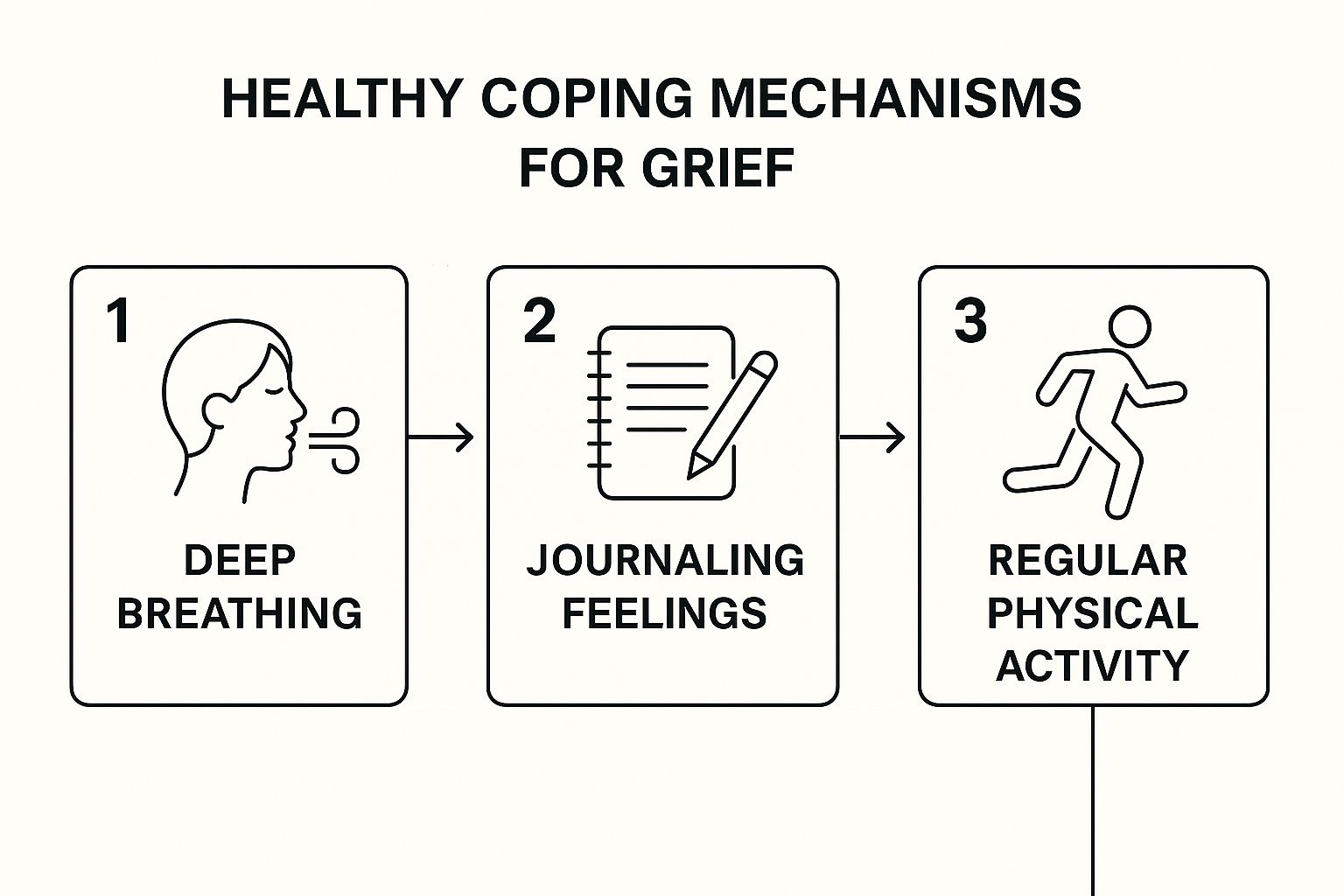
As you can see, simple, intentional actions—like breathing and journaling—can lead to more regulated emotions and physical well-being. It’s a gentle ripple effect.
Even a little movement can be powerful. A short, slow walk around the block can help process those tough emotions that feel stuck in your body. This isn't about "exercise"; it's about moving stagnant energy.
Sometimes, you need a little extra help to feel grounded. The table below offers some very simple, low-energy ideas you can try when you feel overwhelmed and don't know what to do next.
Gentle Self-Care Activities for Grief
| Area of Need | Activity Idea | Why It Helps |
|---|---|---|
| Physical Comfort | Wrap yourself in a heavy blanket. | The gentle pressure can be calming and feel like a hug, soothing your nervous system. |
| Mental Quiet | Listen to an instrumental playlist or nature sounds. | It gives your mind a break from racing thoughts without requiring active focus. |
| Emotional Release | Write down three words describing how you feel. | It externalizes your feelings without the pressure of writing a full journal entry. |
| Grounding | Hold a cool stone or a warm mug in your hands. | The temperature and texture bring your awareness back to the present moment and your body. |
| Nourishment | Sip on a warm cup of herbal tea. | It's a simple, comforting act that hydrates you and encourages a moment of pause. |
These are just starting points. The main idea is to find one small thing that feels even slightly doable and give yourself credit for doing it.
The Importance of Rest and Connection
Let me say this clearly: allowing yourself to rest is one of the most productive things you can do while grieving. Your body and mind are doing the incredibly hard work of healing from trauma. Please, give yourself permission for guilt-free rest, whether that’s an afternoon nap or just sitting quietly without any demands.
As you move through your grief, finding ways to care for yourself is essential. If you’re feeling completely overwhelmed, you might consider exploring gentle services designed to soothe your soul. Sometimes, letting someone else care for you can provide the comfort you can't quite give yourself.
A tangible connection to your loved one can also be a source of quiet strength. For more inspiration, you can explore our guide to personalized memorial jewelry and thoughtful keepsakes. It’s all about finding small, meaningful ways to keep their memory close as you gently care for yourself.
Creating Meaningful Rituals to Honor Your Loved One

As time passes, the initial, sharp pain of grief often softens. The daily struggle for survival slowly shifts into a new question: how do you carry their memory forward? This isn't about getting stuck in the past. It’s about thoughtfully weaving their spirit into the life you continue to live.
One of the most healing ways to do this is by creating personal rituals. These intentional acts give you a tangible way to maintain your connection, transforming the ache of absence into a loving, enduring bond.
Building Bridges to Your Memories
Rituals don't need to be elaborate ceremonies. In fact, the most powerful ones are often quiet, private, and deeply personal. They act as anchors, giving you a dedicated time and space to connect with your memories and feelings in a way that feels safe and comforting.
Think about what was special to your loved one. Could you visit their favorite park on the first warm day of spring? Maybe you could start a tradition of cooking their signature lasagna on their birthday, inviting others to share stories and a meal.
These simple acts build a bridge from the "before" to the "after." They allow you to honor their legacy while still living your life, creating new memories that include them even though they aren't physically here.
Finding Tangible Connections
While memories live in our hearts, sometimes you just need something real to hold onto. Physical keepsakes ground us, offering a concrete connection when loss feels overwhelming and abstract.
This could be as simple as putting together a memory box filled with small treasures: a favorite book with their notes in the margin, a worn-out sweatshirt that still smells faintly of them, or ticket stubs from a concert you went to together.
Here are a few other ideas I've seen bring people comfort:
- Plant a Tree or Garden: Tending to something living and watching it grow can be a beautiful, evolving tribute. It changes with the seasons, just as your grief will change over time.
- Create a "Memory Jar": Ask friends and family to jot down their favorite memories of your loved one. On tough days or special anniversaries, you can pull one out to read. It’s a beautiful reminder of the impact they had on so many lives.
- Compile a Playlist: Gather the songs that make you think of them—the ones they always sang along to, the soundtrack to your relationship, or music that just captures the moment.
"Rituals are the active, visible, and external expression of our internal grief. They give us a place to put our feelings and a way to say, 'You are still important, and you will not be forgotten.'"
Another way people are finding to keep memories close is through personal, wearable keepsakes. Many find immense comfort in carrying a private token with them every day. For a closer look at this idea, Your Guide to a Personalized Memorial Necklace shows how a cherished photo can be subtly held within a piece of jewelry.
Forging New Traditions
Holidays, anniversaries, and birthdays can be minefields of grief. The empty chair at the table is a stark, painful reminder of who is missing. Instead of trying to force things to be exactly as they were, it can be gentler to create new traditions that honor their memory.
This doesn't mean abandoning old traditions, but adapting them. For instance, you might light a special candle for them during a family meal or make a toast in their honor. You could even start something entirely new, like volunteering for a cause they loved on their birthday.
This table gives a few examples of how you might adapt special days.
| Occasion | An Old Tradition | A New, Adapted Tradition |
|---|---|---|
| Birthday | A big, loud party | A quiet dinner with close family, sharing favorite stories. |
| Holiday Meal | Following a strict menu | Making their one favorite dish and trying something new. |
| Anniversary | A celebratory vacation | Visiting a meaningful spot and writing them a letter there. |
These small adjustments can make all the difference on milestone days. They acknowledge the loss while also creating room for new, gentle ways of remembering the love that’s still very much alive. By mindfully creating these rituals, you're taking an active role in your own healing, one meaningful step at a time.
Knowing When to Seek Professional Grief Support
Leaning on friends and family is a huge part of getting through grief, but sometimes, that support system just isn't enough. The weight of loss can feel too heavy to carry, even with their help, and there is absolutely no shame in that.
Deciding to find professional help might feel like a big, intimidating step. But think of it this way: it’s one of the most compassionate things you can do for yourself. It’s a sign of real strength and self-awareness, giving you a safe, dedicated space to work through feelings that might be too raw or complicated to share with the people closest to you.
How to Tell When Grief Becomes Overwhelming
Grief doesn't operate on a schedule, but there are times when it can become so deeply rooted that it starts to seriously disrupt your life. This isn't a sign that you're "failing" at grieving. It's just a signal that the grief has become more complicated and you might benefit from a different kind of support.
Take a moment to check in with yourself. Have you been feeling any of the following for a long time, well after the initial shock wore off?
- An intense, all-consuming ache and longing for the person you lost.
- A persistent feeling of disbelief or numbness, making it hard to accept they're really gone.
- Struggling to get back to work, hobbies, or seeing friends—things you used to enjoy.
- Deep emotional pain, like feeling life is pointless or unbearable without them, often mixed with intense anger or bitterness.
If this sounds familiar, you might be dealing with something more than typical grief. It’s often called Prolonged Grief Disorder (PGD), a recognized condition where the pain of loss remains debilitating.
Globally, PGD affects about 7-10% of people who are grieving. It’s defined by intense, persistent sorrow that gets in the way of daily life long after a loss. Its formal recognition in the DSM-5-TR in 2022 was a huge step forward, helping more people get the specialized help they need.
Finding the Right Support for You
The great news is there are many ways to get professional support, so you can find what feels right. The most important thing is finding a place where you feel safe, heard, and understood.
Here are a few common options:
- One-on-One Grief Counseling: This is your private space to work with a therapist who specializes in loss. They can help you develop coping strategies that are specifically for you and what you're going through.
- Grief Support Groups: There is immense power in connecting with others who "get it." Sharing your story with people who have walked a similar path can make you feel so much less alone.
- Specialized Therapies: Approaches like Cognitive Behavioral Therapy (CBT) can give you practical tools to challenge and reframe the painful thought patterns that often come with grief.
- Teletherapy: Online counseling has made getting help easier than ever. Being able to talk to a therapist from home can be a huge relief, especially when just leaving the house feels like a monumental effort.
If you’re ready to explore these options, there are great resources for connecting with a professional therapist.
Taking this step is an act of real courage. It’s not about "getting over" your loss, but about learning how to carry it forward with you in a healthy way. A therapist or a support group can be a steady hand to hold as you figure out this new reality. Finding ways to keep your loved one's memory alive is part of that journey, and if you need some ideas, our article on creating custom memorial jewelry to honor a life offers gentle ways to create tangible keepsakes.
Your Grief Questions, Answered
When you're grieving, questions bubble up constantly. It's a confusing, disorienting time, and most of us are thrown into it without any kind of guide. Let's walk through some of the most common questions people ask when they're trying to find their footing after a loss.
Is It Normal to Feel So Many Contradictory Emotions?
Yes, absolutely. Grief isn’t just sadness. It's a whole messy, tangled ball of feelings. One minute you might be crying, the next you could be furious at the unfairness of it all, and an hour later you might just feel… numb.
Think of it less like a straight line and more like a chaotic scribble. There's no "right" way to feel. Trying to police your own emotions just adds another layer of stress you don't need right now. A huge part of the healing process is simply allowing yourself to feel whatever comes up, without judgment.
How Long Is This Supposed to Last?
This is the big one, isn't it? And the honest answer is, there’s no expiration date on grief. It’s not like a cold you get over in a week. It's the process of learning how to carry a loss with you.
That raw, all-consuming phase of grief—the one that makes it hard to get through the day—does soften with time for most people. But the loss itself becomes a part of your story. The goal isn't to forget or "get over it," but to weave the memory of your loved one into the fabric of your life so you can carry them with you as you move forward.
What if I Don’t Feel Sad All the Time? Am I Doing This Wrong?
Having a moment of happiness—laughing with a friend, enjoying the sunshine, getting lost in a good book—doesn't mean your grief is gone or that your love wasn't real. In fact, these moments are vital. They’re a sign of your own strength and resilience.
It is more than okay to find pockets of joy amidst the sorrow. These moments aren't a betrayal; they are your emotional life raft, giving you the strength to keep going.
Let yourself have those moments without a shred of guilt. They’re a necessary breather and a healthy, crucial part of your journey through grief.
When Should I Think About Getting Professional Help?
Friends and family are incredible, but sometimes you need a different kind of support. A professional can offer a safe, dedicated space and tools your loved ones simply might not have. The need for this is real—the global grief counseling market was valued at around $3.34 billion in 2024, a number that shows just how many people are realizing it's okay to ask for help.
It might be time to reach out to a professional if:
- Months have passed, and your grief still feels completely overwhelming.
- You're finding it impossible to handle daily life—like going to work or just taking care of yourself.
- You feel stuck in a state of hopelessness or numbness, or you're thinking that life isn't worth living.
- You're turning to unhealthy habits, like substance abuse, to cope.
And if you're on the other side, wondering how to help someone you care about, our guide on 7 thoughtful gifts for grieving friends has some gentle, practical ideas.
At Hidden Forever, we know how important it is to keep memories close as you heal. Our projection photo jewelry is created to be a beautiful, private way to hold a precious moment with you, always. It’s a quiet source of comfort you can touch and see—a gentle reminder that love never truly leaves. See how you can transform a favorite memory into a timeless keepsake at https://hiddenforever.com.


