

Choosing between sterling silver and gold-plated jewelry really boils down to what you value more: lasting quality or budget-friendly style. Sterling silver is a precious metal, a solid choice for pieces you want to keep forever. On the other hand, gold-plated jewelry gives you that high-end gold look without the hefty price tag, which is perfect for trying out new trends or for pieces you won't wear every single day.
Your Quick Guide To Choosing Your Jewelry
When you're shopping for jewelry, knowing the basics about the materials is the key to picking something you'll actually love and wear. There’s a place for both sterling silver and gold-plated pieces in anyone's collection, but they really don't serve the same purpose. The right choice for you depends entirely on your lifestyle, how much you want to spend, and what you plan on doing with the jewelry.
Let's talk about sterling silver. It's a precious metal alloy, which means it’s made of 92.5% pure silver mixed with other metals for strength. That high silver content gives it real value and a beautiful shine. It's tough enough for everyday wear, and even though it can tarnish over time, a quick polish will make it look brand new again.
Gold-plated jewelry is a different story. It starts with a base metal, usually something like brass or copper, which is then coated with a super-thin layer of gold. Its big draw is obvious: you get the look of gold for a tiny fraction of the cost. The catch is that the gold layer is fragile and will eventually wear off, exposing the metal underneath.
Quick Comparison Sterling Silver vs Gold Plated
To make things simple, here’s a quick rundown of the main differences. This table should help you see at a glance which option fits your needs best.
| Attribute | 925 Sterling Silver | 18k Gold Plated |
|---|---|---|
| Base Metal | 92.5% Pure Silver Alloy | Brass, Copper, or other metals |
| Durability | High; can last a lifetime | Low to Moderate; plating wears off |
| Long-Term Value | Retains intrinsic metal value | Minimal to no resale value |
| Best For | Everyday wear, timeless gifts | Trendy items, occasional use |
| Hypoallergenic | Generally safe for sensitive skin | Depends on the base metal (can cause irritation) |
Think of sterling silver as a long-term investment and gold-plated as a fun, fashionable fling. One is built to last, while the other is all about capturing a look for less.
The visual below breaks down some of the key stats, like metal purity and average price, to give you a clearer picture.
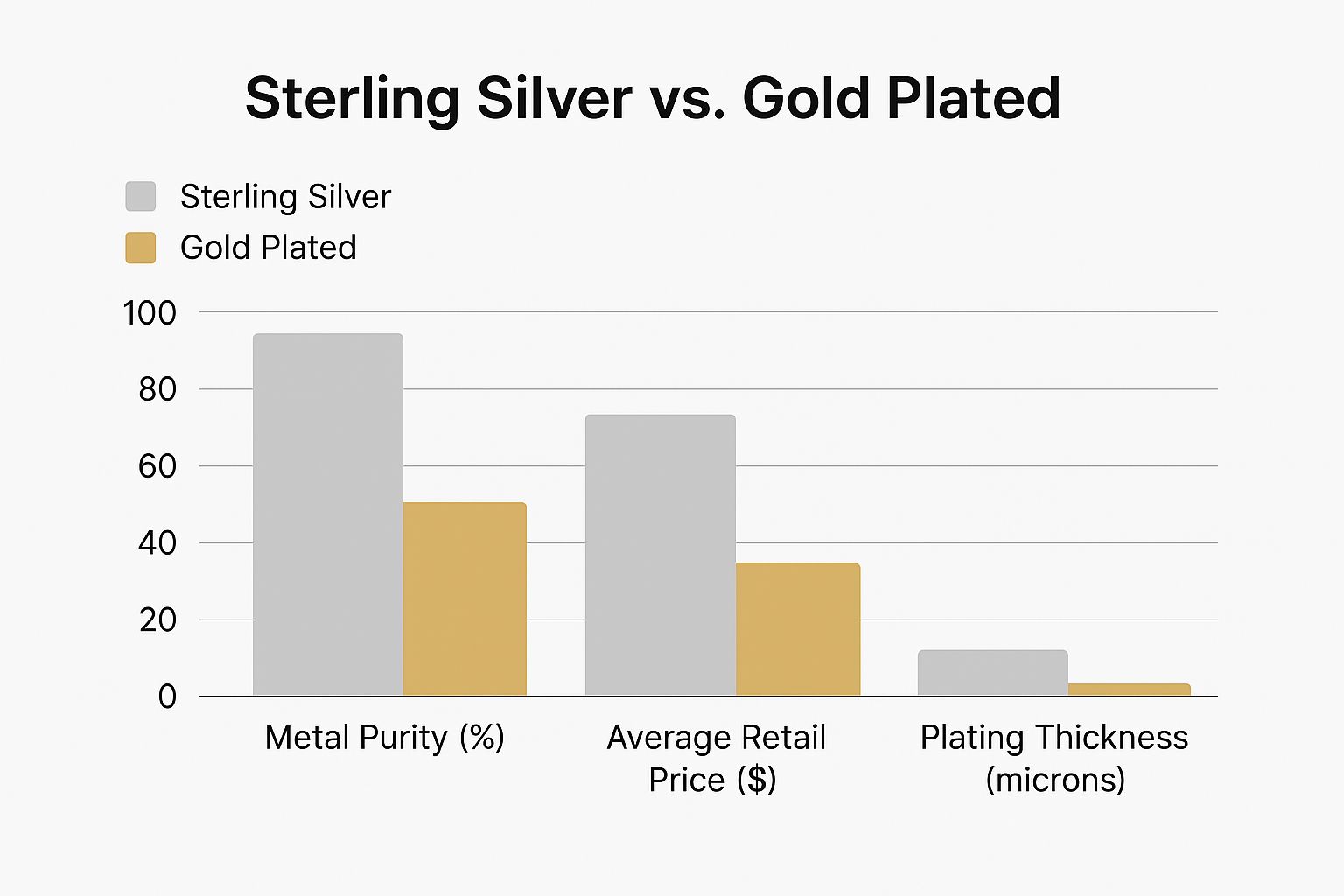
As you can see, the difference is stark. Sterling silver is mostly pure precious metal, while gold plating is just a whisper-thin coating on the surface. This directly affects everything from its durability to its price. This dynamic is playing out across the entire jewelry market, which is growing fast. The global gold and silver jewelry sector was valued at a massive USD 13.2 billion in 2023 and is expected to more than double by 2032. This growth is fueled by people like us, who want both affordable style and pieces that last. You can dive deeper into these market trends and what they mean for shoppers.
What Makes Sterling Silver Jewelry a Quality Choice?
When you hear the term "sterling silver," it's not just describing a color—it's a legally regulated standard of quality. Real sterling silver is a precious metal alloy, a specific recipe of 92.5% pure silver mixed with 7.5% of other metals, usually copper. This blend is what makes it work for jewelry. Pure silver is just too soft on its own for a ring or bracelet that you'd wear every day, so adding those other metals gives it the strength it needs without losing that bright, cool shine we love.
This composition is exactly why sterling silver is such a dependable and high-quality option. It's completely different from silver-plated pieces, which just have a thin silver layer over a cheaper base metal. With sterling silver, the entire piece is a solid alloy. That means its beauty isn't just on the surface. If it gets a scratch, the metal underneath is still sterling silver, so it can be polished back to its original glory time and time again.
Finding the Hallmark of Authenticity
So, how can you be sure you're getting the real deal? Look for the quality stamp, also called a hallmark. It’s a tiny engraving, usually hidden on the clasp or an inside surface, that certifies the metal's purity.
- "925": This is the most common stamp you'll see. It directly tells you the piece is 92.5% pure silver.
- "STER" or "SS": These are just abbreviations for "sterling" and serve the same purpose.
Learning to spot these marks is the first step in becoming a smart jewelry buyer. For a deeper dive into what these numbers mean, check out our complete guide on what defines 925 sterling silver. Seeing that hallmark is your guarantee that you're buying a piece with genuine, lasting value.
When comparing sterling silver vs. gold-plated jewelry, a crucial difference is that sterling silver is a precious metal all the way through. This gives it inherent value and makes it hypoallergenic for most, as it doesn't contain nickel—a common culprit for skin irritation found in the base metals of many plated items.
This level of quality has helped sterling silver dominate the market. In fact, sterling silver jewelry accounted for over 80% of the global silver jewelry market share recently, with top producers focusing heavily on it. People just love its perfect balance of affordability, durability, and classic style. While our focus here is on sterling silver and gold plating, it's also helpful to understand other options like white gold engagement rings, particularly when you're choosing a piece for a truly special occasion.
How Gold-Plated Jewelry Is Made
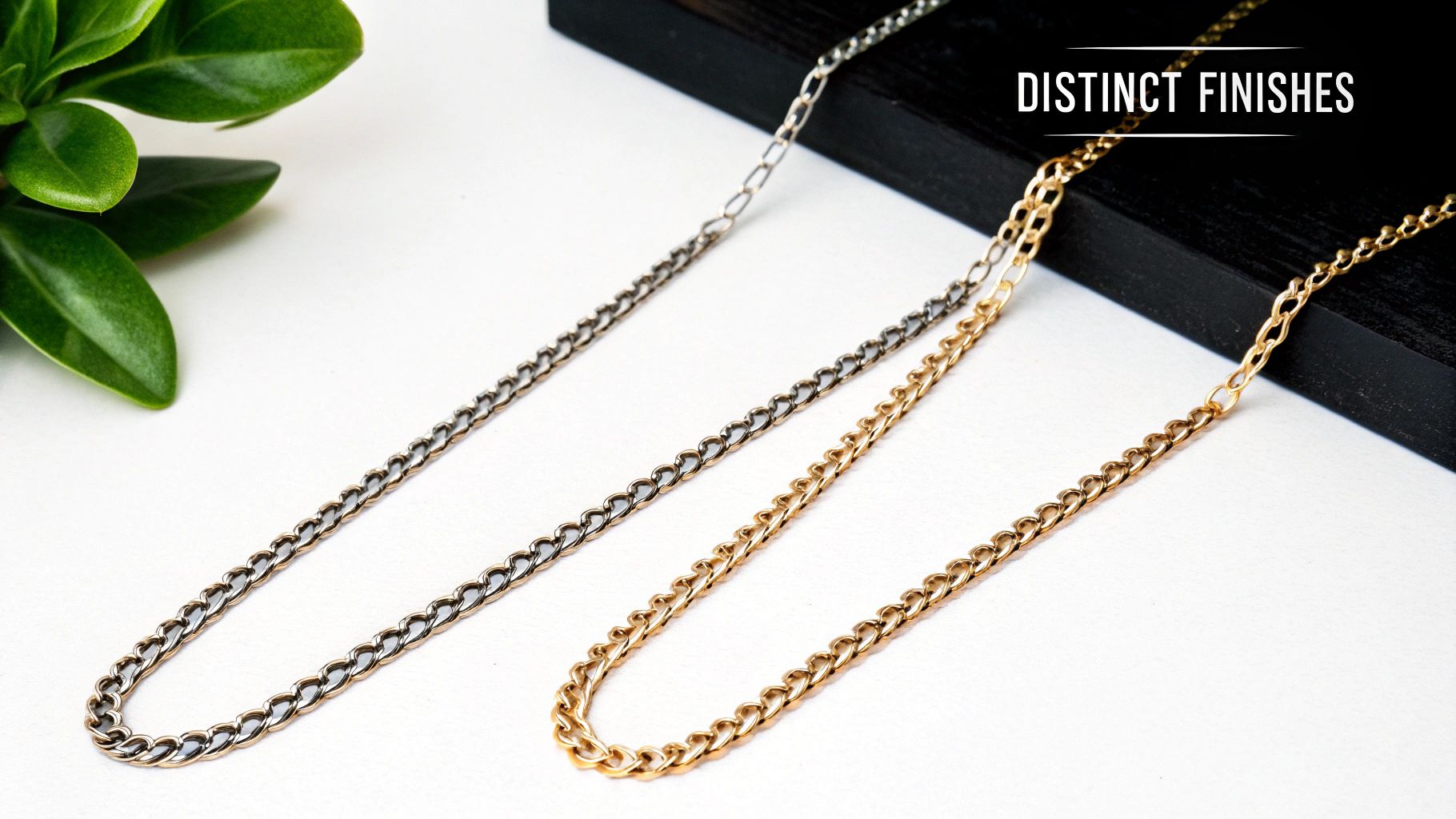
Gold-plated jewelry gives you that gorgeous, luxe look of solid gold but without the hefty price tag. It's a completely different animal from sterling silver, which is a solid precious metal all the way through. Instead, gold-plated pieces have a core of a more affordable metal, like brass or copper, which is then covered by a super-thin layer of real gold.
This magic happens through a process called electroplating. First, the base metal piece is meticulously cleaned so the gold has a perfect surface to stick to. Then, it's dipped into a solution that has tiny gold particles floating in it. An electric current is passed through the solution, which makes the gold permanently bond to the surface of the base metal, creating that beautiful golden finish.
The Importance of Karat and Thickness
When you're looking at gold-plated jewelry, two things really determine its quality: the purity of the gold (karat) and how thick that plated layer is.
- Karat Rating (e.g., 14k or 18k): This tells you how pure the gold in the outer layer is. An 18k gold plating will look richer and more vibrantly yellow because it has more pure gold in it compared to 14k.
- Plating Thickness: This is the big one for durability, and it's measured in microns. A lot of standard fashion jewelry has a whisper-thin layer, sometimes less than 0.5 microns. Higher-quality pieces might have a thicker coating, which helps them last longer.
Here's the key thing to remember in the sterling silver vs gold plated comparison: that gold layer isn't permanent. No matter how well it's made, it's just a coating. Over time, friction and wear will cause it to rub off, revealing the different-colored metal underneath.
This is the fundamental trade-off. Gold-plated pieces look fantastic right out of the box, but they aren't meant to be forever pieces you pass down through generations. Their real strength is offering on-trend styles at an affordable price, making them perfect for accessories you might only wear for a season or two.
If you're curious about the different ways gold is used in jewelry, you can learn more in this guide to solid gold, gold-filled, and gold-plated jewelry. Understanding these distinctions really highlights why gold plating has its own unique place in the market—it’s all about accessible fashion, not long-term investment.
Durability: What to Expect from Everyday Wear
When you're choosing between sterling silver and gold-plated jewelry, durability isn't just about whether a piece will break. It’s really about how it looks and feels after weeks, months, and even years of being worn. The way you live your life—from your morning shower to how often you hit the gym—plays a huge role in which material will hold up best for you.
Sterling silver is a solid precious metal alloy. That's a fancy way of saying what you see on the surface is what you get all the way through. If you happen to scratch it, you'll just see more shiny silver underneath.
Its biggest weakness? Tarnish. Silver naturally reacts with sulfur in the air, creating a dark, discolored layer. But here’s the good news: tarnish isn't permanent damage. It's a surface-level issue you can easily clean off, bringing back that original bright shine. A well-cared-for sterling silver piece can honestly last a lifetime, making it perfect for that favorite necklace or ring you never take off.
How Gold Plating Holds Up
Gold-plated jewelry is a different story altogether. Its entire appeal and durability hinge on a very thin layer of gold electroplated over a less expensive base metal, like brass or copper. Once that gold layer wears away, the base metal underneath is exposed, and the piece loses its luxurious look.
Several things can speed up this wear-and-tear process:
- Friction: Think about a ring constantly rubbing against your finger or a bracelet against your desk. This constant contact will wear down the plating much faster.
- Chemicals: The lotions, perfumes, and even the natural oils on your skin create a chemical cocktail that can slowly eat away at the gold finish.
- Moisture: This is a big one. Showering, swimming, or even just washing your hands with your jewelry on is a surefire way to degrade the plating quickly.
Once the plating is gone, it's pretty much gone for good. While you can get a piece re-plated, it’s often more expensive than the jewelry was in the first place, so it's not a practical option for most items. Our guide on the best way to clean gold jewelry has some great advice on making that finish last as long as possible.
Here’s the key difference: Sterling silver’s main flaw, tarnish, is purely cosmetic and fixable. In contrast, gold plating’s main flaw—the wearing away of the gold layer—is permanent and marks the end of the jewelry’s life as you know it.
This makes gold-plated pieces fantastic for trendy items or jewelry you only pull out for special occasions. A big, bold gold-plated necklace worn a few times a year can stay looking new for ages. But a gold-plated ring worn every single day? You could start seeing the brass or copper peeking through in a matter of months. For the daily grind, sterling silver is simply built to last.
Cost vs. Long-Term Value: What Are You Really Paying For?
When you’re deciding between sterling silver and gold-plated jewelry, the price tag is often the first thing you look at. Gold-plated pieces are almost always cheaper upfront, which can be really appealing if you're on a tight budget. But to get the full picture, you have to think beyond that initial cost and consider the long-term value—what I like to call the "cost-per-wear."
Sterling silver is a precious metal, so it holds intrinsic value. You might pay more for it at the start, but a quality piece of silver is something you can own for a lifetime. Think of it as a one-time buy. Because it’s a solid metal all the way through, you can polish out scratches, and its main weakness—tarnish—is completely fixable. If you ever need to bring back that original sparkle, our guide has some great proven methods to clean 925 silver and restore its shine.
The Plated Jewelry Replacement Cycle
Gold-plated jewelry, on the other hand, is built to be temporary. That thin layer of gold will eventually rub off, no matter how careful you are. Once the base metal underneath is exposed, the piece loses its look and has virtually zero resale value. This kicks off what I call the replacement cycle. That $30 gold-plated necklace seems like a steal, but if you find yourself buying a new one every year, the costs start to pile up.
Here's the real difference in a nutshell: Sterling silver is an asset you own and maintain. Gold-plated jewelry is more like a fashion rental—you enjoy it until it wears out.
Let's break it down with a simple example. Say you're buying a classic chain necklace.
- A sterling silver chain might cost you $80 upfront, but with proper care, it can easily last ten years or even longer. Your cost-per-year works out to $8 or less.
- A gold-plated chain might only be $30, but you’ll likely need to replace it every 1-2 years. Over that same ten-year period, you could end up spending $150 to $300 just on replacements.
When you look at it that way, the more expensive piece suddenly becomes the smarter, more economical choice for the long haul. This is a huge reason why sterling silver is such a powerhouse in the jewelry world. In fact, the global silver jewelry market was valued at USD 38.6 billion in 2024 and is expected to keep growing, largely because people recognize its perfect mix of lasting quality and accessible pricing.
Ultimately, choosing silver is an investment in a piece that lasts. A gold-plated purchase is for enjoying a trend right now.
Making The Right Choice For Your Lifestyle
When you're standing at the jewelry counter, the choice between sterling silver and gold-plated isn't about which one is "better." It's about which one is better for you, right now. The right decision really comes down to your lifestyle, how much you want to spend, and what you plan to do with the piece.
Think of it like building a wardrobe. Sterling silver is your classic white t-shirt or perfect pair of jeans. It's the foundation—solid, reliable, and meant to last. Since it's a solid precious metal, it’s the perfect pick for jewelry you'll live in, like a signature necklace, a special ring, or your go-to everyday earrings.
Gold-plated jewelry, on the other hand, is your trendy statement piece for the season. It’s the fun, of-the-moment accessory that lets you experiment with a bold new look without dropping a ton of cash. It’s all about getting that specific style for a party, a vacation, or just to try something new.
A Practical Buying Guide
Let's break it down into real-life situations. The whole sterling silver vs gold plated question gets a lot simpler when you match the metal to the moment.
When to Choose Sterling Silver
- For your everyday essentials: A sterling silver chain or bracelet can handle the bumps and scrapes of daily life. Even if it tarnishes over time, a quick polish brings it right back to life.
- For a meaningful gift: Anniversaries, milestone birthdays, or graduations call for something special. A sterling silver piece has an inherent, lasting value that feels worthy of the occasion.
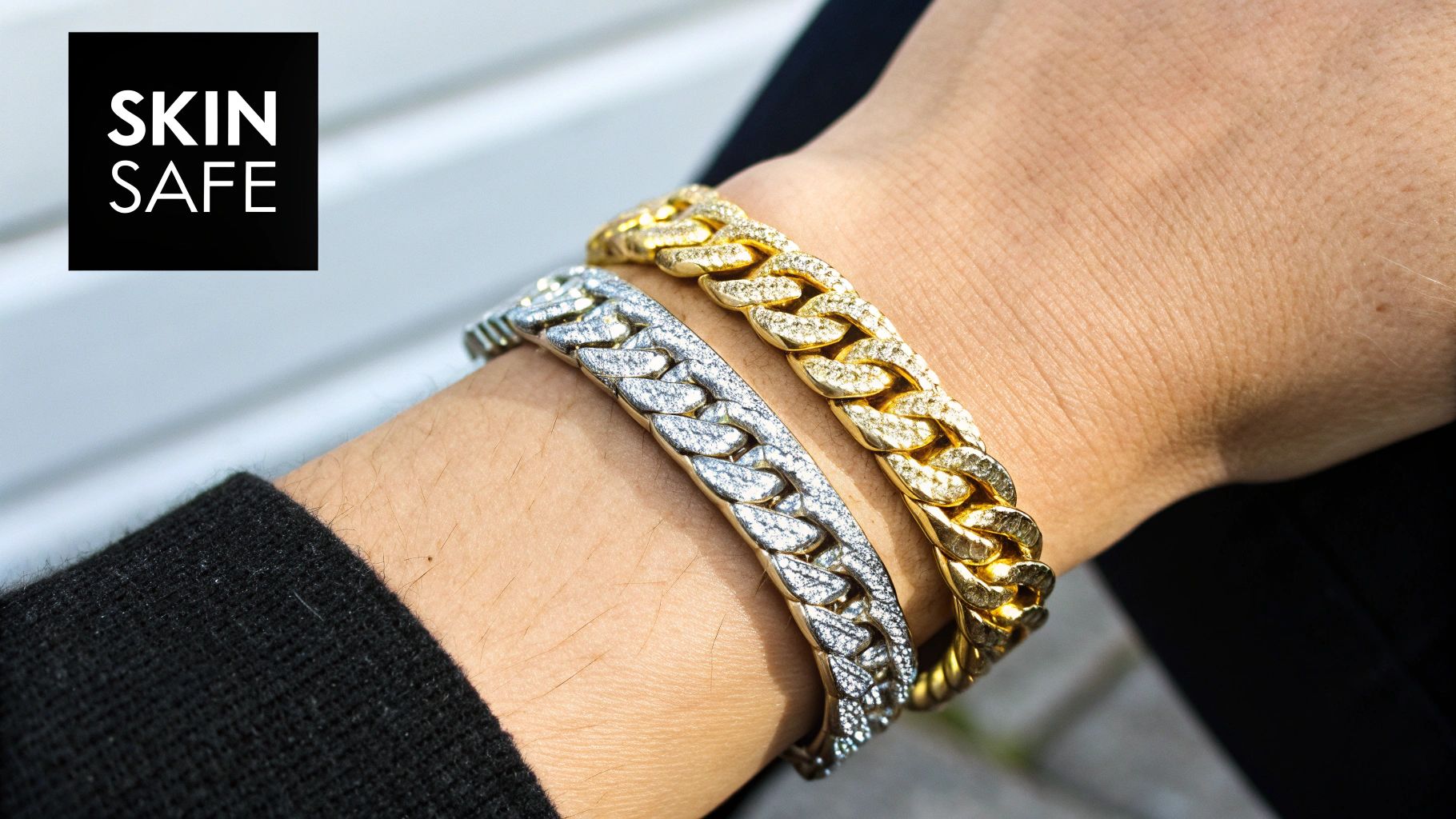
- If you have sensitive skin: As a naturally hypoallergenic metal, 925 sterling silver is a safe bet for most people. It’s free from nickel, which is one of the most common culprits behind skin irritation.
When to Choose Gold-Plated
- To experiment with a new trend: Have you been eyeing those chunky gold hoops everyone's wearing? A plated pair is the perfect low-risk way to see if the style is really for you before you commit to a solid gold version.
- For that one-time event: You found the perfect dress and need a specific necklace to complete the look for a wedding or a gala. A gold-plated piece gives you the high-end look without the high-end price tag for a single night out.
- When budget is your main concern: It’s simple. Gold-plated jewelry delivers the luxurious look of gold at a fraction of the cost, making it easy to build a versatile accessory collection without breaking the bank.
The bottom line is all about purpose. Sterling silver is an investment in timeless style and durability. Gold-plated jewelry is a smart, budget-friendly buy for fashion-forward, short-term wear.
By thinking about how and where you'll be wearing your new jewelry, you can confidently pick the material that fits your life perfectly.
Frequently Asked Questions About Jewelry Care
When you're deciding between sterling silver and gold-plated jewelry, the practical questions are often the most important. How will it hold up day-to-day? What do I need to do to keep it looking great? Let's dive into some of the most common care questions.
Key Maintenance And Quality Questions
The age-old question: can I wear it in the shower? The simple answer is, you really shouldn't. It's always best to take off both sterling silver and gold-plated pieces before you hop in the shower or go for a swim.
Soaps and shampoos contain chemicals that can accelerate tarnishing on silver. For gold-plated items, the combination of moisture and friction will strip away that thin layer of gold much faster than normal wear.
Another common concern is figuring out if your silver is the real deal. With sterling silver, it's all about the hallmark.
- Look for a tiny stamp that says "925," "STER," or "SS."
- This stamp is a guarantee that the piece is 92.5% pure silver.
- If you can't find a hallmark, it's a major red flag—you might be looking at a lower-quality plated piece instead.
When it comes to the sterling silver vs gold plated choice, here's a crucial difference: Silver's main enemy, tarnish, is fixable. But once the gold plating on a piece wears off, that damage is pretty much permanent.
Gold Vermeil And Repairability
You’ll also run into the term "gold vermeil" (pronounced ver-may). Think of it as gold plating's high-end cousin. To qualify as vermeil, a piece must have a sterling silver base and a much thicker layer of gold—a minimum of 2.5 microns.
This makes it far more durable and valuable than standard gold-plated jewelry, which typically uses a brass base and has a gold layer less than 0.5 microns thick.
So what happens when your favorite gold-plated necklace starts to fade? While you can technically get it re-plated, the cost of the service is often more than what you paid for the jewelry in the first place, making it an impractical fix for most fashion pieces. For a complete rundown, check out our guide on caring for gold-plated jewelry.
Ready to capture a memory in a piece designed to last? Explore the beautiful, personalized projection jewelry from Hidden Forever and turn your favorite photo into a timeless treasure. https://hiddenforever.com


