

The very first step—and often the hardest—is simply giving yourself permission to grieve. It’s about fully acknowledging the bond you shared and understanding that whatever you're feeling right now is completely normal. Your emotional response is valid, no matter what anyone else might say.
Your Grief Is Real, and It Matters
Losing a pet isn't just a sad day. For most of us, it’s losing a member of our family, a constant companion, and a source of pure, unconditional love. The pain you're feeling is a direct reflection of that deep connection, and their absence can throw your entire world off-kilter.
Unfortunately, not everyone gets it. Society doesn't always give pet loss the same weight as human loss, which can lead to something called disenfranchised grief. You might get hit with well-meaning but hurtful comments like, "It was just a pet," which can make you feel incredibly isolated, as if you have to hide your sorrow.
Let this be your first takeaway: The depth of your sadness is not an overreaction. It is a testament to the love you gave and received. Your feelings are valid, and you deserve the space to process them on your own terms.
Acknowledging the Unique Pain of Losing a Pet
The relationship we have with our pets is unlike any other. They are woven into the very fabric of our daily lives, from that first sleepy greeting in the morning to the last cuddle at night.
- A Void of Unconditional Love: Pets give us a kind of pure, uncomplicated affection that’s hard to find elsewhere. Losing that steady source of love leaves a gaping hole.
- A Disrupted Routine: Suddenly, your day is empty of all the small rituals—the walks, the feeding times, the playtime. These constant, quiet reminders can make the grief feel relentless.
- The Silence Left Behind: They were your silent confidants, offering comfort without ever needing to say a word. The silence they leave in their wake can feel deafening.
This isn't a niche experience. The sheer scale of pet ownership shows just how many of us share this profound bond. It's estimated there are nearly 373 million pet cats and 471 million pet dogs worldwide in 2025. Here in the U.S., a staggering 71% of households own a pet—a huge jump from 56% back in 1988. It's clear they've become central to modern family life. If you're interested, you can find more insights about these pet ownership statistics and what they tell us about our relationships with animals.
To start, it can be helpful to take a few small, concrete actions. These aren't meant to "fix" anything, but to gently guide you through the initial shock and pain.
Initial Steps for Acknowledging Your Grief
| Action | Why It Helps |
|---|---|
| Talk to a trusted friend | Voicing your feelings to someone who understands can validate your pain and make you feel less alone. |
| Write down a favorite memory | Focusing on a specific, happy moment can be a comforting reminder of the love you shared. |
| Allow yourself to cry | Crying is a natural physical and emotional release. Don't hold it back; let it flow. |
| Look at old photos | While it might hurt at first, revisiting happy times helps you honor your pet's life and your journey together. |
Taking these first steps is about being kind to yourself. It's about honoring both your pet and the very real grief you feel for them.
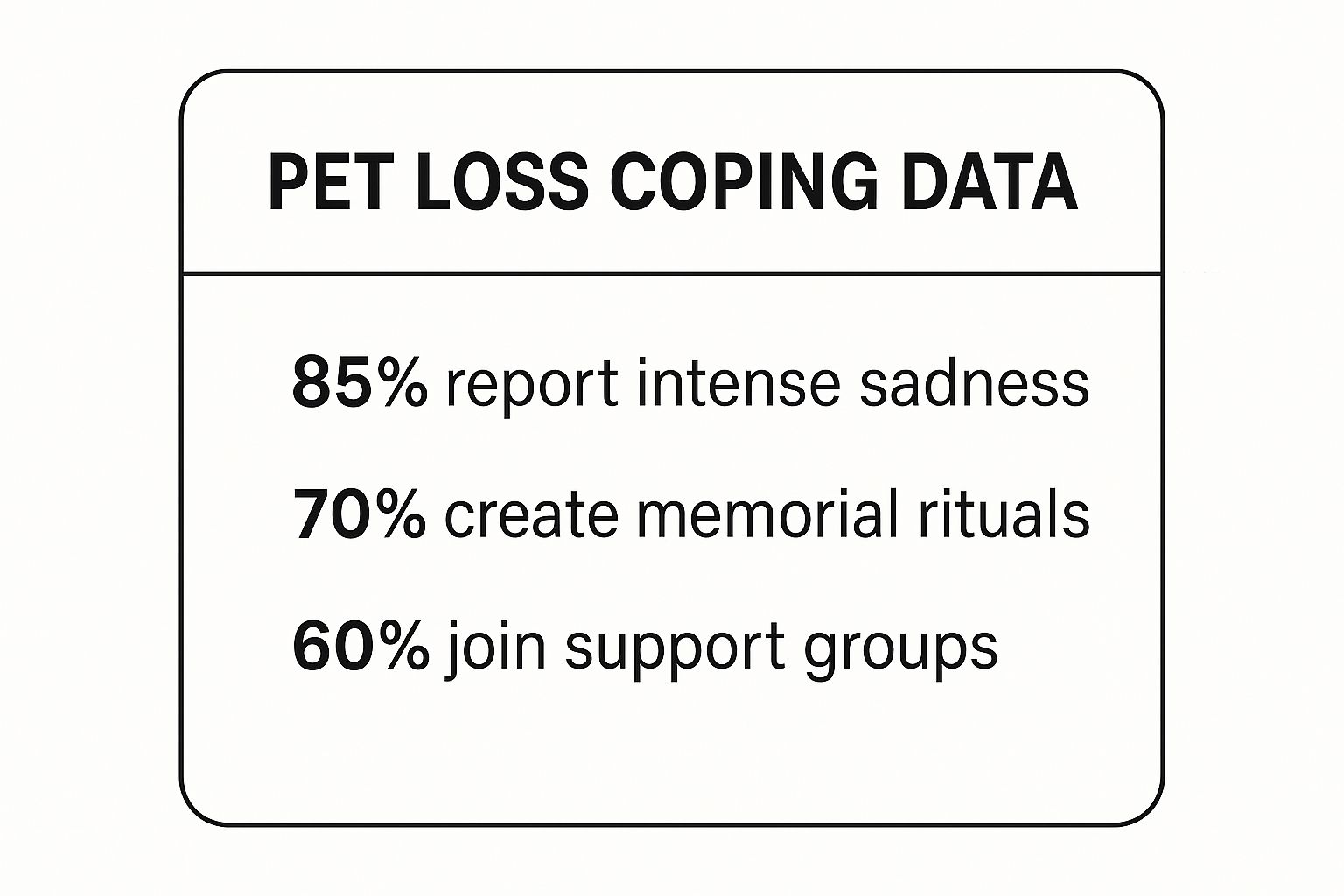
As you can see, overwhelming sadness is a nearly universal experience. The good news is that many people find a path forward by taking proactive steps, like creating memorials or connecting with a community that understands. Honoring your pet and your grief isn't just okay—it's the first gentle step on the path toward healing.
Navigating the Complex Emotions of Pet Loss

Grief isn't a single, straightforward feeling. It's more like a storm of emotions, swirling from profound sadness one minute to a wave of anger or guilt the next. If you're going to learn how to cope with losing a pet, the first step is giving yourself permission to feel it all, without judgment.
This emotional chaos is a completely normal part of grieving. Remember, you aren't just mourning an animal; you're mourning a loyal companion, a piece of your daily routine, and a source of unconditional love that's suddenly gone.
The pain of losing a pet is a silent sorrow that connects millions of us. In 2024 alone, more than 1.7 million pets were reported lost in the United States. While 63% of dogs and 52% of cats thankfully found their way back, many did not, leaving their families with an unresolved grief. You can read more about the difficult reality of lost pets and their outcomes on PsychologyToday.com.
Understanding Feelings of Guilt
Guilt is one of the heaviest, most common emotions we carry after a pet dies. It’s the voice in your head that whispers "what if" and "if only." This is especially true if you had to make the incredibly difficult decision of euthanasia to end their suffering.
It’s so important to remind yourself that choosing to prevent more pain is an act of deep love and mercy, not a reason for guilt. You made the best, most compassionate choice you could with the information you had at the time. That’s all any of us can do.
Guilt often disguises itself as a need for control in a situation where you had none. Acknowledge the feeling, but challenge its validity. You gave your pet a life full of love, and that is what truly matters.
Dealing with Anger and Sadness
Anger often shows up right alongside the sadness. You might feel rage at the illness that took them, the vet, or even yourself. This anger is usually just a cover for the immense pain underneath. It’s a raw expression of how deeply unfair it all feels.
It's much healthier to let yourself feel that anger than to bottle it up. Here are a few ways I’ve seen work for people trying to process these big, messy feelings:
- Journaling: Don’t hold back. Write down exactly what you’re feeling without filtering a single word. Just getting it out of your head and onto paper can be a huge release.
- Physical Activity: Go for a hard run, hit a punching bag, or tackle some tough yard work. Moving your body can be an amazing outlet for that intense, pent-up energy.
- Mindful Breathing: When the sadness is just too much, find a quiet spot and focus on your breath. Breathe in for four counts, hold for four, and breathe out for six. This simple exercise can pull you back to the present moment and offer a bit of calm.
These feelings—the sadness, the guilt, the anger—are not a sign of weakness. They are the testament to a deep and meaningful love. Learning to navigate them is the heart of healing, allowing you to move forward without ever leaving your cherished memories behind.
Creating Rituals to Honor Your Pet

Grief needs a place to go. When it feels overwhelming, creating intentional rituals gives your sadness a constructive outlet, helping you transform that pain into a loving tribute. This isn't about forgetting; it's about actively engaging with your memories in a way that feels healing.
There’s no instruction manual for this. A meaningful ritual could be as simple as lighting a candle by their picture each night or something more involved, like creating a dedicated space in your garden. What matters is that the action feels authentic to the one-of-a-kind bond you shared.
Tangible Keepsakes and Memorials
For many people I've worked with, having something physical to see and touch provides immense comfort. It makes the memories feel concrete, bringing a sense of closeness when the emptiness feels vast. Think about the little things that truly captured your pet’s personality.
- Assemble a memory box: This is a classic for a reason. Gather their favorite squeaky toy, their old collar, a clay paw print, and a handful of beloved photos. The act of decorating the box itself can be a wonderfully soothing and creative outlet for your feelings.
- Commission a custom portrait: An artist can turn a favorite photo into a beautiful piece of art for your home. I’ve seen clients find incredible peace by having a tangible, artistic representation of their companion to look at every day.
- Keep them close with wearable reminders: Sometimes, you just need to feel that connection physically. A memorial photo necklace is a subtle, beautiful way to carry their image with you, while other jewelry can incorporate ashes or a fur clipping.
These items become touchstones for your love, giving you a focal point for your grief when the waves hit hard.
A meaningful ritual isn’t about "moving on." It's about finding a way to carry your pet's love forward with you, weaving their memory into the fabric of your life in a new and beautiful way.
Living Tributes and Acts of Service
Sometimes the most powerful memorials are the ones that grow and give back, reflecting the unconditional love your pet gave you. Channeling your grief into acts of service can create a positive legacy in their name.
Here are a few ideas that have brought comfort to others:
- Plant a tree or a garden space. Watching something grow and flourish year after year can be a beautiful, living symbol of their enduring spirit. You’re nurturing new life in their honor.
- Donate to a shelter in their name. A one-time or recurring donation to your local animal shelter or a breed-specific rescue is a powerful way to help other animals. Many organizations will even let you dedicate a kennel or place a small plaque in your pet's memory.
- Volunteer your time. If and when you feel ready, spending time walking dogs or socializing cats at a shelter can be incredibly healing. You're giving the gift of your time and affection, just as your pet did for you.
Finding the right ritual is a deeply personal journey. Trust your instincts. Choose something that resonates with your heart and truly honors the special relationship you were so lucky to have.
Finding Support From People Who Understand

One of the loneliest parts of losing a pet is the feeling that no one else really gets it. Friends and family mean well, of course, but their words can sometimes fall flat, making you feel even more isolated in your grief. Finding a community of people who truly understand the bond you shared is a massive step toward healing.
You really don’t have to go through this alone. There's immense comfort in sharing your story with others who have walked this same path. It’s a powerful reminder that your feelings are valid and that you’re not being dramatic or over-the-top for feeling this heartbroken.
Connecting With Dedicated Support
Thankfully, you're not the first person to feel this way, and there are resources out there created just for people mourning a pet. These are safe, judgment-free spaces where you can be completely honest about your pain.
If you're looking for that kind of understanding, here are a few places to start:
- Pet Loss Support Hotlines: A surprising number of veterinary schools and nonprofits run free hotlines. They’re staffed by trained volunteers who are there simply to listen with a compassionate ear.
- Online Forums and Communities: Websites and social media groups for pet loss are incredible. You can connect with a global community of people who understand, sharing stories and pictures whenever you need to, day or night.
- Local Support Groups: A quick online search can often turn up local groups—some meet in person, others virtually. Many are run by grief counselors who specialize in this specific type of loss.
It's also worth remembering that the grief we feel is part of a much larger picture. Each year, around 7.6 million companion animals end up in U.S. shelters. Behavioral problems, which are reported in over 40% of these cases, are often a contributing factor. Knowing this can sometimes help ease feelings of guilt and remind you that you're not alone in your experience. You can read more about these pet adoption statistics on WorldAnimalFoundation.org.
How to Talk to Friends and Family
When it comes to loved ones who haven't experienced this kind of loss, they often want to help but just don't know how. The best approach is to be clear and direct about what you need.
It’s perfectly okay to say something like, "I really don't need advice right now, I just need someone to listen while I talk about him." This takes the guesswork out of it for them and helps you get the kind of support that actually feels supportive.
Instead of just hoping they'll figure it out, try to gently guide them. You could ask, "Would it be okay if I shared a funny memory of her with you?" This invites them into your experience on your terms. Looking at photos together or even creating a small memorial can also be a concrete way for them to participate. You might even find some meaningful ideas in this guide to unique custom pet memorial gifts that you can create with your family to honor your pet together.
Reaching out is an act of strength, not weakness. Whether it’s with a counselor, an online group, or just one trusted friend, sharing the weight of your grief truly does make it easier to carry.
Caring for Yourself and Other Pets
Grief isn't just an emotional experience; it’s physically exhausting. The sheer weight of it can leave you feeling completely depleted, making it hard to even think about your own needs. But when you're figuring out how to cope with losing a pet, looking after yourself isn't selfish—it's essential. You can't navigate this journey on an empty tank.
Even the smallest acts of self-care can make a real difference. Your body and mind are intrinsically linked, so supporting your physical well-being gives you a stronger foundation to process your emotions. Don't feel like you need to have it all together. Just focus on small, manageable steps to get through each day.
Practical Self-Care in Times of Grief
When you're overwhelmed, the basics are usually the first things to slide. The goal here isn't perfection; it's about finding a little stability when everything feels shaky.
Think about these simple starting points:
- Nutrition and Hydration: Grief can mess with your appetite. You might not feel hungry at all, or you might find yourself stress-eating. Try to have small, simple meals. A bowl of soup, some toast, or a piece of fruit is enough. Keep a water bottle handy and take small sips.
- Gentle Movement: Nobody is expecting you to run a marathon. A short, quiet walk can do wonders for clearing your head and easing tension. Even some simple stretching can help release the stress and sadness your body is holding onto.
- Prioritize Sleep (or at Least Rest): Sleep can feel completely out of reach right now, and that’s okay. If you can’t sleep, just allow yourself to rest. Find a quiet spot, put away your phone, and lie down. This quiet downtime is vital for letting your mind process everything.
These small actions create a foundation of care, giving you the physical strength you need to face the emotional side of your loss.
Taking care of your physical self isn't a distraction from your grief. It is an active part of the healing process that provides the energy and resilience needed to face your emotions.
Supporting Your Other Pets Through Grief
In the midst of your own pain, it's easy to overlook that your other pets are grieving, too. They may not understand what happened, but they absolutely feel the absence of their companion and are incredibly sensitive to your own sadness.
While you're working through your loss, it’s important to remember that the other animals in your home are likely feeling distressed. A key part of helping them is understanding dog stress symptoms, which can give you clues about how they’re coping. Since they can't tell you what's wrong, their behavior is their primary way of communicating confusion and sadness.
Look out for these signs of grief in surviving pets:
- Changes in appetite, like refusing to eat
- Restlessly searching the house for the missing pet
- More vocal than usual (whining, meowing, or howling)
- Lethargy and sleeping much more than normal
- Becoming extra clingy or, sometimes, more withdrawn and distant
The best way to help them is to stick to their routine. Keep feeding times, walks, and playtime as consistent as you can. It provides a sense of normalcy in a confusing time. Offer extra reassurance with gentle pets, quiet cuddles on the couch, and a calm voice. This shared comfort can be incredibly healing for both of you, a quiet reminder that you still have each other to lean on.
Common Questions About Coping with Pet Loss
When you're grieving the loss of a pet, your mind can swirl with questions. It’s completely natural to look for answers when your world feels upside down. Knowing that others have asked these same things can be a small comfort, a reminder that you aren't alone in this.
There's no instruction manual for grief, and everyone’s path is different. But let's walk through some of the most common questions together. My hope is to offer some gentle, practical guidance to help you find your way through this incredibly tough time.
How Long Does Grief Last After Losing a Pet?
This is usually the first question on everyone's mind, and the honest answer is, there's no set timeline. Your grief is as unique as the bond you shared with your pet. For some, the initial sharp, overwhelming pain might start to feel a little softer after a few weeks or months. For others, it takes much, much longer.
So much depends on your personal situation—the circumstances of their passing, the depth of your connection, and the support you have around you.
Healing isn't about forgetting them. It's about learning how to carry their memory forward with you, so the love remains without the constant, heavy ache. Give yourself grace and be patient with the process.
Is It Okay to Get Another Pet Soon?
This is a big one, and it's a decision only you can make. There is no right or wrong time. Some people find that caring for a new animal helps them channel their love and brings a spark of joy back into a quiet home. Others feel they need a significant amount of time before they can even consider opening their heart again. Both are perfectly valid.
The most important thing is to be real with yourself. Are you thinking about a new pet to fill the specific void left by the one you lost? If you're looking for a "replacement," it might be a sign to wait. It’s often best to let the rawest feelings of grief pass, so you can welcome a new friend for the unique individual they are, not as a shadow of the one you miss so dearly.
How Do I Explain Pet Loss to Children?
When you’re navigating your own grief, explaining the loss of a family pet to a child can feel overwhelming. The best approach is always honesty, delivered with gentleness and simplicity. It's really important to use clear, direct language that they can understand. Try to avoid confusing phrases like "put to sleep" or "went away," which can create anxiety around sleeping or a false hope they might return.
You could say something simple and true, like, "Buddy was very, very old, and his body stopped working. He's not in any pain anymore."
Then, make space for them to process their big feelings. Encourage them to:
- Talk about it. Let them ask as many questions as they need to and share all their favorite memories.
- Draw it out. Suggesting they draw a picture of their pet or a happy time you all shared can be a wonderful outlet.
- Write it down. For older kids, writing a letter or a short story about their furry friend can be incredibly cathartic.
Involving them in creating a small memorial can also be a beautiful way to say goodbye. They could help decorate a memory box, choose a special spot in the garden for a tribute stone, or pick out a frame for a favorite photo. It gives them a tangible way to channel their love and sadness.
What Should I Do with My Pet's Belongings?
Seeing your pet’s collar, bed, food bowls, and favorite toys can be a gut punch every time you walk by. Deciding what to do with them is a deeply personal step, and there is absolutely no rush.
Some people find comfort in keeping these items nearby; they are tangible reminders of the love and joy you shared. For others, seeing them is just too painful right now. It is 100% okay to gather everything up, put it in a box, and store it away. You can always revisit that box when you feel stronger.
When you're ready, you might think about creating a lasting tribute. Learning how personalized memorial jewelry thoughtful keepsakes to honor loved ones can transform a memory into something you can hold close is a beautiful option for many.
Another wonderful choice is to donate usable items like unopened food, clean beds, or sturdy toys to a local animal shelter. It’s a powerful way to let your pet’s legacy live on by helping another animal in need.
At Hidden Forever, we understand that memories are treasures. Our handcrafted projection jewelry allows you to carry a cherished photo of your beloved pet close to your heart, hidden within an elegant keepsake. It’s a beautiful way to honor their memory and keep their spirit with you always. Discover our collection at https://hiddenforever.com.


